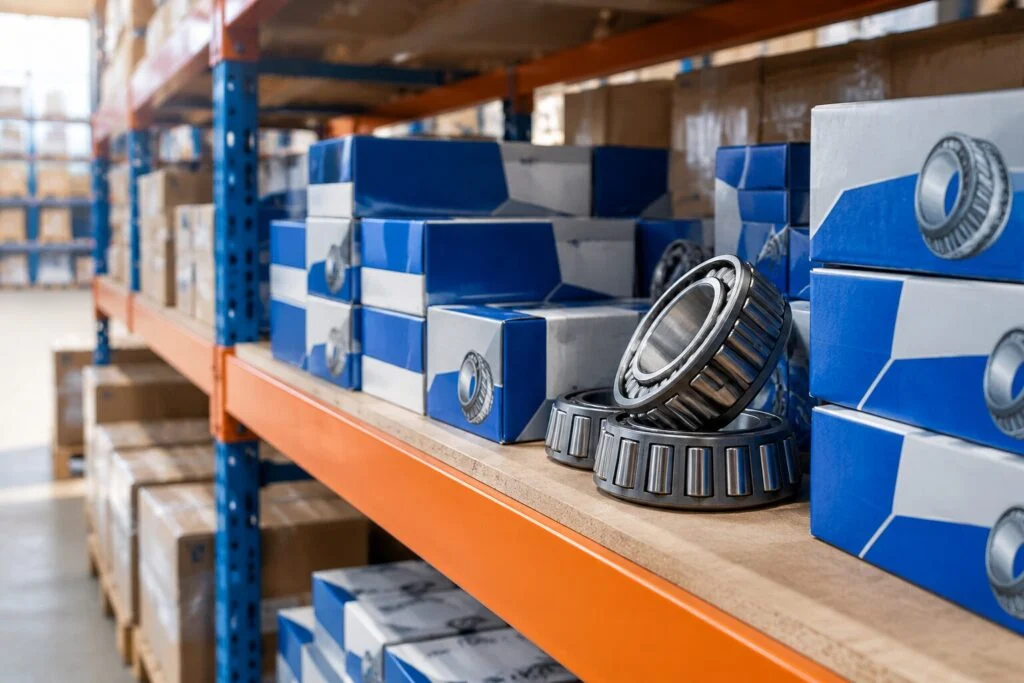
EV Aftermarket Parts Demand 2026: Wholesale Supplier
Most assume electric vehicles need fewer parts; the reality is they demand highly specialized, traceable electrical insulation components that traditional suppliers lack.
The 2026 EV aftermarket is not merely a continuation of internal combustion engine logistics. It represents a fundamental shift from mechanical wear management to electrical integrity preservation. For distributors and wholesalers, this means the primary bottleneck is no longer volume but specificity. Securing genuine multi-brand stock of insulated bearings requires agile sourcing strategies that official OEM channels often fail to provide due to rigid minimum order quantities and limited mixed-batch capabilities. Understanding EV aftermarket parts demand 2026 trends is critical for capturing early-market margins before supply chains fully stabilize.
This transition caught many off guard. At a recent trade show in Chicago, a buyer from Detroit stared at my catalog and asked if I had spot inventory for insulated deep groove ball bearings. The silence that followed was telling. Years ago, my focus was entirely on standard automotive bearings for fuel engines. The sudden pivot to high-voltage systems revealed a massive gap in the market. Traditional suppliers lacked the specific traceability documents required for these electrical components. This experience highlighted that meeting EV aftermarket parts demand 2026 requires more than just stock; it demands verified authenticity and technical cross-referencing capabilities.
How is the 2026 EV Aftermarket Redefining Parts Demand?
The shift from mechanical to electrical components demands new inventory strategies focused on insulation and traceability.
In traditional automotive repair, bearing failure was usually a result of lubrication breakdown or mechanical fatigue. In electric vehicles, the primary threat is electrical erosion. High-frequency currents from inverters can pass through the motor shaft, causing arcing inside the bearing raceways. This phenomenon, known as fluting, destroys bearings long before their mechanical life expectancy is reached. [NEED_CITE: mechanism of electrical erosion in EV motor bearings] Consequently, the market is moving away from standard steel bearings toward those with specialized insulating coatings or ceramic elements.
For wholesalers, this changes the definition of "fast-moving" stock. A distributor who previously stocked thousands of standard deep groove bearings now faces a complex matrix of insulated variants. Each variant must match specific voltage ratings and thermal requirements of different EV models. The challenge is not just finding the part but ensuring it is genuine. Counterfeit bearings without proper insulation can lead to catastrophic motor failures, resulting in significant liability for the supplier.
Navigating EV aftermarket parts demand 2026 involves recognizing that volume is less important than precision. A single incorrect bearing can disable an entire vehicle fleet. Therefore, suppliers must prioritize quality assurance and documentation over bulk purchasing. This shift requires a deeper understanding of electrical standards and motor designs, moving beyond traditional mechanical knowledge. The ability to verify insulation resistance and provide complete traceability documents becomes a key competitive advantage in this evolving landscape.
Why Are Insulated Bearings the New Bottleneck for EV Repairs?
High-voltage systems require specialized insulated bearings to prevent electrical erosion, creating a supply gap for non-OEM channels.
The core issue lies in the design of modern EV powertrains. Unlike internal combustion engines, electric motors operate with high-frequency switching from inverters. These frequencies induce stray currents that seek the path of least resistance to the ground, often passing through the motor bearings. Without insulation, these currents cause micro-arcing that pits the raceways and rolling elements. [NEED_CITE: impact of inverter frequency on bearing lifespan] Standard bearings cannot withstand this stress, leading to premature failure and noisy operation.
Insulated bearings solve this by introducing a dielectric barrier. This can be achieved through ceramic-coated outer rings or hybrid designs using ceramic rolling elements. However, these components are not commodity items. They are engineered solutions that require precise manufacturing controls. Many traditional bearing distributors do not stock these items because they were irrelevant in the ICE era. As a result, when a repair shop needs a replacement, they often face long lead times from OEMs or struggle to find compatible aftermarket options.
This scarcity defines the current state of EV aftermarket parts demand 2026. Repair shops are increasingly turning to independent suppliers who can offer faster turnaround times. However, this creates a risk of sourcing counterfeit or substandard parts. A bearing that looks identical may lack the necessary insulation properties, leading to repeat failures. Suppliers who can provide genuine, tested insulated bearings with full documentation are filling a critical void. They enable repair shops to maintain service levels without waiting weeks for OEM shipments.
What Sourcing Strategies Guarantee Genuine EV Bearing Supply?
Multi-brand consolidation and strict traceability are the only ways to mitigate stockouts and ensure component authenticity.
Securing reliable inventory requires a departure from traditional bulk buying. Official brand channels often impose high minimum order quantities and restrict mixed-brand purchases. This model is inefficient for the aftermarket, where demand is fragmented across multiple vehicle makes and models. A more effective approach is to work with suppliers who offer flexible MOQs and mixed-batch consolidation. This allows distributors to stock a wide variety of insulated bearings without tying up capital in slow-moving inventory.
Traceability is equally crucial. Every bearing used in an EV application must come with verifiable documentation proving its origin and specifications. This includes material certificates, inspection reports, and proof of insulation testing. [NEED_CITE: importance of traceability in automotive safety components] Without these documents, suppliers cannot guarantee the quality of their products, exposing themselves to legal and reputational risks. Genuine multi-brand spot inventory provides the flexibility needed to meet urgent demands while maintaining high standards.
When evaluating suppliers for EV aftermarket parts demand 2026, look for those who can provide cross-brand equivalent model consultation. Different EV manufacturers use similar bearing designs, but with slight variations in insulation or sealing. A knowledgeable supplier can help identify compatible alternatives, reducing dependency on a single brand. This technical support is invaluable for distributors who may not have in-house engineering expertise. It ensures that the right part is sourced for each application, minimizing returns and customer dissatisfaction.
How Can Distributors Pivot from ICE to EV Inventory?
Agile mixed-batch sourcing and technical cross-referencing outperform traditional bulk buying in the transition to electric vehicle parts.
Transitioning from internal combustion engine stock to EV components requires a strategic shift in procurement. Instead of ordering large quantities of standard bearings, distributors should focus on building a diverse portfolio of insulated and high-precision bearings. This involves identifying the most common EV models in their region and stocking the corresponding bearing types. Mixed-batch consolidation allows for smaller, more frequent orders, keeping inventory fresh and aligned with current demand.
Technical cross-referencing is essential for this transition. Many EV bearings have direct equivalents in other brands, but these are not always obvious. Suppliers who offer detailed cross-reference lookup services can help distributors expand their offerings without increasing SKU complexity. [NEED_CITE: methodology for cross-referencing EV motor bearings] This capability enables distributors to serve a broader customer base with a leaner inventory. It also reduces the risk of obsolescence, as equivalent parts can be substituted if one brand becomes unavailable.
Success in meeting EV aftermarket parts demand 2026 depends on agility. Distributors must be able to respond quickly to changes in vehicle technology and repair trends. This means maintaining close relationships with suppliers who understand the technical nuances of EV components. By focusing on genuine multi-brand stock and flexible sourcing options, distributors can position themselves as reliable partners for repair shops and fleet operators. This approach not only mitigates supply chain risks but also captures the growing value in the EV aftermarket sector.
Conclusion
The EV aftermarket rewards agility and technical precision over traditional volume metrics.
Success in this sector requires embracing the complexity of electrical components and prioritizing traceability. Distributors who adapt their sourcing strategies to include flexible, multi-brand options will thrive. Understanding the specific needs of EV repairs is no longer optional; it is the foundation of sustainable growth in the coming years. Meeting EV aftermarket parts demand 2026 is about providing the right solution, at the right time, with the right proof of quality.