Hub Assembly vs Press-In Bearing: Repair Choice for Sale
The cheapest part on the invoice is often the most expensive repair in the yard.
Choosing between a hub assembly and a press-in bearing depends entirely on your workshop’s tooling capability and the vehicle’s operating environment. For fleets running in harsh conditions or shops lacking hydraulic press equipment, the hub assembly eliminates installation error and reduces total downtime. For well-equipped facilities handling standard highway trucks with low mileage, press-in bearings offer a lower initial parts cost but demand strict adherence to torque and alignment specifications. The decision is not about the price of the steel; it is about the cost of the labor and the risk of catastrophic housing failure.
I still remember a sweltering afternoon at a copper mine in the Andes, Chile. A fleet manager was furious, pointing at a seized wheel end. They had insisted on buying cheap press-in bearings instead of a complete hub assembly to save upfront costs. Their local mechanic hammered the bearing in crooked, destroying the housing and halting the haul truck fleet for two days. That costly mistake pushed me to transition from on-site after-sales to sales, just to stop buyers from making the same false economy choices. Now, when sourcing for partners across Mexico and Brazil, I always start with that exact scene. It is not just about the part number; it is about knowing when a simple press-in job will actually cost you the whole hub. [NEED_CITE: common wheel end failure modes due to improper installation]
Understanding the mechanical differences between these two options is the first step in optimizing your inventory and repair strategy.
What Are the Core Differences in Wheel End Repair?
A hub assembly is a sealed, pre-adjusted unit, while a press-in bearing requires manual setup and precise tooling.
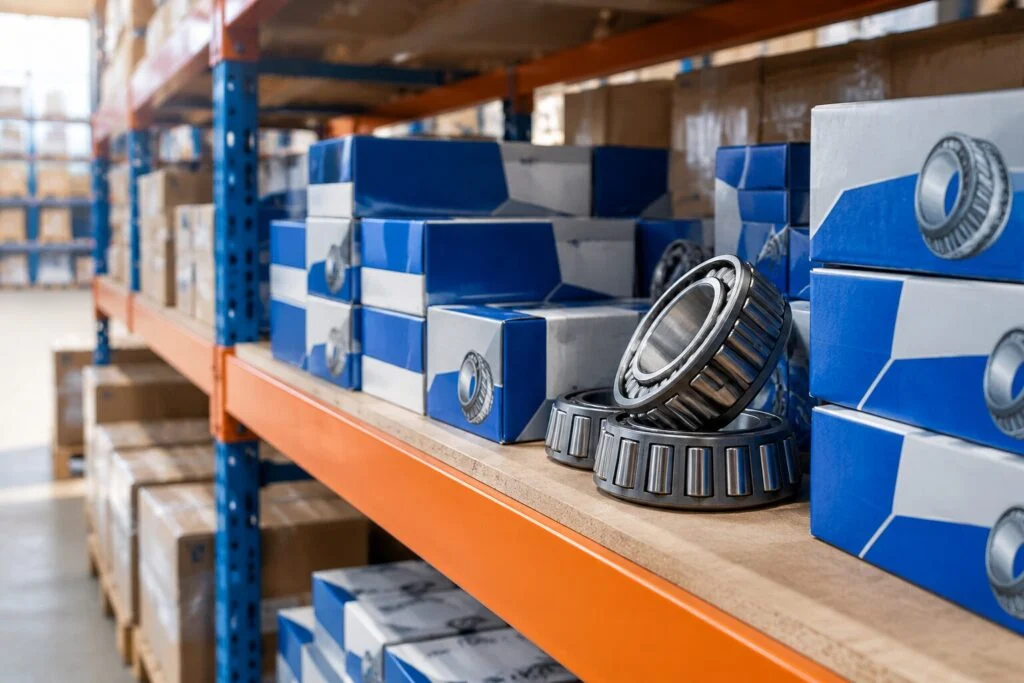
The structural difference defines the repair workflow. A hub assembly integrates the bearing, seal, and hub into a single module. It arrives from the manufacturer with the correct preload and sealing already applied. In contrast, a press-in bearing consists of separate inner and outer races, rollers, and seals that must be installed individually into the knuckle or hub. This distinction is critical for maintenance planning. [NEED_CITE: technical specifications of integrated hub units vs tapered roller bearings]
| Feature | Hub Assembly | Press-In Bearing |
|---|---|---|
| Installation Complexity | Low (Bolt-on replacement) | High (Requires press and tools) |
| Preload Adjustment | Factory set (Non-adjustable) | Manual (Requires torque/spec check) |
| Sealing Integrity | Integrated multi-lip seal | Separate seal installation |
| Housing Risk | Minimal (No force on housing) | High (Risk of distortion during press) |
| Initial Parts Cost | Higher | Lower |
| Labor Time | Significantly reduced | Extended |
In a busy repair shop, time is inventory. Installing a press-in bearing requires cleaning the housing, checking for burrs, pressing the outer race, installing the inner race, packing grease, and setting the end play. Each step introduces a variable for error. A hub assembly simply replaces the old unit. The bolt pattern aligns, the axle slides through, and the nut is torqued. The consistency of the factory assembly ensures that every unit performs identically, removing the variability of individual mechanic skill levels. [NEED_CITE: impact of assembly precision on bearing service life]
The choice between these two formats directly influences the total cost of ownership, especially when factoring in labor and potential rework.
How Does Installation Impact Total Repair Costs?
The hidden cost of press-in bearings is not the part, but the specialized tooling and the risk of human error.
Many procurement managers look at the unit price and see savings with press-in bearings. However, this view ignores the infrastructure required to install them correctly. A proper press-in job requires a hydraulic press, specific drivers for each bearing size, and torque wrenches. If a shop lacks these tools, mechanics may resort to hammering, which damages the bearing races and the housing bore. [NEED_CITE: industry standards for bearing installation tools and methods]
Consider a repair group in Latin America managing a mixed fleet of heavy-duty trucks. They initially switched to press-in bearings to cut parts costs. Within months, their return rate spiked. The issue was not the bearing quality, but the installation. Mechanics were misaligning the bearing during the press fit, causing early spalling and seal failure. The cost of replacing the damaged hub housings and the downtime of the trucks far exceeded the savings from the cheaper bearings. They eventually switched back to hub assemblies for their high-mileage routes, stabilizing their maintenance budget.
Conversely, a well-equipped dealership with certified technicians and calibrated presses can leverage press-in bearings effectively. They have the control to ensure every bearing is seated perfectly. But for independent workshops or remote mining sites, the lack of controlled environments makes the hub assembly a safer financial bet. The "cheap" press-in job becomes expensive when you factor in the probability of a botched install. [NEED_CITE: correlation between installation method and premature bearing failure]
Knowing when to deploy each solution requires a clear understanding of the operating conditions and available resources.
When Should You Choose a Hub Assembly Over Press-In?
Select hub assemblies for harsh environments, high-mileage fleets, or shops without advanced press tooling.
The decision matrix is straightforward. If the vehicle operates in mud, dust, or water, the integrated sealing of a hub assembly offers superior protection. Press-in bearings rely on separate seals that can be damaged during installation if not handled with extreme care. In off-road applications, such as construction or agriculture, the robustness of the hub assembly prevents contaminant ingress more reliably. [NEED_CITE: sealing performance comparison in contaminated environments]
Furthermore, if your supply chain serves multiple small workshops with varying skill levels, stocking hub assemblies reduces liability. You eliminate the variable of incorrect preload adjustment. A mechanic cannot over-tighten a sealed hub assembly in the same way they can misadjust a tapered roller bearing. This standardization is crucial for maintaining fleet uptime.
However, press-in bearings remain the optimal choice for specific scenarios. Classic car restorations or specific OEM designs that do not offer a hub conversion require press-in components. Additionally, for low-volume, low-speed applications where labor cost is negligible, the lower parts cost of press-in bearings can be justified. But for modern heavy-duty logistics, the trend is decisively moving toward integrated solutions to minimize roadside failures. [NEED_CITE: market trends in heavy-duty wheel end maintenance]
Regardless of the choice, the authenticity of the component is the foundation of reliability.
How to Source Genuine Components for Both Options?
Verify traceability and cross-brand compatibility to ensure every unit meets OEM specifications.
Sourcing wheel end components requires more than just matching a part number. The market is flooded with counterfeit bearings that look identical but fail under load. Genuine components from brands like SKF, Timken, FAG, or NSK come with batch traceability and material certifications. When procuring for resale or fleet maintenance, insist on documentation that proves the origin of the steel and the manufacturing facility. [NEED_CITE: importance of supply chain traceability for bearing authenticity]
For distributors, offering a mix of both options is key. Some clients need the economy of press-in bearings for their light-duty vans, while others need the durability of hub assemblies for their dump trucks. A reliable supplier provides cross-reference data to ensure that a hub assembly from one brand can safely replace an OEM unit from another, provided the dimensions and load ratings match. This flexibility allows buyers to optimize their inventory without compromising on quality.
We support this need by maintaining a diverse stock of genuine bearings and assemblies. Our focus is on providing verified products that meet the rigorous demands of industrial and automotive applications. Whether you need a single emergency replacement or a container load for regional distribution, the priority is ensuring that every part performs as intended under pressure. [NEED_CITE: guidelines for verifying genuine bearing suppliers]
Conclusion
The right repair choice balances initial cost against long-term reliability and installation risk.
Hub assemblies offer a premium, error-proof solution for harsh conditions and less equipped shops, while press-in bearings provide a cost-effective option for well-tooled facilities handling standard applications. Evaluate your workshop’s capabilities and your fleet’s operating environment before deciding. Prioritize genuine components with full traceability to avoid the high cost of premature failure.