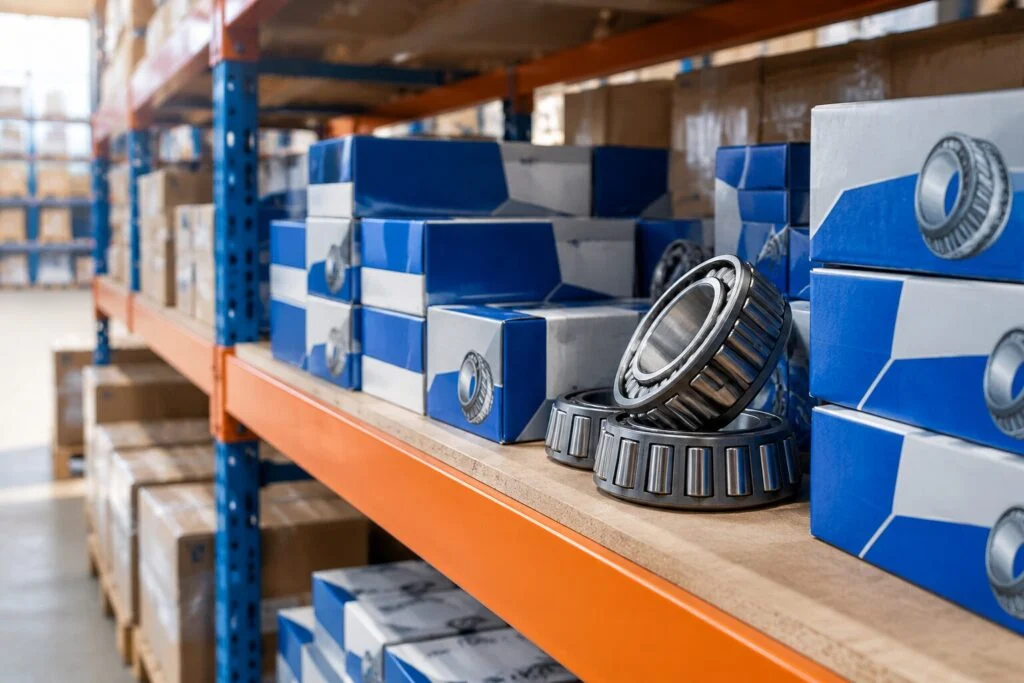
NTN Differential Bearings for Rebuilders Wholesale Supplier
Dimension match is not enough.
Rebuilders must prioritize genuine NTN differential bearings with verified internal clearance and material traceability over cheap alternatives to prevent premature differential failures. Sourcing requires strict verification of clearance specifications and batch consistency rather than relying solely on part number compatibility.
I still remember the smell of burnt gear oil in a workshop in Latin America. A local rebuilder had just finished overhauling a fleet of pickup trucks, using what he believed were cost-effective tapered roller bearings. The parts looked identical to the originals. The dimensions matched the calipers. But within twenty thousand kilometers, every single vehicle returned with severe differential noise and scoured gear teeth. The culprit was not the steel quality alone, but uncontrolled internal clearance. That failure taught me that in differential rebuilds, the devil is in the microns you cannot see with the naked eye. When sourcing NTN differential bearings for rebuilders, the focus must shift from simple availability to technical verification. [NEED_CITE: impact of internal clearance on bearing fatigue life per ISO standards]
The market is flooded with components that fit but do not function under load. For automotive aftermarket suppliers and repair groups, the reputation risk of a failed rebuild far outweighs the initial savings on substandard parts. This guide breaks down how to identify genuine components, verify critical specs, and secure a supply chain that supports high-volume rebuilding operations without compromising on reliability.
Why Internal Clearance Matters in Differential Rebuilds?
Most technicians assume that if a bearing fits the housing and shaft, it will work. This is a dangerous misconception. In differential applications, especially in heavy-duty pickups and commercial fleets, the bearing operates under complex combined loads. The internal clearance determines how the rolling elements distribute this load. If the clearance is too loose, the rollers skid rather than roll, generating heat and rapid wear. If it is too tight, the bearing overheats and seizes during thermal expansion.
Genuine NTN differential bearings for rebuilders are manufactured with precise control over this clearance, often specified as C3 or standard depending on the application. Counterfeit or low-quality alternatives often have uncontrolled clearance ranges. They might fall within the acceptable limit by chance, but more often, they sit at the extreme edges, leading to unpredictable performance. [NEED_CITE: relationship between internal clearance and operational temperature in tapered roller bearings]
Consider the case of a fleet maintenance operator in Southeast Asia. He switched from mixed-brand sourcing to a consistent batch of genuine NTN bearings. The change did not just reduce noise complaints; it significantly lowered warranty claims. The key difference was batch-to-batch consistency. Every bearing in the lot had the same internal geometry, allowing the rebuilders to set preload with confidence. Without this consistency, each rebuild becomes a gamble.
When evaluating suppliers, ask for documentation on clearance verification. A reliable supplier will not just provide a box of bearings; they will provide assurance that the internal geometry meets the manufacturer’s specifications. This is not about trusting a brand name; it is about trusting the physics of the component. For rebuilders, this means fewer comebacks and higher customer retention. The cost of a failed differential is not just the parts; it is the labor, the towing, and the lost trust of the end-user.
How to Verify Genuine NTN Bearings vs Counterfeits?
Counterfeit bearings have become sophisticated. They mimic the packaging, the laser etching, and even the weight. However, they rarely mimic the material integrity and the traceability. Verifying genuine NTN differential bearings for rebuilders requires a multi-layered approach that goes beyond visual inspection.
First, check the traceability documentation. Genuine bearings come with batch numbers that can be traced back to the manufacturing facility. This is not just a formality; it is proof of origin. If a supplier cannot provide material certificates or traceability documents for a bulk order, it is a red flag. [NEED_CITE: importance of material traceability in automotive safety components]
Second, examine the material hardness and surface finish. While you cannot perform a full metallurgical analysis in the warehouse, you can look for signs of poor manufacturing. Genuine NTN bearings have a uniform, fine surface finish on the raceways. Counterfeits often show grinding marks or inconsistent polishing. The steel used in genuine bearings is clean, with low inclusion density, which contributes to longer fatigue life. Cheap alternatives use lower-grade steel with higher impurity levels, leading to early spalling.
A workshop in Europe recently upgraded its supply chain to include only traceable NTN components. The initial cost was higher, but the reduction in premature failures was immediate. The rebuilders reported that the bearings seated better and required less adjustment during installation. This is because the dimensional tolerances were held tightly throughout the production process. For a rebuilder, time is money. A bearing that installs smoothly and performs predictably saves hours of diagnostic and rework time.
Verification also involves checking the cage construction. In tapered roller bearings, the cage holds the rollers in place. Genuine NTN cages are robust and precisely formed. Counterfeit cages may be weak or poorly welded, leading to cage failure under high RPM or shock loads. Always inspect a sample from any new batch before committing to a large order. If the cage feels flimsy or the rollers do not spin smoothly, reject the shipment.
What Specs to Compare When Sourcing Rebuilder Bearings?
When sourcing NTN differential bearings for rebuilders, a simple part number match is insufficient. You need to compare critical specifications that affect performance and longevity. The following matrix highlights the key parameters that differentiate genuine OEM-quality replacements from generic alternatives.
| Specification | Genuine NTN Standard | Generic/Counterfeit Risk | Impact on Rebuild |
|---|---|---|---|
| Internal Clearance | Controlled (e.g., C3/Standard) | Uncontrolled/Variable | Prevents premature wear and noise |
| Material Traceability | Full Batch Documentation | None or Self-reported | Ensures material integrity and safety |
| Surface Finish | Uniform, Fine Polish | Inconsistent, Grinding Marks | Reduces friction and heat generation |
| Cage Integrity | Robust, Precision Formed | Weak, Poor Welding | Prevents cage failure under load |
| Dimensional Tolerance | Tight, ISO Compliant | Loose, Variable | Ensures proper preload and fit |
This comparison shows why price alone is a poor indicator of value. A cheaper bearing may save a few dollars upfront, but the risk of uncontrolled clearance and poor material quality leads to higher long-term costs. [NEED_CITE: ISO standards for rolling bearing dimensional tolerances]
For rebuilders, the most critical spec is internal clearance. As mentioned earlier, this dictates how the bearing handles load and heat. Generic suppliers often ignore this parameter, assuming that "close enough" is acceptable. In differential applications, it is not. A bearing with excessive clearance will allow the differential carrier to move, causing gear misalignment and noise. A bearing with insufficient clearance will overheat and fail.
Another key spec is the cage design. Some applications require specific cage materials or designs to handle high speeds or heavy shocks. Genuine NTN bearings are engineered with the correct cage for each application. Generic replacements often use a one-size-fits-all approach, which may not suit the specific demands of a heavy-duty differential.
When reviewing quotes from suppliers, ask for these specific details. Do not accept vague answers like "meets OEM specs." Demand proof. Ask for the clearance class, the material certificate, and the tolerance grade. A professional supplier will have this information readily available. If they hesitate, it is likely because the product does not meet the required standards.
How to Source Reliable NTN Bearings Globally?
Sourcing genuine NTN differential bearings for rebuilders on a global scale requires a partner who understands the complexities of the aftermarket. It is not just about finding a supplier; it is about finding a consolidator who can provide mixed-brand packages with consistent quality.
Many rebuilders struggle with minimum order quantities (MOQs). Official brand channels often require large volumes that small to medium-sized workshops cannot absorb. This forces them to turn to local distributors who may not have the technical expertise to verify authenticity. A professional global supplier bridges this gap by offering flexible MOQs. You can order a single unit for an emergency repair or a full container for stock replenishment. This flexibility allows rebuilders to manage their inventory efficiently without tying up capital in excess stock.
Consolidation is another key advantage. Rebuilders often need various types of bearings for different vehicles. Sourcing each type from a different supplier is inefficient and increases shipping costs. A one-stop sourcing solution allows you to combine NTN differential bearings with other necessary components like seals, gaskets, and other bearing types from brands like SKF or TIMKEN. This simplifies logistics and reduces lead times. [NEED_CITE: benefits of supply chain consolidation for automotive aftermarket businesses]
Technical support is also crucial. A good supplier does not just ship boxes; they provide technical datasheets and cross-reference support. If you are unsure about a part number or need an equivalent model, they should be able to guide you. This support is invaluable when dealing with older vehicles or obscure models where documentation is scarce.
Consider a regional distributor in the Middle East who supplies multiple repair workshops. By partnering with a global supplier who offers genuine traceability and flexible MOQs, he was able to expand his product range without increasing his inventory risk. He could offer his customers genuine NTN bearings with confidence, knowing that every batch was verified. This improved his reputation and increased his sales volume.
Conclusion
Quality verification prevents costly failures.
Sourcing NTN differential bearings for rebuilders demands a focus on internal clearance, material traceability, and batch consistency. Avoid the trap of low-cost alternatives that compromise on these critical parameters. Partner with suppliers who offer transparent documentation and flexible sourcing options to ensure your rebuilds stand the test of time.