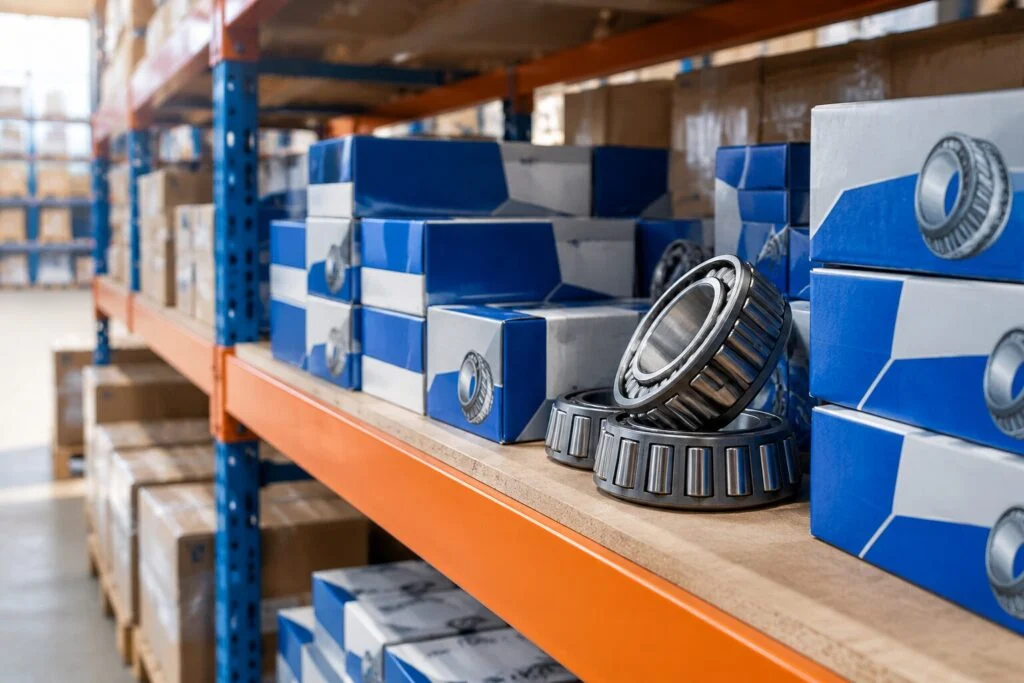
NTN Steering Column Bearings Wholesale Supplier
Matching the part number is not enough to prevent steering failure in harsh environments.
Selecting the correct NTN steering column bearings requires matching specific internal clearance codes, seal variants, and cage materials to actual operating conditions rather than relying solely on cross-reference part numbers. Genuine components with verified traceability ensure that metallurgy and sealing integrity withstand extreme dust, thermal expansion, and vibration, preventing catastrophic lock-ups in heavy-duty applications.
I still remember the heat rising off the tarmac in Lagos, watching a mining dump truck tilt precariously on a steep haul road. The driver had slammed the brakes, but the vehicle kept drifting because the steering column had seized. When we dismantled the assembly back at the workshop, the cause was immediate and frustrating. The bearing installed was not an original NTN unit. While the outer dimensions matched the housing perfectly, the internal clearance was standard, not the expanded C3 or C4 required for high-temperature mining operations. Furthermore, the seal was a basic rubber lip that had long since surrendered to the red dust, allowing abrasive particles to grind against the raceways. The cage material, likely pressed steel of inferior grade, had deformed under vibration, locking the rollers in place. That near-miss accident shifted my focus from simple parts replacement to rigorous工况 matching. Many buyers look only at the model number and price, ignoring how high dust and thermal stress demand specific seal and clearance configurations. Choosing a bearing is not about comparing static parameters; it is about ensuring the component can survive the abuse of rough terrain and extreme climates.
This guide breaks down the technical selection criteria for NTN steering column bearings, helping distributors and MRO operators avoid premature failures by prioritizing environmental compatibility over simple part number matching.
Why Do Standard Steering Bearings Fail in Heavy-Duty Applications?
Standard seals and clearances cannot withstand the extreme dust ingress and thermal expansion found in heavy-industry environments.
In commercial fleets or light agricultural use, a standard steering column bearing often performs adequately. However, in mining, construction, and heavy logistics, the operating environment introduces stressors that generic specifications cannot handle. The primary failure mode is not usually load capacity exhaustion but contamination and thermal distortion.
Dust and particulate matter are the silent killers of steering systems. In open-pit mines or unpaved construction sites, airborne dust is fine enough to penetrate inadequate seals. Once inside, these particles act as an abrasive paste between the rolling elements and raceways. This leads to rapid wear, increased friction, and eventually, seizure. Standard ZZ shields offer minimal protection against such fine contaminants, whereas specialized contact seals like 2RS or LLB types provide a physical barrier that maintains lubrication integrity. [NEED_CITE: ISO 15243 failure mode classification for contamination]
Thermal expansion is another critical factor. Steering columns generate heat through constant friction and exposure to engine bay temperatures or direct sunlight in tropical regions. If a bearing is fitted with standard internal clearance (C0), the heat causes the inner ring to expand more than the outer ring, effectively pre-loading the bearing. This unintended preload increases torque, generates more heat, and accelerates fatigue. In contrast, bearings with C3 or C4 clearance are designed to accommodate this thermal growth, maintaining smooth rotation even under high thermal loads.
Vibration from rough terrain also plays a significant role. Heavy equipment operates on uneven surfaces, subjecting the steering column to constant shock loads. Inferior cage materials can fracture or deform under these conditions, leading to roller misalignment and sudden locking. Genuine NTN bearings utilize cages made from high-grade pressed steel or machined brass, depending on the application, ensuring structural integrity under dynamic stress.
Understanding these failure mechanisms is the first step toward selecting the right component. It is not enough to buy a bearing that fits; it must be engineered to survive the specific hazards of the job site.
How to Select the Right NTN Steering Column Bearing for Your Operating Conditions?
Match clearance, seal type, and cage material to specific environmental stressors rather than just matching the OEM part number.
Selecting the appropriate NTN steering column bearings involves a three-dimensional assessment of the operating environment. This process moves beyond simple catalog lookup to a technical evaluation of clearance, sealing, and material science.
Internal clearance is the most frequently overlooked specification. For applications involving high temperatures or significant shaft-to-housing temperature differentials, such as in mining trucks or steel mill transport vehicles, C3 or C4 clearance is essential. These expanded clearances prevent thermal preload, ensuring the bearing remains free-running even when hot. For standard ambient conditions with precise mounting requirements, C0 or C2 may suffice, but erring on the side of extra clearance is often safer in unpredictable field conditions. [NEED_CITE: NTN technical catalog guidelines on internal clearance selection]
Seal type determines the bearing’s resistance to contamination. In dusty or muddy environments, non-contact seals (ZZ) are insufficient. Contact seals, such as 2RS (rubber seals on both sides) or LLB (low-torque contact seals), provide superior protection. LLB seals are particularly valuable in steering applications because they offer robust contamination exclusion while minimizing friction torque, which is critical for maintaining responsive steering feel. In extremely wet or muddy agricultural settings, additional protective shrouds or housing designs may be necessary to supplement the bearing’s inherent sealing capability.
Cage material affects durability under vibration and speed. Pressed steel cages are common and cost-effective for general applications, offering good strength and weight balance. However, in high-vibration environments or where higher speeds are involved, machined brass cages provide superior guidance and resistance to deformation. Brass cages also handle thermal stress better than steel, making them a preferred choice for heavy-duty continuous operation.
| Selection Factor | Standard Application | Harsh Environment (Mining/Construction) | Agricultural (Mud/Water) |
|---|---|---|---|
| Internal Clearance | C0 / C2 | C3 / C4 | C3 |
| Seal Type | ZZ (Shield) | 2RS / LLB (Contact Seal) | 2RS with additional housing protection |
| Cage Material | Pressed Steel | Machined Brass / High-Grade Steel | Pressed Steel (Corrosion Resistant) |
| Lubrication | Standard Grease | High-Temperature Synthetic Grease | Water-Resistant Grease |
A European wind farm operator once faced repeated steering failures in their service vehicles due to salt spray and humidity. By switching to NTN bearings with enhanced corrosion-resistant seals and appropriate clearance, they eliminated premature seizures. The key was not changing the brand, but specifying the correct variant for the coastal environment.
By aligning these technical specifications with the actual working conditions, operators can significantly extend service life and reduce unplanned downtime.
NTN vs. Alternatives: What’s the Real Difference in Harsh Conditions?
Genuine NTN offers superior metallurgy and seal integrity, preventing catastrophic steering lock-ups that cheaper alternatives cannot avoid.
The market is flooded with aftermarket bearings that claim compatibility with OEM specifications. While they may match the outer dimensions and part numbers, the internal quality often differs significantly. The difference lies in the metallurgy, manufacturing precision, and quality control processes.
Genuine NTN bearings are produced using high-purity steel with controlled inclusion levels. This results in superior fatigue life and resistance to spalling under heavy loads. Cheaper alternatives often use lower-grade steel with higher impurity levels, which act as stress concentrators, leading to early crack initiation and failure. In steering applications, where safety is paramount, this difference is critical. A failed steering bearing can lead to loss of vehicle control, posing severe risks to operators and nearby personnel.
Seal integrity is another area where genuine components excel. NTN uses proprietary rubber compounds and precise molding techniques to ensure seals maintain their shape and elasticity over time. Aftermarket seals may harden, crack, or lose tension quickly, allowing contaminants to enter. In dusty mining environments, this failure happens rapidly, turning a new bearing into a grinding mess within weeks.
Batch consistency is also a major advantage of sourcing genuine products. Large fleet operators and distributors require that every bearing in a batch performs identically. Genuine NTN production lines adhere to strict ISO standards, ensuring minimal variation in dimensions and performance. Alternative suppliers may have inconsistent quality across batches, leading to unpredictable performance and increased warranty claims. [NEED_CITE: SAE heavy-duty vehicle standards for component reliability]
A Middle East steel mill experienced a series of steering failures in their internal transport fleet after switching to a low-cost alternative supplier. The bearings looked identical but failed within months due to poor seal quality and inconsistent clearance. Switching back to genuine NTN bearings resolved the issue, restoring reliability and reducing maintenance costs.
The real cost of a cheaper alternative is not just the purchase price but the risk of failure, downtime, and potential safety incidents. Genuine NTN bearings provide the peace of mind that comes from verified quality and performance.
How to Verify Authenticity and Secure Genuine NTN Bearings?
Demand full traceability, proper packaging, and buy from verified global suppliers to ensure you receive genuine products.
Counterfeit bearings are a significant problem in the global market, particularly in regions with high demand for heavy-equipment spare parts. These fakes often mimic the packaging and branding of genuine products but lack the internal quality and performance characteristics. Verifying authenticity is crucial for protecting your equipment and reputation.
Traceability documentation is the first line of defense. Genuine NTN bearings come with complete documentation, including batch numbers, manufacturing dates, and quality certificates. This allows for full tracking from the factory to the end user. Suppliers who cannot provide this documentation should be approached with caution. Ask for proof of origin and verify the supplier’s authorization status with the manufacturer.
Packaging details also offer clues. Genuine NTN packaging is high-quality, with clear printing, correct logos, and secure sealing. Counterfeit packaging often has blurry text, misspelled words, or poor-quality materials. Inspect the bearing itself for markings. Genuine bearings have precise, laser-etched or stamped markings that are clear and uniform. Fakes may have shallow, uneven, or incorrect markings.
Buying from verified global suppliers is the safest approach. Established distributors have direct relationships with manufacturers and adhere to strict quality control processes. They can provide technical support, ensuring you select the right bearing for your application. They also offer flexible MOQs and consolidation services, making it easier to source mixed-brand orders for large projects.
By prioritizing traceability and sourcing from reputable partners, you can ensure that every NTN steering column bearing you install is genuine, reliable, and fit for purpose.
Conclusion
Selecting the right bearing is a technical decision, not just a purchasing transaction.
Avoiding steering failure in heavy-duty applications requires matching NTN steering column bearings to specific environmental conditions through careful selection of clearance, seals, and cage materials. Genuine components with verified traceability provide the reliability needed to keep operations running safely and efficiently. Prioritize technical compatibility and authentic sourcing over simple part number matching to ensure long-term performance.