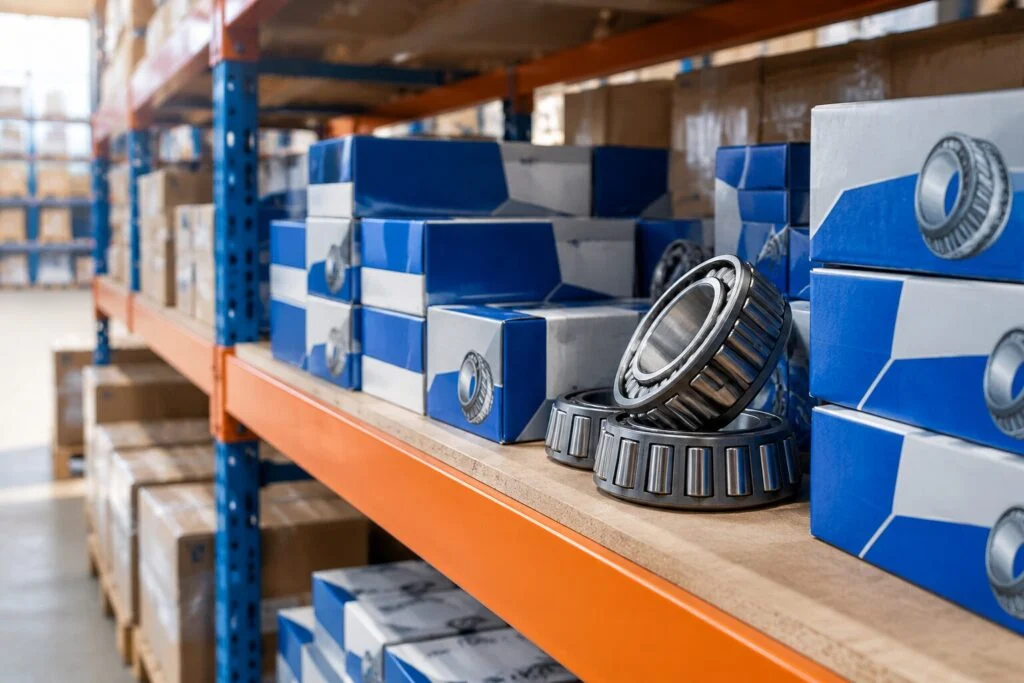
NTN Wheel Bearing Kits with ABS Sensors Wholesale Supplier
A silent bearing does not guarantee a working ABS system.
Selecting genuine NTN wheel bearing kits with ABS sensors requires verifying magnetic encoder teeth count and signal type compatibility, not just bearing clearance, to prevent immediate ABS fault lights and ensure direct fitment for automotive aftermarket distributors.
I still remember the humidity of the Las Vegas Convention Center during the AAPEX show. A buyer from a large North American repair group approached my booth, holding a sample hub assembly. He needed a reliable source for replacement parts. I focused entirely on the bearing itself, discussing radial clearance and noise levels, confident that the smooth rotation would impress him. I handed over a quote for what I believed was a premium product. Weeks later, the email arrived. The samples had failed installation. Not because the bearing seized or made noise, but because the ABS warning light flashed incessantly on every test vehicle. The issue was not the steel quality or the grease; it was a mismatch in the magnetic encoder ring integrated into the seal. The tooth count did not match the vehicle’s sensor reading frequency. That rejection cost me more than just the sample fee; it cost me credibility. Since then, my approach to sourcing an NTN wheel bearing supplier has shifted fundamentally. I no longer start with silence tests. I start with the encoder.
This experience highlights a critical gap in the aftermarket supply chain. Many distributors treat the ABS sensor as an accessory, when in reality, it is an integral part of the safety system. When you source an NTN ABS sensor wheel bearing kit, you are buying a mechatronic unit, not just a mechanical component. The precision of the magnetic encoding matters as much as the hardness of the raceways.
Why Do ABS Fault Lights Flash After Bearing Replacement?
The most common cause of post-replacement ABS faults is a mismatch in magnetic encoder teeth count, not bearing failure.
When a wheel bearing is replaced, the expectation is that the vehicle returns to normal operation. However, modern vehicles rely on precise data from the wheel speed sensor. This data is generated by a magnetic encoder ring, often integrated into the bearing seal or hub. If the new kit has a different number of magnetic poles or teeth than the original equipment manufacturer (OEM) specification, the ABS control module receives an erroneous signal frequency. [NEED_CITE: relationship between encoder pole count and ABS signal frequency]
In my early days, I assumed all bearings for a specific car model were interchangeable. They are not. A slight variation in the encoder design can cause the ABS module to interpret the wheel as locking up or spinning too fast, triggering the warning light. This is not a defect in the bearing’s load-carrying capacity; it is a specification error.
Consider a case involving a European fleet operator. They switched to a cheaper alternative supplier for their van fleet. The bearings ran smoothly for months, but the ABS lights began flickering intermittently during cold starts. The root cause was traced to the magnetic material’s coercivity, which changed with temperature, altering the signal strength. By contrast, genuine kits maintain consistent magnetic properties across operating temperatures. When you buy genuine NTN hub bearing with ABS, you are ensuring that the magnetic encoder meets the strict thermal and dimensional tolerances required by the vehicle’s computer.
To avoid this, verify the part number against the OEM catalog specifically for the ABS variant. Do not rely on visual similarity. The external dimensions may be identical, but the internal encoder configuration can differ between production batches or vehicle trim levels.
How to Verify Active vs. Passive ABS Sensors?
Use a multimeter or oscilloscope to confirm whether the sensor requires power (active) or generates its own voltage (passive) before installation.
Not all ABS sensors work the same way. Passive sensors generate an alternating current (AC) voltage as the magnetic encoder passes by. They are simple, robust, and do not require external power. Active sensors, however, require a power supply from the vehicle’s ECU and output a digital square wave signal. They are more accurate at low speeds but are sensitive to wiring issues and polarity. [NEED_CITE: difference between active and passive ABS sensor signal types]
Mixing these types is a frequent error in the aftermarket. Installing a passive sensor kit on a vehicle designed for an active sensor will result in no signal at all. Conversely, installing an active kit where a passive one is expected can damage the vehicle’s wiring harness or the sensor itself.
I once assisted a distributor in Southeast Asia who received a complaint about a batch of hubs. The mechanics claimed the parts were dead on arrival. Upon inspection, we found that the vehicle required an active sensor, but the kit supplied had a passive encoder interface. The mechanics had connected it, expecting a voltage spike, but received nothing. The solution was not a refund, but a correct cross-reference.
When evaluating an NTN ABS sensor wheel bearing kit, check the technical datasheet for the signal type. If documentation is unavailable, a simple resistance test can help. Passive sensors typically show a specific resistance range (often between 1000 and 2000 ohms, though this varies), while active sensors may show open circuit or very high resistance on the signal pins because they contain semiconductor components. [NEED_CITE: standard resistance ranges for passive wheel speed sensors] Always confirm this with the vehicle’s service manual.
Ensuring signal compatibility prevents diagnostic headaches. It transforms a potential warranty claim into a successful repair. For distributors, this means maintaining accurate databases that distinguish between active and passive applications for each vehicle model.
What Are the Key Specs for NTN Hub Bearing Kits?
Compare encoder teeth count, signal output type, and bearing clearance in a structured matrix to ensure direct fitment.
Selecting the right kit involves more than matching the bolt pattern. It requires a holistic view of the assembly. Below is a comparison framework that helps identify the critical differences between generic replacements and genuine engineered solutions.
| Specification | Generic Aftermarket Kit | Genuine NTN Kit | Impact on Performance |
|---|---|---|---|
| Magnetic Encoder Teeth Count | Often unspecified or approximate | Exact match to OEM specification | Prevents ABS fault codes and ensures accurate speed reading |
| Signal Type Compatibility | May not distinguish active/passive | Clearly defined for specific vehicle applications | Avoids electrical mismatches and sensor damage |
| Bearing Clearance Class | Standard C3 only | Available in C3, C4, or specific OEM grades | Ensures proper thermal expansion and lifecycle under load |
| Seal Integration | Separate or loosely fitted | Integrated with precise encoder alignment | Prevents contamination and maintains signal integrity |
| Traceability Documentation | Limited or none | Full batch traceability available | Facilitates warranty claims and quality audits |
[NEED_CITE: importance of bearing clearance classes for automotive applications]
The table above illustrates why price alone is a poor indicator of value. A generic kit might save money upfront, but the risk of ABS faults increases significantly. The "Impact on Performance" column highlights that the encoder precision is as vital as the bearing steel.
A Middle East automotive parts wholesaler shared his experience with us. He noticed that returns for ABS-related issues dropped noticeably after switching to verified kits with documented encoder specs. His mechanics spent less time diagnosing false faults and more time completing repairs. This efficiency gain outweighed the slight increase in unit cost.
When you source from an NTN wheel bearing supplier, demand this level of detail. Ask for the specific encoder tooth count if it is not listed in the catalog. Verify that the clearance class matches the vehicle’s operating environment. High-performance or heavy-load applications may require different clearance than standard passenger cars.
This structured approach minimizes guesswork. It ensures that every kit leaving your warehouse is ready for direct installation, reducing the likelihood of comebacks.
How to Source Genuine NTN Kits to Avoid Claims?
Demand traceability documents and verify part numbers against OEM catalogs to ensure authenticity and fitment.
Counterfeit and mislabeled bearings are prevalent in the global market. A box labeled with a premium brand may contain a substandard product. To protect your business and your customers, verification is essential. Genuine products come with complete traceability documentation, including batch numbers and manufacturing dates. [NEED_CITE: standards for bearing traceability and anti-counterfeiting]
I recall a shipment destined for a South American mining region. The packaging looked perfect, but the bearing seals felt slightly different. A quick check of the batch number against the manufacturer’s database revealed a discrepancy. The goods were rejected before they reached the end user. This vigilance saved the distributor from a massive liability claim.
When working with an NTN wheel bearing supplier, establish a protocol for verification. Request certificates of origin and quality assurance documents for each batch. Cross-reference the part numbers with the official OEM catalogs, not just generic cross-reference lists. Generic lists often miss subtle variations in ABS sensor integration.
Furthermore, consider the supply chain’s transparency. A reliable partner will provide mixed-batch consolidation options, allowing you to order various sizes and types in a single container. This reduces logistics costs and simplifies inventory management. They should also offer technical support for complex fitment questions, helping you resolve issues before they become claims.
Sourcing is not just about buying; it is about risk management. By prioritizing traceability and technical accuracy, you build a reputation for reliability. Your customers will trust that every NTN ABS sensor wheel bearing kit you supply will perform as expected, keeping their vehicles safe and their workshops efficient.
Conclusion
Precision in the encoder is as critical as precision in the bearing.
Sourcing wheel bearing kits with ABS sensors requires a shift from mechanical-only thinking to mechatronic awareness. Verifying magnetic encoder teeth, signal types, and traceability prevents costly ABS faults and warranty claims. Partnering with a knowledgeable NTN wheel bearing supplier ensures that every kit meets the rigorous demands of modern automotive safety systems.