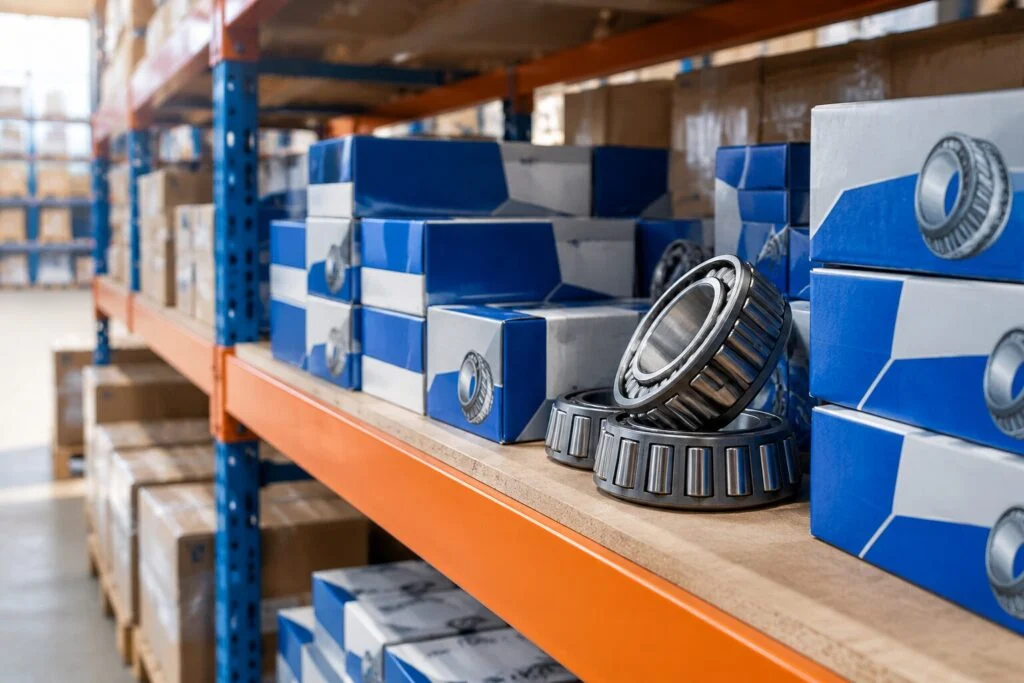
Wheel Bearing Kit Equivalents for Ford: Wholesale Supplier
Matching part numbers is not enough.
True equivalents for Ford wheel bearing kits require matching application conditions such as load, speed, and clearance rather than just physical dimensions. A direct dimensional match without considering environmental factors like tropical heat or heavy shock loads often leads to premature failure, regardless of the brand reputation.
I learned this the hard way in Ho Chi Minh City. I once supplied a local auto parts wholesaler with a domestic alternative for Ford wheel bearing kits to help them cut costs. The dimensions were perfect. The price was right. But I ignored the specific clearance requirements for the tropical climate. Months later, those hubs seized up under heavy loads. The returns were massive, and the account was lost. That failure taught me that cross-brand equivalents are not just about matching metal to metal; it is about matching the component to its operating reality. Now, when buyers ask for SKF or Timken replacements, I do not just quote prices. I check the load, speed, and operating environment first. A cheap part that fails in six months costs more than a genuine one. This guide explains how to select reliable Ford wheel bearing kit equivalents by focusing on technical specifications rather than just part numbers.
Selecting the right Ford wheel bearing kit equivalents starts with understanding why standard replacements fail in the field. Most failures occur not because the bearing is defective, but because it is mismatched to the environment.
Why Do Ford Wheel Bearing Equivalents Fail in the Field?
Dimensional match is useless without environmental and load matching.
Many distributors assume that if a bearing fits the hub, it will work. This is a dangerous assumption. In tropical climates or heavy-duty applications, the internal clearance of the bearing is critical. Standard bearings often come with C2 or normal clearance. In high ambient temperatures, the metal expands. If the initial clearance is too tight, the expansion eliminates the running gap, leading to friction, heat buildup, and eventual seizure.
I have seen this happen repeatedly with fleet operators in Southeast Asia. They switched to cheaper aftermarket kits that matched the OEM dimensions perfectly. However, these kits used standard clearance bearings. Under the combined stress of high humidity, high temperature, and heavy cargo loads, the bearings failed within months. The root cause was not material quality alone, but the lack of appropriate internal clearance [NEED_CITE: impact of thermal expansion on bearing clearance in high ambient temperatures].
For wholesalers supplying regions with extreme weather, offering Ford wheel bearing kit equivalents with C3 or C4 clearance is not an upsell; it is a necessity. These clearance classes provide the extra space needed for thermal expansion. Ignoring this specification turns a cost-saving measure into a liability. When sourcing alternatives, always verify the clearance class specified in the OEM service manual for the specific vehicle model and region. If the original equipment calls for C3, do not substitute with a standard clearance bearing, even if the brand is reputable.
How to Cross-Reference SKF and Timken for Ford Accurately?
Compare dynamic load ratings and clearance classes, not just part numbers.
SKF and Timken are the gold standards in the industry. Their part numbers are often used as the baseline for cross-referencing. However, a direct part number swap does not guarantee equivalent performance. The key lies in the technical specifications behind the number.
When evaluating Ford wheel bearing kit equivalents, you must look at the dynamic load rating (C) and the static load rating (Co). These values determine how much load the bearing can handle before fatigue sets in. Aftermarket brands may match the dimensions but fall short on load capacity. This discrepancy becomes apparent in heavy-duty applications, such as off-road repairs or commercial fleet maintenance.
| Specification | Premium Brand (SKF/Timken) | Generic Aftermarket | High-Quality Equivalent |
|---|---|---|---|
| Dynamic Load Rating | Certified per ISO standards | Often unverified | Verified per ISO standards |
| Internal Clearance | Clearly marked (C3/C4) | Often unspecified | Clearly marked (C3/C4) |
| Seal Material | Viton or High-grade NBR | Standard NBR | Viton or High-grade NBR |
| Traceability | Full batch traceability | Limited or none | Full batch traceability |
A US buyer once asked for a direct replacement for a Timken kit used in heavy trucks. The generic option was thirty percent cheaper. However, upon reviewing the datasheets, the dynamic load rating was significantly lower. For light passenger cars, this might be acceptable. For heavy trucks, it was a risk. We recommended a verified equivalent from a reputable Chinese manufacturer that matched the load ratings and offered full traceability. The client accepted the slightly higher cost over the generic option, avoiding potential warranty claims.
Cross-referencing requires access to detailed technical data. Suppliers who cannot provide load ratings or clearance specifications should be avoided. Reliable Ford wheel bearing kit equivalents come with documentation that allows you to verify these parameters against the OEM requirements [NEED_CITE: ISO standards for bearing load ratings and classification].
What Specifications Matter for Tropical and Heavy-Duty Use?
C3/C4 clearances and high-temp seals are mandatory for hot climates.
In regions like the Middle East, Africa, and Southeast Asia, the operating environment is harsh. High ambient temperatures combine with heavy loads to create extreme conditions for wheel bearings. Standard specifications are insufficient here.
The first critical specification is internal clearance. As mentioned, C3 and C4 clearances are essential. C3 provides a greater radial internal clearance than normal, while C4 offers even more. These classes prevent the bearing from binding as it heats up during operation. For heavy-duty Ford vehicles operating in these regions, specifying Ford wheel bearing kit equivalents with C3 clearance is the minimum requirement.
The second critical specification is the seal material. Standard nitrile rubber (NBR) seals can harden and crack in high temperatures, allowing contaminants to enter the bearing. Viton seals, on the other hand, maintain their elasticity and sealing properties at higher temperatures. They also offer better resistance to chemicals and oils. When sourcing kits for tropical markets, always check if the seal material is Viton or a high-grade NBR compound designed for high-temperature use.
Off-road repair shops face another challenge: shock loads. In these cases, the hardness of the roller elements matters. Bearings made from high-purity steel with controlled heat treatment offer better resistance to shock and fatigue. While exact material compositions are proprietary, reputable manufacturers will provide information on the steel grade and heat treatment process [NEED_CITE: automotive industry standards for bearing material hardness and durability].
For mixed-batch wholesalers, urgency often drives decisions. However, rushing to buy the cheapest available stock without verifying these specifications leads to higher return rates. Investing time in verifying clearance and seal materials ensures that the Ford wheel bearing kit equivalents you supply will perform reliably in the field.
How to Verify Quality When Sourcing Aftermarket Kits?
Demand traceability docs and ISO compliance from suppliers.
Quality verification is not just about inspecting the physical product. It is about verifying the supply chain and manufacturing standards. Counterfeit and substandard bearings flood the market, making due diligence essential.
The first step is to request traceability documentation. Reputable suppliers can provide batch numbers that link the bearing back to the production date and factory. This traceability is crucial for warranty claims and quality control. If a supplier cannot provide this information, it is a red flag. Genuine products from brands like SKF, FAG, INA, NSK, NTN, TIMKEN, KOYO, NACHI, IKO, and reliable domestic lines like ZWZ, HRB, and LYC come with full traceability.
Second, check for ISO compliance. Bearings should be manufactured according to ISO standards for dimensions, tolerances, and testing. Ask for certificates of conformity or test reports. These documents verify that the bearings meet the required specifications for load, speed, and precision [NEED_CITE: ISO bearing standards for quality assurance and testing].
Third, consider the supplier’s inventory and sourcing capabilities. A professional global supplier with massive spot inventory can offer mixed-brand, mixed-size bearing packages. This flexibility is vital for wholesalers who need to fulfill diverse orders quickly. The ability to consolidate shipments from multiple brands reduces logistics costs and lead times.
I once worked with a European wind farm operator who needed urgent replacements for a specific bearing type. The official channel had a long lead time. We sourced a verified equivalent from our stock, providing all necessary documentation and technical support. The parts were installed successfully, minimizing downtime. This experience highlighted the value of having a supplier who understands both technical requirements and logistical urgency.
When evaluating Ford wheel bearing kit equivalents, look for suppliers who offer technical selection support. They should be able to advise on the right clearance, seal material, and load rating for your specific application. This expertise adds value beyond the product itself, helping you avoid costly mistakes.
Conclusion
Reliability comes from specification matching, not just brand names.
Choosing the right Ford wheel bearing kit equivalents requires a deep understanding of application conditions. Dimensions are only the starting point. Load ratings, internal clearance, and seal materials determine whether a bearing will survive in tropical heat or under heavy shock loads. By focusing on these technical details and demanding traceability from suppliers, wholesalers and repair shops can avoid premature failures and build trust with their customers. A well-selected equivalent performs as well as the premium original, offering a cost-effective solution without compromising on safety or durability.