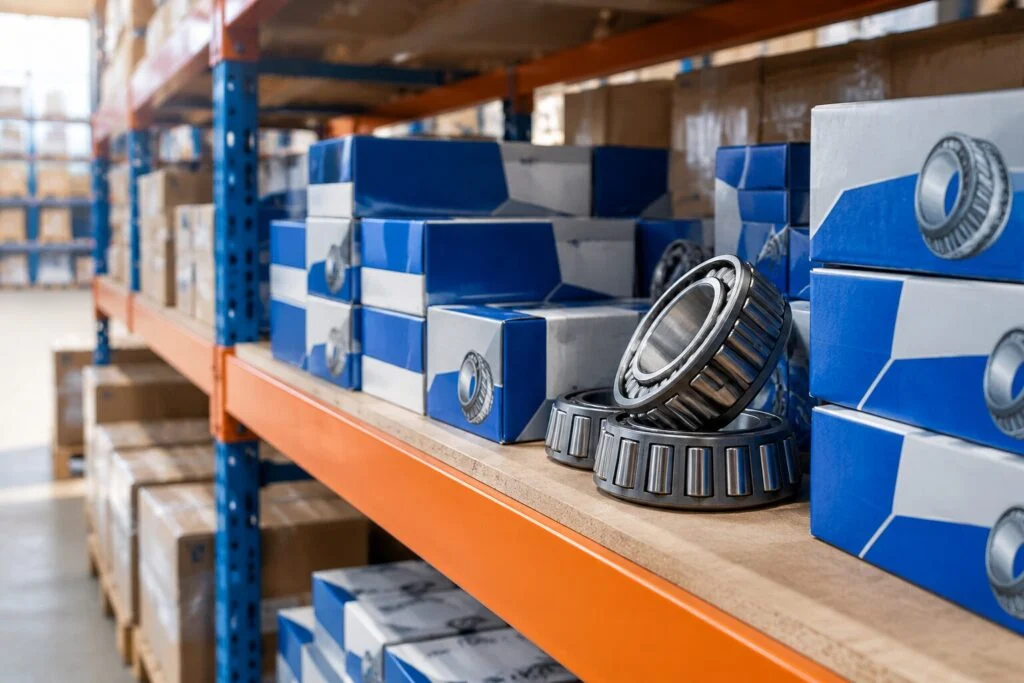
CV Axle Program for Garage Chain: Wholesale Supplier
Most CV axle failures are not caused by broken shafts, but by crushed bearings inside the tripod joint.
A successful CV axle program for garage chain operations relies on strict tolerance matching and genuine multi-brand sourcing to prevent premature failures in harsh road conditions. Distributors who prioritize micron-level clearance verification over lowest-unit-cost purchasing see a noticeable drop in warranty claims and higher customer retention across emerging markets.
In Lagos, mechanics know that a clicking sound from the undercarriage usually means the internal bearing has disintegrated, not that the steel shaft has snapped. I have seen batches of aftermarket parts fail before reaching twenty thousand kilometers because the internal clearance was incorrect for the local terrain. The vibration from unpaved roads amplifies even minor tolerance deviations, leading to rapid wear of the tripod joint. This is why a robust CV axle program for garage chain procurement must focus on the quality of the internal components, specifically the wheel and universal joint bearings, rather than just the external housing.
Transitioning from single-part purchasing to a verified bearing and joint kit strategy requires a deep understanding of how tolerance affects longevity. Let us explore why standard sourcing models fail in these environments and how to build a resilient supply structure.
Why Do CV Axles Fail Prematurely in Emerging Markets?
Harsh roads and poor tolerance matching destroy tripod joints, not just the shafts.
The prevailing assumption in many distribution channels is that CV axle failure is primarily due to material fatigue or impact damage to the shaft itself. However, field data suggests that the root cause is often the degradation of the internal bearings due to incorrect clearance settings. [NEED_CITE: common failure modes in automotive drivetrain components per ISO 15243] When a vehicle operates on rough terrain, the suspension undergoes constant vertical movement. If the bearing inside the tripod joint has excessive clearance, the rollers or balls slam against the raceway with every bump. This impact loading causes brinelling and spalling long before the shaft reaches its fatigue limit.
I recall a specific case in West Africa where a repair shop chain experienced a high rate of returns on a new batch of axles. The customers reported noise and vibration after only a few months of use. Upon inspection, we found that the internal bearings were not matched to the joint housing tolerances. The clearance was too loose for the heavy-duty application, allowing the joint to wobble under load. This microscopic movement generated heat and wear particles, which eventually seized the joint. A well-structured CV axle program for garage chain must account for these dynamic loads by specifying bearings with precise internal clearance classes, such as C3 or C4, depending on the operating temperature and load profile.
Another critical factor is the quality of the steel used in the bearings. Substandard materials with high inclusion density are prone to early fatigue crack initiation. In contrast, genuine bearings from premium brands undergo rigorous cleaning and heat treatment processes that enhance their durability. [NEED_CITE: effect of steel cleanliness on bearing fatigue life] When sourcing for a CV axle program for garage chain, it is essential to verify the origin of the bearings. Mixing genuine premium brands with unverified generic parts can lead to inconsistent performance, undermining the reliability of the entire product line.
To mitigate these risks, distributors should implement a testing protocol that includes checking the rotational torque and axial play of the assembled joint. This simple check can reveal tolerance mismatches before the product reaches the end user. By focusing on the internal components, a CV axle program for garage chain can significantly reduce failure rates and improve brand reputation in competitive markets.
How to Build a Reliable CV Axle Sourcing Program?
Shift from single-part purchasing to tolerance-verified bearing and joint kits.
Building a reliable supply chain for CV axles requires moving beyond the traditional model of buying individual components from multiple vendors. Instead, distributors should adopt a holistic approach that integrates bearing selection with joint assembly verification. This ensures that all parts work together seamlessly, reducing the risk of compatibility issues. A comprehensive CV axle program for garage chain involves selecting suppliers who can provide complete kits with traceable documentation for each component.
The first step is to establish clear technical specifications for the bearings. This includes defining the required precision class, internal clearance, and cage material. For example, in high-load applications, polymer cages may offer better performance than steel cages due to their lower weight and improved lubrication retention. [NEED_CITE: advantages of polymer cages in automotive bearings] Suppliers who can provide detailed technical datasheets and certification documents are preferable, as they demonstrate a commitment to quality and transparency.
Next, implement a supplier audit process that focuses on quality control capabilities. Visit the manufacturing facilities or request third-party audit reports to verify that the supplier adheres to international standards. Look for evidence of statistical process control (SPC) in their production lines, which indicates a consistent output quality. A reliable CV axle program for garage chain partner will be open to sharing this information and working collaboratively to address any quality concerns.
It is also important to consider the logistics and inventory management aspects of the program. Maintaining a balanced stock of high-turnover items while minimizing excess inventory requires accurate demand forecasting. Use historical sales data and market trends to predict future needs, and adjust orders accordingly. Collaborating with a supplier who offers flexible minimum order quantities and fast lead times can help optimize inventory levels and reduce holding costs.
Finally, establish a feedback loop with your customers to monitor product performance in the field. Collect data on failure rates, common issues, and customer satisfaction. Use this information to refine your sourcing criteria and improve the overall quality of your CV axle program for garage chain. Continuous improvement is key to maintaining a competitive edge in the automotive aftermarket.
What Are the Benefits of Multi-Brand Consolidation?
Balancing premium and cost-effective genuine brands optimizes margins and availability.
Sourcing from a single brand can limit flexibility and increase dependency on one supplier. Multi-brand consolidation allows distributors to offer a wider range of products at different price points, catering to diverse customer needs. By combining premium brands like SKF, FAG, and TIMKEN with reliable domestic lines, a CV axle program for garage chain can achieve a balance between quality and cost.
One major benefit is risk mitigation. If one brand faces supply chain disruptions, others can fill the gap, ensuring continuous availability for your customers. This resilience is crucial in volatile markets where demand can fluctuate rapidly. Additionally, multi-brand sourcing provides leverage in negotiations, as you are not locked into a single supplier’s pricing structure.
From a technical perspective, different brands may excel in specific areas. For instance, one brand might offer superior performance in high-temperature environments, while another provides better value for standard applications. By understanding these strengths, you can curate a product mix that maximizes performance and profitability. A well-managed CV axle program for garage chain leverages this diversity to meet specific application requirements without compromising on quality.
Traceability is another critical advantage. Reputable multi-brand suppliers provide full documentation for each batch, including certificates of origin and material test reports. This transparency builds trust with customers and protects against counterfeit products. In regions where fake parts are prevalent, having verifiable proof of authenticity is a significant competitive advantage.
| Feature | Single-Brand Sourcing | Multi-Brand Consolidation |
|---|---|---|
| Supply Risk | High dependency on one source | Diversified risk across multiple brands |
| Price Flexibility | Limited negotiation power | Competitive pricing through brand mixing |
| Product Range | Restricted to one brand’s portfolio | Wide variety of specs and price points |
| Traceability | Consistent but limited scope | Comprehensive with batch-level docs |
| Technical Support | Brand-specific expertise | Cross-brand equivalent consultation |
Implementing a multi-brand strategy requires careful management to ensure consistency in quality and service. Work with a supplier who has established relationships with multiple manufacturers and can provide unified logistics and support. This simplifies the procurement process and reduces administrative overhead for your CV axle program for garage chain.
How to Ensure Quality and Traceability?
Implementing strict supplier audits and batch documentation prevents counterfeit losses.
Quality assurance is the cornerstone of any successful distribution business. Without rigorous controls, even the best-sourced products can fail due to handling errors or counterfeit infiltration. A robust CV axle program for garage chain must include systematic checks at every stage of the supply chain, from manufacturing to delivery.
Start by requiring full traceability documentation for every shipment. This includes batch numbers, manufacturing dates, and inspection certificates. These documents allow you to track the history of each product and identify any potential issues quickly. In case of a failure, you can pinpoint the specific batch and take corrective action, minimizing the impact on your customers.
Conduct regular supplier audits to verify compliance with quality standards. These audits should cover production processes, quality control procedures, and storage conditions. Look for suppliers who invest in advanced testing equipment, such as coordinate measuring machines (CMM) and hardness testers. [NEED_CITE: importance of dimensional accuracy in bearing performance] Their ability to measure and verify critical parameters demonstrates a commitment to precision.
Counterfeit prevention is another critical aspect. Fake bearings often look identical to genuine ones but lack the necessary material properties and precision. Train your staff to recognize signs of counterfeiting, such as poor packaging, misspelled labels, or inconsistent finishing. Use authentication tools provided by brands, such as holograms or QR codes, to verify product authenticity. A diligent CV axle program for garage chain prioritizes these measures to protect its reputation and customer trust.
Finally, establish a clear return and warranty policy that holds suppliers accountable for quality issues. This encourages them to maintain high standards and provides a safety net for your business. By enforcing strict quality controls and maintaining transparent relationships with suppliers, you can build a CV axle program for garage chain that delivers consistent value and reliability.
Conclusion
Precision in tolerance and authenticity in sourcing define the longevity of CV axles in tough conditions.
A successful CV axle program for garage chain hinges on understanding that internal bearing quality matters more than external appearance. By prioritizing tolerance verification, leveraging multi-brand consolidation, and enforcing strict traceability, distributors can reduce warranty claims and build lasting trust with repair shops. Focus on the details that prevent premature failure, and your supply chain will become a reliable asset in any market.