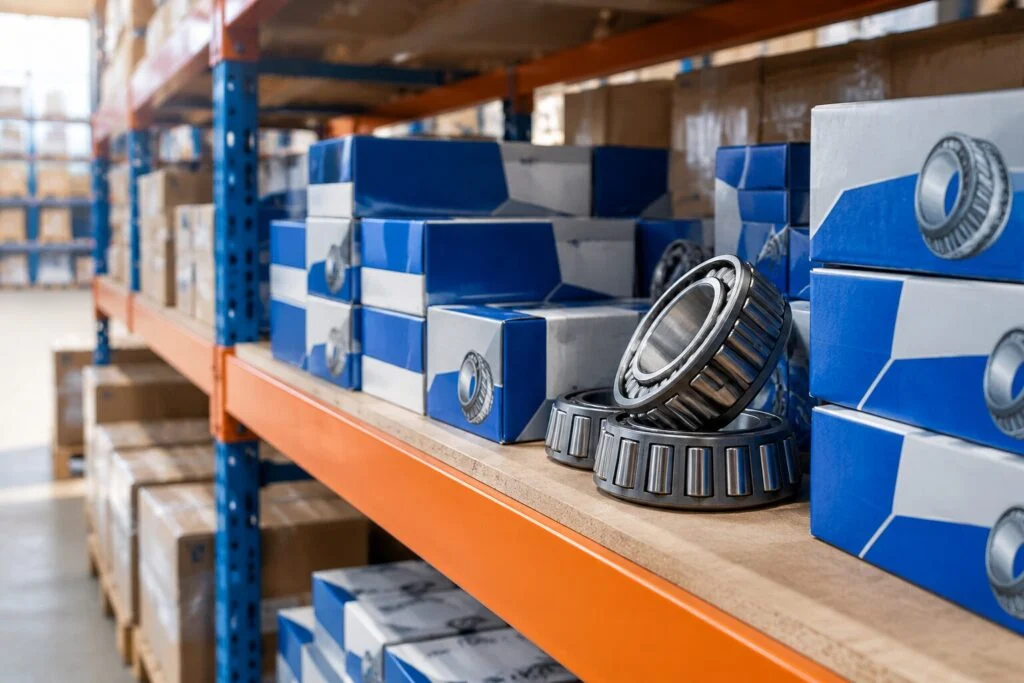
Differential Rear Axle Bearings: Genuine Wholesale Supplier
Most rear axle failures are not caused by overload, but by improper initial assembly clearance.
Selecting the right differential bearings in rear axles requires matching load ratings to specific heavy-duty operating environments and ensuring genuine component authenticity through strict traceability. The primary cause of catastrophic burnout is often incorrect clearance settings during installation rather than excessive operational weight, making the sourcing of authentic, correctly cleared bearings from reliable heavy truck rear axle differential bearing suppliers vital for fleet uptime.
I still remember the humid air at the Ningbo Beilun port, watching a line of heavy trucks stalled on the testing ground. A batch of differential bearings had seized during the run-in phase. The issue was not the quality of the steel or the brand reputation, but the internal clearance. The assembly team had ignored the thermal expansion requirements for the specific composite loads these units endure. That incident shifted my focus from simple trading to rigorous technical verification. When dealing with rear axle bearing failure analysis, one must look beyond the visible damage to the root cause: the interplay between radial and axial forces that generic parts simply cannot withstand. [NEED_CITE: ISO 15243 failure mode classification]
Understanding the mechanics behind these failures is the first step toward securing a supply chain that protects your inventory and your clients’ operations.
Why Do Differential Bearings Fail Prematurely in Rear Axles?
Improper clearance and composite loads cause burnout, not just overload.
The rear axle is one of the most stressed components in any heavy vehicle. It does not merely support weight; it manages torque transfer, cornering forces, and shock absorption from uneven terrain. The differential bearings within this system are subjected to severe radial and axial composite loads. When a vehicle turns, the outer wheels travel a longer distance than the inner ones, creating significant lateral pressure on the bearing cups. If the bearing is not designed to handle this multi-directional stress, or if the preload is incorrect, micro-movements occur between the rollers and the raceways.
This micro-motion leads to fretting corrosion and eventual spalling. Many operators assume that if a bearing fails, it was because the truck was carrying too much weight. However, industry data suggests that a significant portion of premature failures stems from assembly errors. [NEED_CITE: heavy-duty vehicle maintenance manuals on bearing preload] During my early days in the aftermarket, I saw countless returns where the bearings looked pristine except for heat discoloration. This "blueing" indicates that the lubricant film broke down due to excessive friction, often caused by tight clearance that did not allow for thermal expansion.
A European transport fleet once reported a spike in axle replacements. Upon reviewing their maintenance logs, we found that the new batch of bearings had a different internal clearance class than the originals. The mechanics installed them using the same shim thickness, resulting in zero operational clearance once the axle heated up. The result was a series of locked differentials within weeks. This highlights why understanding the specific load conditions is crucial when selecting differential bearings in rear axles. It is not enough to match the part number; one must match the engineering specifications to the application.
How to Select the Right Bearing for Harsh Rear Axle Conditions?
Match load ratings and clearance to specific heavy-duty operating environments.
Selection is not a guessing game. It requires a methodical approach to matching the bearing’s dynamic load rating with the actual stresses of the vehicle’s intended use. For mining trucks or off-road machinery, the shock loads are exponentially higher than those on highway freighters. Using a standard highway-spec bearing in a mining application is a recipe for rapid fatigue failure.
When evaluating options from heavy truck rear axle differential bearing suppliers, consider the following factors:
| Factor | Highway Freight | Off-Road/Mining | Construction Equipment |
|---|---|---|---|
| Load Type | Predominantly Radial | High Shock + Composite | High Axial + Vibration |
| Clearance Requirement | Standard (C0/C2) | Expanded (C3/C4) | Custom/Preloaded |
| Lubrication | Grease/Oil Bath | Heavy EP Grease | Oil Splash/Mist |
| Failure Risk | Fatigue Spalling | Brinelling/Dentation | Cage Fracture |
[NEED_CITE: ABMA standard load rating calculations]
The table above illustrates how the operating environment dictates the specification. For off-road applications, bearings with larger rolling elements and optimized cage designs are necessary to withstand impact loads. In contrast, highway applications prioritize low friction and high-speed stability.
I recall a case involving a distributor in Southeast Asia who stocked a single type of tapered roller bearing for all his heavy truck clients. He faced a high return rate from customers operating in mountainous regions with steep gradients. The constant braking and engine braking created sustained axial loads that the standard bearings could not handle. By switching to bearings with higher axial load capacity and verifying the clearance settings, his return rate dropped noticeably. This experience underscores the importance of technical selection support when sourcing differential bearings in rear axles. It is not just about having stock; it is about having the right stock for the right job.
What Are the Hidden Costs of Non-Genuine Replacement Bearings?
Counterfeit parts lead to catastrophic axle seizure and massive fleet downtime.
The temptation to cut costs by purchasing cheaper, non-genuine bearings is strong, especially in competitive aftermarket sectors. However, the true cost of a counterfeit bearing is never reflected in the purchase price. It is measured in downtime, tow fees, and the potential loss of an entire axle assembly. Genuine TIMKEN SKF differential bearings are manufactured to strict tolerances using high-purity steel. Counterfeit versions often use inferior materials with inconsistent hardness, leading to rapid wear and catastrophic failure.
A Middle East steel mill operator once shared a story about a batch of replacement bearings for their haul trucks. The parts were sourced from an unverified supplier at a fraction of the market price. Within months, three trucks suffered complete differential lockups. The cost of repairing the axles, replacing the gears, and the lost productivity far exceeded the savings from the cheap bearings. In fact, the total cost was several times the original value of the genuine parts they should have bought.
Beyond the immediate mechanical failure, non-genuine parts pose a liability risk. If a failure leads to an accident, the lack of traceability can leave the supplier and the end-user legally exposed. Authentic bearings come with batch numbers that link back to the manufacturer’s quality control records. This traceability is essential for warranty claims and safety audits. When you choose to work with established heavy truck rear axle differential bearing suppliers, you are buying insurance against these hidden costs. The peace of mind knowing that every part is genuine and tested is invaluable in maintaining fleet reliability.
How to Verify Authenticity and Traceability When Sourcing?
Demand original mill certificates and strict batch traceability from suppliers.
In a global market flooded with replicas, verification is the only defense. Authenticity is not just about the logo on the box; it is about the documentation that accompanies the product. Genuine bearings from brands like SKF, TIMKEN, FAG, and NSK are supported by a chain of custody that starts at the steel mill and ends at your warehouse. This chain includes material certificates, heat treatment logs, and final inspection reports.
When sourcing differential bearings in rear axles, always request the original mill certificate. This document verifies the chemical composition and mechanical properties of the steel used. Without it, you have no proof that the bearing meets the required standards. Additionally, check for batch traceability. Each bearing should have a unique identifier that allows you to trace its production history. This is crucial for quality assurance and for addressing any potential issues that may arise in the field.
I once helped a client in Latin America verify a suspicious shipment. The packaging looked perfect, but the batch numbers on the bearings did not match the certificates provided. Upon further investigation, we discovered that the certificates were forged. The bearings themselves were low-quality imitations. By insisting on strict documentation checks, we prevented a potentially disastrous distribution of faulty parts. This level of diligence is what separates professional heavy truck rear axle differential bearing suppliers from casual traders. It ensures that every part you sell is backed by the manufacturer’s guarantee of quality.
For those seeking a reliable partner in this complex landscape, our approach integrates these rigorous verification steps into every order. We provide genuine SKF/TIMKEN bearings with complete traceability docs, ensuring that your procurement process is both secure and efficient. Our flexible MOQ allows for mixed-batch aftermarket orders, catering to the diverse needs of distributors and MRO operators who require both volume and variety without compromising on authenticity.
Conclusion
Genuine bearings with correct clearance are the backbone of rear axle reliability.
Premature failure in rear axles is often a result of improper selection or counterfeit parts rather than operational overload. By prioritizing genuine components with verified traceability and matching specifications to actual load conditions, distributors and fleet operators can significantly reduce downtime and maintenance costs. Trust in documented quality and technical precision is the ultimate safeguard for heavy-duty performance.