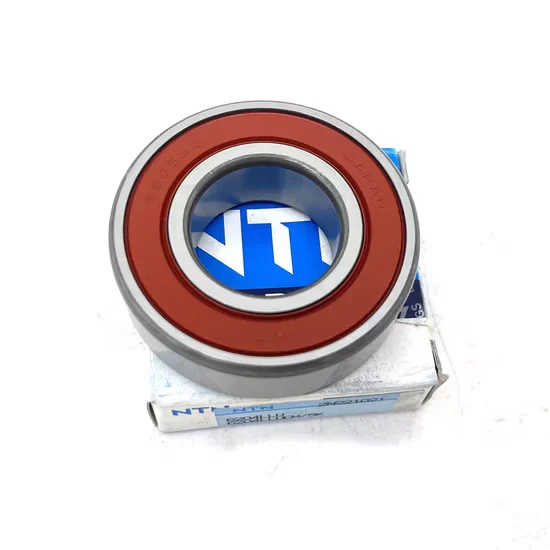
Dimensional interchangeability does not equal performance equivalence in harsh environments.
NTN Bower and Timken tapered roller bearing sets are not direct interchangeable equivalents for all applications. Timken excels in heavy-duty, high-shock mining and industrial applications due to superior cage geometry and roller contact patterns, while NTN Bower is optimized for automotive and light-to-medium industrial loads where cost efficiency and high-speed performance are prioritized. Selecting the wrong brand for a specific load profile leads to premature cage fracture and catastrophic shaft damage.
I learned this distinction the hard way. Before moving into international trade in Shenzhen, I spent years on the shop floor in Dongguan grinding bearing rings. Early in my sales career, a mining client in Latin America complained about the high cost of their original Timken specifications. Seeking to offer a competitive alternative, I substituted an NTN Bower series that matched the dimensional cross-reference. The result was disastrous. The Bower cages shattered under the intense vibration of the mining screens within months. The client’s angry emails highlighted a critical lesson: matching outer diameter and bore size is insufficient when shock loads exceed the cage’s tensile limits. Since then, I have rigorously analyzed the operational differences between these two brands. I now understand that Bower is ideal for automotive hubs and moderate industrial duties, whereas Timken remains the robust choice for heavy shock and axial loads. When configuring Tapered Sets, I never quote without first verifying the specific operating conditions.
Understanding these nuances is essential for any procurement manager or distributor aiming to optimize their supply chain without compromising equipment reliability. This analysis breaks down the technical divergences to help you make informed sourcing decisions.
Are NTN Bower and Timken Tapered Sets Truly Interchangeable?
Shared dimensions do not guarantee shared durability under stress.
Many buyers assume that if two bearing sets share the same ISO boundary dimensions, they are functionally identical. This is a dangerous misconception. While NTN Bower and Timken may produce sets that fit the same housing and shaft, their internal engineering philosophies differ significantly. Timken focuses heavily on maximizing load capacity through optimized roller end geometry and cage strength, particularly for industries like mining and steel production. NTN Bower, historically strong in the automotive sector, prioritizes high-speed performance and cost-effective manufacturing for lighter loads.
The core difference lies in the internal clearance and preload settings. Timken sets often require precise adjustment during installation to achieve optimal life in heavy applications. NTN Bower sets are frequently designed for easier installation in high-volume assembly lines, such as automotive wheel hubs, where consistent, moderate loads are the norm. Swapping a Timken set with an NTN Bower equivalent in a crusher application ignores the dynamic load ratings that define bearing life.
| Feature | Timken Tapered Sets | NTN Bower Tapered Sets |
|---|---|---|
| Primary Application Focus | Heavy Industry, Mining, Aerospace | Automotive, Light Industrial, Agriculture |
| Cage Design Philosophy | High tensile strength for shock resistance | Optimized for high speed and low friction |
| Load Capacity Strategy | Maximized dynamic load rating | Balanced for cost and moderate loads |
| Installation Requirement | Precise adjustment often required | Designed for simplified assembly lines |
| Cost Positioning | Premium pricing for extreme durability | Competitive pricing for volume applications |
A European machinery distributor once attempted to consolidate purchases by replacing Timken units with NTN Bower across their entire inventory. While the automotive division saw no issues, the heavy equipment sector reported increased warranty claims. The failure mode was consistent: cage disintegration under variable shock loads. This case underscores that interchangeability is conditional, not absolute.
How Do Cage Designs Differ Under High Shock Loads?
Cage integrity determines survival in vibrating environments.
The cage, or retainer, holds the rollers in place and guides them through the load zone. In high-shock applications, such as vibrating screens or rock crushers, the cage undergoes immense stress. Timken employs heavy-duty cage designs with reinforced pockets and materials selected for high impact resistance. These cages are engineered to withstand the erratic forces generated by uneven material flow in mining operations.
In contrast, NTN Bower cages are often designed for smoother, more predictable load paths typical of automotive drivetrains. While sufficient for road vehicles, these cages may lack the marginal strength required to survive the continuous pounding of industrial machinery. When a cage fails, it does not just stop the bearing; it releases loose rollers that can gouge the raceways and destroy the housing. This collateral damage turns a simple bearing replacement into a major repair job.
I recall a case involving a cement plant in Southeast Asia. The maintenance team switched to a cheaper alternative for their kiln drive bearings, ignoring the cage specification. Within a short period, the cage fractured, causing severe scoring on the shaft. The cost of repairing the shaft far exceeded the savings from the initial bearing purchase. This highlights why cage design is a critical, yet often overlooked, factor in bearing selection.
Timken’s approach involves rigorous testing of cage materials under simulated shock conditions. Their designs often feature larger roller guidance surfaces to distribute stress more evenly. NTN Bower, while producing high-quality products, optimizes its cages for weight reduction and rotational efficiency, which is less critical in slow-moving, heavy-load scenarios.
Which Brand Fits Your Specific Industry Application?
Match the brand strength to your operational load profile.
Choosing between NTN Bower and Timken should be driven by the specific demands of your application rather than price alone. For automotive manufacturers and suppliers, NTN Bower offers a compelling value proposition. Their bearings are engineered to meet the stringent quality and cost requirements of vehicle production. In commercial vehicle wheel hubs, where radial loads are moderate and speeds are consistent, NTN Bower provides reliable performance at a lower total cost of ownership.
Conversely, for mining, construction, and heavy industrial sectors, Timken remains the preferred choice. These industries involve high axial loads, frequent shock impacts, and contaminated environments. Timken’s robust construction and superior sealing options provide the durability needed to minimize downtime. A mixed-brand procurement strategy can be effective: using Timken for critical, high-stress points like main drive shafts and NTN Bower for auxiliary, low-load components like conveyor idlers.
A Middle East steel mill implemented this hybrid approach. They retained Timken bearings for their main rolling mill stands, where load consistency is vital for product quality. For the less critical transport conveyors within the plant, they switched to NTN Bower. This strategy optimized their bill of materials cost without exposing critical processes to unnecessary risk.
| Application Sector | Recommended Brand | Reasoning |
|---|---|---|
| Mining & Quarrying | Timken | Superior shock load resistance |
| Automotive OEM | NTN Bower | Cost-effective, high-speed optimized |
| Steel Mills | Timken (Critical), NTN Bower (Auxiliary) | Balanced risk and cost management |
| Agricultural Machinery | NTN Bower | Suitable for moderate, variable loads |
| Wind Turbines | Timken | High reliability for inaccessible locations |
Understanding these distinctions allows procurement teams to negotiate better terms with suppliers. Instead of demanding a single brand for all needs, buyers can specify brands based on function, leveraging the strengths of each manufacturer.
How to Validate Bearing Authenticity and Specs Before Ordering?
Traceability prevents counterfeit and mismatched applications.
The global bearing market is fraught with counterfeits and mislabeled goods. Ensuring that you receive genuine NTN Bower or Timken products requires rigorous validation. Start by requesting full traceability documentation from your supplier. Genuine manufacturers provide batch numbers that link back to production records, including material certifications and quality control data.
Verify part-number cross-references against actual operating conditions, not just dimensional charts. A part number might match in size but differ in internal clearance or cage type. Always confirm the specific suffix codes that denote these internal features. For example, a Timken bearing with a specific cage code may not have a direct equivalent in the NTN Bower line without modifying the housing or shaft fit.
Physical inspection is also crucial. Genuine bearings exhibit precise machining marks, consistent branding font, and high-quality packaging. Counterfeits often have rough edges, inconsistent labeling, or subpar packaging materials. If a deal seems too good to be true, it likely is. Engaging a supplier who offers technical selection support can mitigate these risks. They can help verify that the proposed alternative meets the necessary load and speed ratings for your application.
A US buyer once received a shipment of bearings that appeared genuine but failed prematurely. Investigation revealed that the internal clearance was incorrect for their high-temperature application. The supplier had provided a standard clearance unit instead of the specified C3 clearance. This error could have been avoided with proper documentation review and technical consultation.
Conclusion
Selecting the right tapered roller bearing set requires matching brand strengths to specific operational demands.
NTN Bower and Timken serve distinct niches within the bearing market. Timken dominates in heavy-duty, high-shock environments, while NTN Bower excels in automotive and light industrial applications. Understanding these differences prevents costly failures and optimizes maintenance budgets. By validating specifications and ensuring traceability, buyers can secure genuine products that deliver reliable performance. Strategic sourcing involves not just finding the lowest price, but identifying the right technical solution for each application point.
In this article
NTN bearings mentioned in this article
Open each product to compare its series and category with the position on your list.
 Deep Groove Ball Bearings
High Rotation NTN Deep Groove Ball Bearing 6201 6202 6303 6204 6305
View product details Deep Groove Ball Bearings
X&S NTN 6203 6202 603 Deep Groove Ball Bearing C3
View product details Deep Groove Ball Bearings NTN 6202 6201 6708 Deep Groove Ball Bearing Corrosion-Resistant
View product details Deep Groove Ball Bearings NTN Deep Groove Ball Bearing 608 675 676 677 6202 6212 16004 16006 16007
View product detailsRelated applications
See how this topic connects to gearbox and heavy-drive service.