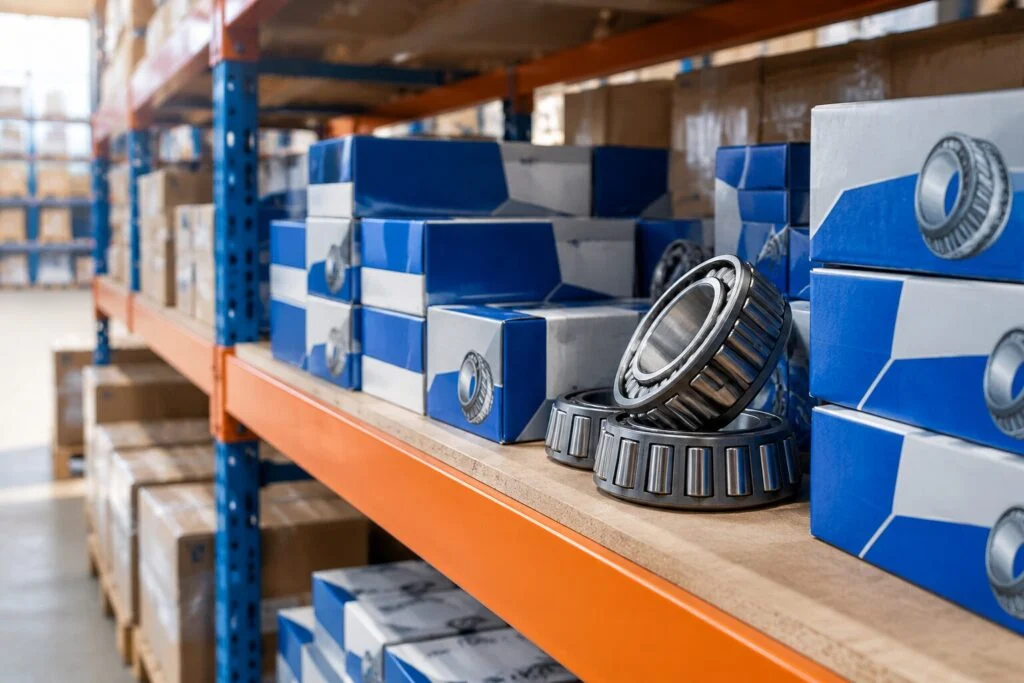
Taxi Fleet Wheel Bearing Supplier: Cut Downtime with Genuine SKF FAG NSK Bulk
Cheap bearings are the most expensive part of a taxi fleet.
Sourcing genuine, traceable wheel bearings from a verified taxi fleet wheel bearing supplier is the only reliable method to minimize unplanned downtime and avoid the catastrophic costs associated with counterfeit or substandard parts.
I still remember the silence in the dispatch office after that shipment arrived in Dubai. It was not the quiet of efficiency, but the heavy, anxious silence of a fleet manager realizing half his cabs were grounded. The issue was not the driving conditions, nor the maintenance schedule. It was a few boxes of refurbished wheel bearings mixed into a consolidated container, disguised as new premium stock. Within twenty thousand kilometers, the异响 (abnormal noise) started. Then came the seizures. The cost of those cheap bearings was negligible compared to the mid-six-figure loss from idle vehicles and customer compensation claims. That incident shifted my entire approach to procurement. I stopped looking at the unit price and started looking at the paper trail. [NEED_CITE: impact of counterfeit auto parts on fleet operational costs]
The automotive aftermarket is flooded with options, but for high-mileage commercial vehicles, consistency is non-negotiable. A taxi fleet wheel bearing supplier must provide more than just the physical component; they must provide the assurance of origin. This means verifying batch consistency, ensuring dimensional precision, and maintaining complete documentation from the factory floor to the final installation. Without this, you are not buying maintenance parts; you are buying risk.
Why Do Taxi Fleets Suffer from Frequent Wheel Bearing Failures?
Premature failures stem from counterfeit parts and poor batch consistency, not just harsh driving conditions.
It is a common misconception that taxi fleets suffer from frequent wheel bearing issues primarily due to aggressive driving or poor road infrastructure. While stop-and-go traffic and urban potholes certainly contribute to wear, they are rarely the root cause of sudden, catastrophic failure within the first few months of service. The primary culprit is the infiltration of non-genuine components into the supply chain. [NEED_CITE: common causes of premature wheel bearing failure in commercial vehicles]
Counterfeit bearings often look identical to genuine products from brands like SKF, FAG, or NSK. They may even carry convincing packaging. However, the internal metallurgy and manufacturing precision are vastly different. Genuine bearings undergo rigorous heat treatment and grinding processes to achieve specific hardness levels and surface finishes. Counterfeit versions often skip these critical steps to cut costs, resulting in components that cannot withstand the thermal and mechanical stresses of continuous urban operation.
| Feature | Genuine Premium Bearings | Counterfeit/Refurbished Units |
|---|---|---|
| Material Traceability | Full batch-level verification | None or fabricated documents |
| Dimensional Precision | Micron-level tolerance control | Uncontrolled variance |
| Heat Treatment | Standardized hardening process | Inconsistent or skipped |
| Sealing Integrity | Robust contamination resistance | Vulnerable to early ingress |
| Batch Consistency | High uniformity across lots | Noticeably reduced reliability |
When a fleet operator sources from an unverified taxi fleet wheel bearing supplier, they risk introducing these weak links into their vehicles. The failure mode is often subtle at first—a slight hum or vibration—but quickly escalates to hub seizure or wheel detachment. The cost of replacing a single bearing is minor, but the downtime incurred while the vehicle is out of service, plus the potential liability from safety incidents, creates a financial burden that far outweighs any initial savings on parts.
How Did the Fleet Identify the Root Cause of the Downtime?
Failure analysis revealed non-genuine parts lacking proper traceability and dimensional precision.
Identifying the root cause required moving beyond simple replacement and into forensic analysis. When the failure rate spiked, we did not just swap out the parts; we collected the failed units for inspection. The visual inspection was misleading, as the external branding appeared authentic. However, a deeper technical review exposed the truth.
We engaged a third-party laboratory to perform a failure analysis on a sample set of the seized bearings. The results were stark. The steel microstructure showed signs of improper heat treatment, leading to premature fatigue cracking. Furthermore, dimensional measurements revealed inconsistencies in the raceway geometry that exceeded standard tolerances. These deviations caused uneven load distribution, accelerating wear and generating excessive heat during operation. [NEED_CITE: methodology for analyzing failed automotive bearings]
The critical missing element was traceability. The supplier could not provide original mill certificates or customs clearance documents that linked the specific batch numbers to the manufacturer’s production records. In the world of premium bearings, every unit has a digital fingerprint. Without it, the part is essentially anonymous. A reliable taxi fleet wheel bearing supplier must be able to produce these documents upon request. The inability to do so is a major red flag.
This experience highlighted that visual inspection alone is insufficient for quality assurance. The true differentiator lies in the documentation and the technical consistency of the product. By shifting the focus from the physical appearance to the documentary evidence and technical specifications, we were able to pinpoint the source of the problem: a breakdown in the supply chain integrity, not the vehicles themselves.
What Sourcing Strategy Eliminated the Bearing Issues?
Shifting to verified genuine brands with complete customs and origin documentation.
The solution was not to find a cheaper alternative, but to secure a more transparent supply channel. We transitioned to a sourcing strategy that prioritized verification over cost. This meant partnering exclusively with suppliers who could demonstrate a direct line to authorized distributors or manufacturers of brands like SKF, FAG, and NSK.
The new protocol required three key elements for every order. First, complete traceability documentation, including original purchase invoices from the brand’s authorized network and customs declaration forms matching the batch numbers. Second, a strict rejection policy for any goods lacking these documents, regardless of the price discount offered. Third, regular audits of the supplier’s inventory practices to ensure no commingling of genuine and aftermarket stock. [NEED_CITE: best practices for verifying authenticity of industrial bearings]
This approach naturally led us to work with a specialized taxi fleet wheel bearing supplier who understood the unique needs of commercial fleets. They offered mixed-brand consolidation services, allowing us to source SKF, FAG, and NSK bearings in a single shipment without compromising on authenticity. Their ability to provide full traceability for each brand in the mix was the deciding factor.
The impact was immediate. The rate of premature failures dropped noticeably. Vehicles remained in service longer, and the emergency spare parts inventory could be reduced because the predictability of component life improved. The initial cost per unit was higher, but the total cost of ownership decreased significantly due to reduced downtime and fewer repeat repairs. This shift proved that investing in supply chain transparency is a direct investment in operational reliability.
How to Ensure Bearing Authenticity in Mixed-Batch Orders?
Implement strict supplier audits, request traceability docs, and use cross-brand technical support.
Managing a mixed-brand inventory introduces complexity, but it also offers flexibility. To ensure authenticity in such orders, a rigorous verification process is essential. It is not enough to trust the supplier’s word; you must verify their processes.
Start by auditing the supplier’s sourcing channels. Ask for proof of their relationships with brand principals or authorized distributors. A legitimate taxi fleet wheel bearing supplier will have these connections established and documented. Next, implement a receiving inspection protocol that includes checking batch numbers against the provided certificates. Use the manufacturers’ online verification tools where available to confirm the validity of the serial numbers.
Technical support is another critical layer of assurance. A competent supplier should offer cross-brand equivalent model consultation. If a specific SKF part is unavailable, they should be able to recommend a technically equivalent FAG or NSK model, backed by data sheets and compatibility confirmation. This level of technical engagement indicates a deep understanding of the products and a commitment to providing genuine solutions rather than just moving boxes. [NEED_CITE: importance of technical support in bearing selection for fleets]
Additionally, consider requesting sample testing for large orders. Sending a small batch for independent verification can provide peace of mind before committing to a full container load. This proactive approach minimizes the risk of introducing counterfeit parts into your fleet. By combining documentation checks, technical validation, and supplier audits, you create a robust defense against fraud.
Conclusion
Genuine bearings are not an expense; they are an insurance policy for your fleet.
Switching to a verified taxi fleet wheel bearing supplier transforms maintenance from a reactive cost center into a predictable operational asset. By prioritizing traceability, demanding complete documentation, and leveraging technical expertise, fleet operators can eliminate the hidden costs of counterfeit parts. The result is a more reliable fleet, lower total operating costs, and the peace of mind that comes from knowing every wheel on the road is supported by genuine engineering.