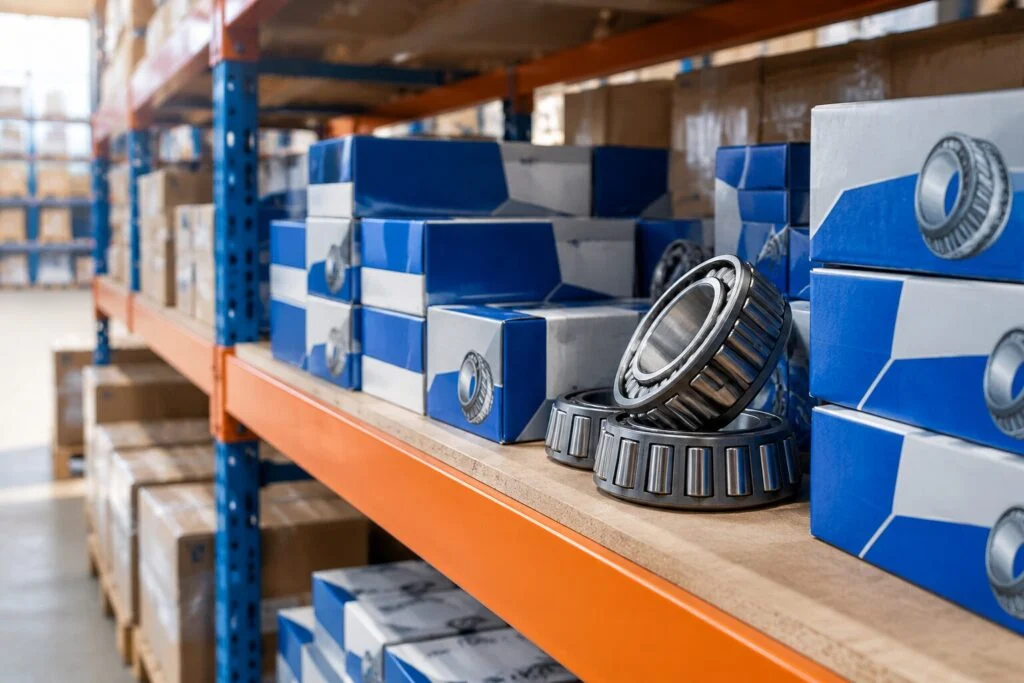
Water Damage in Wheel Bearings: Wholesale Supplier for Bulk MRO Orders
Premium brands do not guarantee water resistance. Standard seals fail identically across all major manufacturers when submerged, regardless of the logo on the box.
Water ingress is the primary cause of premature wheel bearing failure because it emulsifies grease and destroys lubrication instantly. Preventing this requires selecting multi-lip or labyrinth seal structures specifically designed for wet environments, rather than relying on brand reputation alone. Strict maintenance protocols, including precise torque specifications and proper grease filling volumes, are critical to preventing catastrophic downtime in heavy equipment operations.
I still remember the smell of burnt metal and wet mud in a quarry in Nigeria. It was the rainy season, and after a week of relentless downpours, three mining trucks came in with seized hubs. The maintenance team had installed top-tier tapered roller bearings, expecting them to handle the abuse. When we cracked open the hubs, the scene was consistent: the grease had turned into a milky, gray emulsion. The cage was rusted through, and the rollers were bitten into the inner ring. [NEED_CITE: mechanism of grease emulsification and bearing seizure] That failure wasn’t due to poor quality steel; it was due to a standard single-lip seal that couldn’t handle the hydrostatic pressure of deep mud. Since then, I have shifted my focus from just supplying parts to advising on seal structure. For any MRO operator dealing with wet conditions, understanding how water actually destroys the bearing assembly is more valuable than knowing the price per unit.
This reality check is essential for anyone sourcing replacements. If you are managing inventory for harsh environments, the conversation must start with sealing technology, not just part numbers.
How Does Water Actually Destroy Wheel Bearings?
Water does not just wash away grease; it chemically alters it. Many operators assume that thick grease acts as a barrier, but under high-speed rotation and heat, water penetrates the seal lip and mixes with the lubricant. This process, known as emulsification, turns the grease into a thin, watery sludge that loses its load-carrying capacity almost immediately. [NEED_CITE: tribology principles of water contamination in lubricants]
Once the lubrication fails, metal-to-metal contact occurs. This leads to micro-pitting on the raceways and rollers. In wet environments, this is compounded by corrosion. The water introduces oxygen and contaminants directly to the highly polished surfaces of the bearing steel. Within a short operational window, these micro-pits grow into spalls, causing vibration and eventual seizure.
The counter-intuitive truth is that external washing is often insufficient protection. High-pressure washers can force water past even intact seals if the pressure exceeds the seal’s design limit. Furthermore, internal micro-cracks in the housing or capillary action can draw moisture in during cooling cycles after operation. [NEED_CITE: capillary water ingress mechanisms in bearing housings]
For a wholesale supplier for bulk MRO orders, recognizing this mechanism means stock selection must prioritize seals with higher lip interference and backup rings. Standard rubber seals may harden or degrade in high-humidity coastal environments, shortening their lifecycle significantly. Understanding this chemical and physical degradation process is the first step in specifying the right components for your inventory.
What Are the Early Warning Signs of Water Ingress?
Listen for changes in noise and feel for heat spikes before visual inspection confirms failure. By the time grease leaks out looking like milkshake, the damage is already done. Early detection relies on monitoring subtle changes in performance.
The first sign is often an abnormal noise profile. A healthy bearing hums; a water-damaged bearing may produce a grinding or crunching sound as the emulsified grease fails to separate the rolling elements. This is distinct from the high-pitched whine of a dry bearing.
Secondly, monitor hub temperature. Water contamination increases friction dramatically. A sudden spike in operating temperature, especially after exposure to rain or washing, indicates that the lubricant film has broken down. [NEED_CITE: correlation between lubricant viscosity loss and temperature rise]
Thirdly, inspect the grease color during routine maintenance. Fresh grease is typically uniform in color. If you see streaks of white, gray, or rust-colored particles, water has entered the system. In agricultural machinery used in flooded fields, this discoloration can appear within a very short operational hour range after submersion.
| Symptom | Indication | Action Required |
|---|---|---|
| Abnormal Grinding Noise | Loss of lubrication film | Immediate stop and inspection |
| Hub Temperature Spike | Increased friction from emulsified grease | Check seal integrity and grease condition |
| Grease Discoloration | Water emulsification | Replace grease and inspect seals |
| External Rust Streaks | Seal breach allowing exit/entry | Replace seal and clean housing |
For distributors stocking parts for local repair workshops, educating customers on these signs can prevent catastrophic failures. Instead of waiting for a wheel to lock up, proactive checks based on these indicators can save expensive downstream components. As a wholesale supplier for bulk MRO orders, providing technical datasheets that highlight these warning signs adds value beyond the physical product.
How to Select the Right Seal for Wet Environments?
Upgrading to multi-lip or labyrinth seals is mandatory for high-water-risk applications. The standard single-lip contact seal found on many economy bearings is designed for dust exclusion, not water immersion. When sourcing for mines, construction sites, or agricultural operations, the seal structure is the critical variable.
The key parameter here is the seal lip material hardness and design. Softer materials may conform better but wear faster in abrasive mud. Harder materials resist wear but may allow micro-leakage if the shaft surface is imperfect. Multi-lip seals create multiple barriers, forcing water to navigate a longer, more tortuous path. Labyrinth seals use non-contacting gaps to drop pressure, making them highly effective against high-pressure washdowns. [NEED_CITE: ISO standards for seal performance classification]
In my experience, coastal construction equipment faces a dual threat: saltwater corrosion and high humidity. Here, standard seals degrade rapidly. Upgrading to seals with enhanced chemical resistance and complex lip geometries can extend service life meaningfully.
When evaluating options, consider the following comparison:
| Seal Type | Water Resistance | Abrasion Resistance | Best Application |
|---|---|---|---|
| Single-Lip Contact | Low | Moderate | Dry, dusty environments |
| Multi-Lip Contact | High | High | Wet, muddy quarries |
| Labyrinth Non-Contact | Very High | Low (no wear) | High-pressure washdown areas |
| Magnetic Seal | Extreme | High | Submerged or extreme slurry |
Selecting the right seal requires balancing these factors. For a wholesale supplier for bulk MRO orders, offering a range of seal options alongside standard bearings allows customers to match the component to their specific environment. We stock genuine products from SKF, FAG, TIMKEN, and other premium brands, many of which offer upgraded seal variants for tapered roller bearings. Technical consultation is essential here, as the wrong seal choice negates the benefits of a high-quality bearing.
What Are the Correct Installation & Maintenance Steps?
Strict cleaning and precise torque specifications prevent secondary contamination. Even the best seal will fail if installed incorrectly. The installation process is where many failures originate, particularly in field repairs where conditions are less than ideal.
First, cleanliness is paramount. Any dirt or moisture left in the housing before installation becomes a contaminant source. The housing should be cleaned with a solvent that leaves no residue. [NEED_CITE: best practices for bearing housing preparation]
Second, grease filling volume must be controlled. Over-greasing creates churning and heat, which can push seals out or force grease past the lip, creating a path for water to enter later. Under-greasing leaves voids for water to occupy. The general rule is to fill the free space in the housing, not pack the bearing itself completely, unless specified by the OEM.
Third, torque specs for the axle nut or locking mechanism must be precise. Incorrect preload affects the bearing clearance, which can distort the seal interface. Using a torque wrench and following the manufacturer’s sequence ensures the seal sits correctly on the shaft.
Common mistakes include using hammers to install seals, which damages the lip, and mixing different grease types, which can cause chemical incompatibility and breakdown. In one case, a European wind farm operator noticed premature failures in yaw bearings. The root cause was traced back to maintenance crews using incompatible greases during top-ups, which softened the seal material and allowed water ingress.
| Step | Tool/Method | Critical Parameter |
|---|---|---|
| Housing Cleaning | Solvent wipe | No residue remaining |
| Grease Filling | Manual pump or filler gun | Fill free space only |
| Seal Installation | Press tool or soft mallet | Even seating, no distortion |
| Axle Nut Torque | Calibrated torque wrench | OEM specified value |
For MRO teams, having these steps documented and trained is as important as having the parts in stock. A wholesale supplier for bulk MRO orders can support this by providing clear installation guides and technical support for complex applications.
Conclusion
Water damage is preventable with the right seal strategy. It is not a matter of luck or brand prestige, but of engineering selection and maintenance discipline. By understanding how water emulsifies grease, recognizing early warning signs, choosing multi-lip or labyrinth seals, and following strict installation protocols, operators can significantly extend bearing life.
For those managing supply chains in harsh environments, partnering with a knowledgeable wholesale supplier for bulk MRO orders ensures access to the right components and technical guidance. Focus on the seal structure, respect the maintenance process, and keep the water out.