
Matching inner and outer diameters is not enough to guarantee a functional replacement.
True equivalents for Honda wheel bearing kits require matching not just basic dimensions, but also ABS sensor tooth counts and flange offsets to prevent dashboard faults. Many aftermarket failures stem from micro-deviations in these critical interface points rather than load capacity issues.
I still remember the humidity in Jeddah when the call came through. A distributor had received a batch of what looked like perfect replacements for a popular Honda SUV model. The part numbers crossed over cleanly on paper. The inner and outer diameters matched the OEM specs to the micron. Yet, every single unit installed triggered an ABS fault light within minutes of driving. We pulled one off the hub and compared it side-by-side with the original. The difference was invisible to the naked eye but catastrophic for the vehicle’s electronics: the ABS encoder ring had two fewer teeth than the original specification. The flange bolt hole pitch was off by a fraction of a millimeter, causing slight runout that stressed the sensor gap. That single container cost us the air freight for the returns and nearly lost the agency agreement. Since then, I have learned that in the world of Honda wheel bearing kit equivalents, a deviation of a hair’s breadth is not a tolerance issue; it is a failure point.
This experience reshaped how we approach cross-referencing. It is not about finding a box that fits the shelf; it is about ensuring the component speaks the same language as the vehicle’s computer. For wholesalers and repair groups, understanding these hidden specifications is the difference between a reliable supply chain and a backlog of warranty claims.
Why Do Aftermarket Honda Wheel Bearings Fail?
Micro-deviations in sensors and flanges cause more failures than load capacity.
Most buyers assume that if a bearing spins smoothly and fits the hub, it will work. This is a dangerous assumption for modern vehicles equipped with integrated ABS sensors. The primary cause of return rates for Honda wheel bearing kit equivalents is not premature wear due to poor steel quality, but immediate electronic incompatibility.
The ABS system relies on a precise magnetic or inductive signal generated by the encoder ring attached to the bearing. If the tooth count is incorrect, even by a small margin, the ECU receives an erratic signal. It interprets this as a wheel lock-up or sensor failure, triggering the warning light and disabling stability control systems.
Furthermore, the flange offset—the distance from the mounting surface to the center of the bearing—must be exact. A deviation here changes the scrub radius and can cause uneven tire wear, but more immediately, it alters the gap between the sensor and the tone ring. If the gap is too wide, the signal is weak; if too narrow, physical contact occurs during thermal expansion.
| Failure Mode | Root Cause | Impact on Vehicle |
|---|---|---|
| ABS Fault Light | Incorrect encoder tooth count | Loss of stability control, failed inspection |
| Premature Noise | Flange hole pitch deviation | Vibration, uneven tire wear |
| Sensor Damage | Incorrect flange offset | Physical contact with tone ring |
| Hub Wobble | Poor runout tolerance | Steering vibration, safety risk |
A fleet maintenance manager in Southeast Asia once reported mixed-brand batch issues where half the kits failed within weeks. Upon verification, we found that the "equivalent" parts had inconsistent dimensional tolerances across the batch. Some fit tightly, others loosely. This lack of batch consistency is a hallmark of lower-tier manufacturing where quality control is sporadic rather than systematic.
When sourcing Honda wheel bearing kit equivalents, you must look beyond the basic size. The real test is in the details that do not show up on a standard caliper measurement but are critical for electronic integration.
How to Cross-Reference Honda Bearing Part Numbers?
Always verify ABS tooth count and flange pitch, not just basic dimensions.
Cross-referencing part numbers is a standard practice, but it is fraught with pitfalls if done superficially. Many online databases map OEM numbers to aftermarket equivalents based solely on physical dimensions. This ignores the electronic and geometric nuances required for a true fit.
To perform a reliable cross-reference, start with the OEM part number and identify the specific vehicle application, including the model year and trim level. Honda often uses different bearing designs for the same model depending on the production date or market region. For example, a Civic from one year may use a different ABS encoder type than the next.
Next, verify the ABS sensor type. Is it magnetic or inductive? How many teeth are on the encoder ring? This information is rarely listed in generic catalogs but is essential for compatibility. You may need to consult technical service bulletins or physically measure a sample from the original part.
Then, check the flange specifications. Measure the bolt hole circle diameter and the offset. Even a minor deviation can cause installation issues or sensor misalignment. Compare these measurements against the aftermarket part’s technical data sheet. If the supplier cannot provide this level of detail, consider it a red flag.
We maintain a detailed database that includes these granular specifications for our Honda wheel bearing kit equivalents. This allows us to catch discrepancies before they reach the customer. For instance, we recently identified a batch where the flange thickness varied by a fraction of a millimeter across different production runs. By catching this early, we prevented a potential wave of returns due to sensor gap issues.
What Are the Best Equivalent Brands for Honda Kits?
Premium global brands and verified Chinese lines offer the best balance of cost and precision.
The market for Honda wheel bearing kit equivalents is divided into three tiers: premium global brands, mid-tier verified manufacturers, and low-cost generic options. Each has its place, but the risk profile varies significantly.
Premium global brands, such as SKF, FAG, NSK, and NTN, offer near-OEM quality. Their manufacturing processes adhere to strict international standards, ensuring high batch consistency and precise dimensional tolerances. These brands are ideal for customers who prioritize reliability over cost and are willing to pay a premium for peace of mind. However, their pricing can be prohibitive for high-volume aftermarket distributors.
Verified Chinese lines, such as ZWZ, HRB, and LYC, have improved significantly in recent years. When sourced from reputable suppliers who enforce strict quality control, these brands offer a compelling balance of cost and performance. They can match the precision of global brands for most applications, provided that critical specifications like ABS tooth counts are verified. The key is to work with a supplier who performs incoming inspection and validates these details.
Generic low-cost options often save on unit price but incur higher total costs due to return rates and warranty claims. As seen in the Jeddah incident, a cheaper part that fails immediately is far more expensive than a slightly more costly part that works correctly. The air freight for returns, the labor for replacement, and the damage to customer trust add up quickly.
| Brand Tier | Cost Level | Quality Consistency | Best For |
|---|---|---|---|
| Premium Global | High | Very High | OEM repairs, high-end workshops |
| Verified Chinese | Medium | High (with QC) | Volume distributors, value-conscious fleets |
| Generic Low-Cost | Low | Variable/Low | Price-sensitive markets with low expectations |
We offer cross-brand equivalent consultation to help you select the right tier for your market. By leveraging our relationships with both global and domestic manufacturers, we can source Honda wheel bearing kit equivalents that meet your specific quality and budget requirements. Our genuine traceability documentation ensures that you know exactly what you are buying, reducing the risk of counterfeit or substandard parts.
Choosing the right brand is not just about the logo on the box. It is about understanding the manufacturing pedigree and the quality control processes behind it. For wholesalers, this means partnering with suppliers who can provide transparency and verification, not just a low price.
How to Verify Quality Before Bulk Ordering?
Request dimensional reports and physical sample checks for critical tolerances.
Before committing to a large order of Honda wheel bearing kit equivalents, due diligence is essential. Relying solely on catalog specifications is insufficient. You need tangible proof of quality.
Start by requesting detailed dimensional reports from the supplier. These should include measurements for inner and outer diameters, width, flange offset, and bolt hole pitch. More importantly, ask for verification of the ABS encoder specifications, including tooth count and signal type. A reputable supplier will have this data readily available.
Next, order physical samples for testing. Install them on a test vehicle or use a hub simulator to check for proper fit and function. Verify that the ABS sensor reads correctly and that there is no excessive play or noise. Pay attention to the feel of the installation; a well-made bearing should slide onto the hub smoothly without force.
Inspect the packaging and labeling. Genuine parts from reputable brands have consistent, high-quality packaging with clear part numbers and batch codes. Counterfeit or low-quality parts often have poor printing, misspelled words, or missing information.
Finally, consider the supplier’s return policy and technical support. A partner who stands behind their products and offers assistance with failure analysis is invaluable. We provide mixed-batch consolidation services, allowing you to order smaller quantities of multiple part numbers to test the market before scaling up. This reduces inventory risk and allows for gradual validation of new suppliers.
Quality verification is an ongoing process, not a one-time check. By establishing rigorous inspection protocols and maintaining open communication with your supplier, you can ensure that every Honda wheel bearing kit equivalents shipment meets your standards. This proactive approach minimizes surprises and builds confidence in your supply chain.
Conclusion
Precision in details defines the true equivalent.
Sourcing reliable replacements for Honda vehicles demands more than matching basic dimensions. It requires a deep understanding of ABS sensor specifications and flange geometry. By prioritizing verified data and rigorous quality checks, distributors can avoid costly returns and build lasting trust with their customers. The right Honda wheel bearing kit equivalents are those that perform invisibly, keeping the vehicle safe and the dashboard dark.
In this article
NTN bearings mentioned in this article
Open each product to compare its series and category with the position on your list.
 Deep Groove Ball Bearings
X&S 6201 Deep Groove Ball Bearing for Wheel Bearing
View product details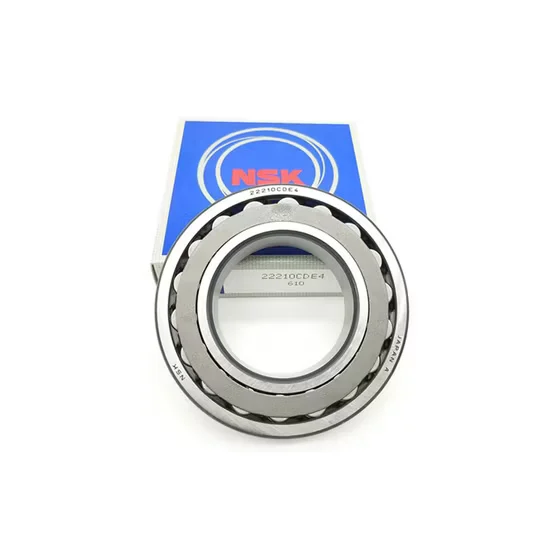 Spherical Roller Bearings
NTN 22209 22211 22213 22215 22217 Spherical Roller Bearing Auto Wheel
View product details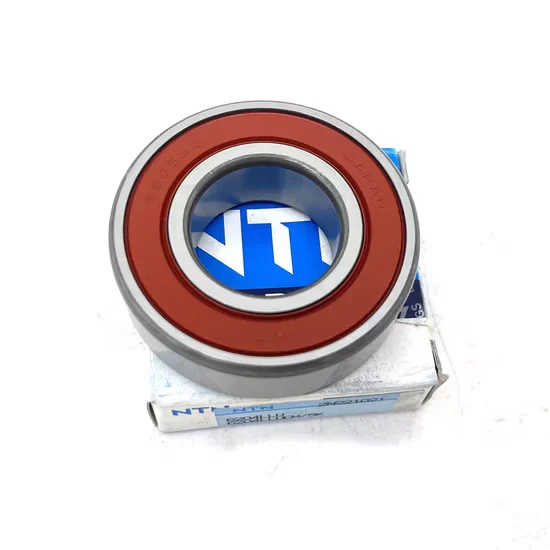 Deep Groove Ball Bearings
X&S 6000 Deep Groove Ball Bearing for Auto Wholesale Supplier
View product details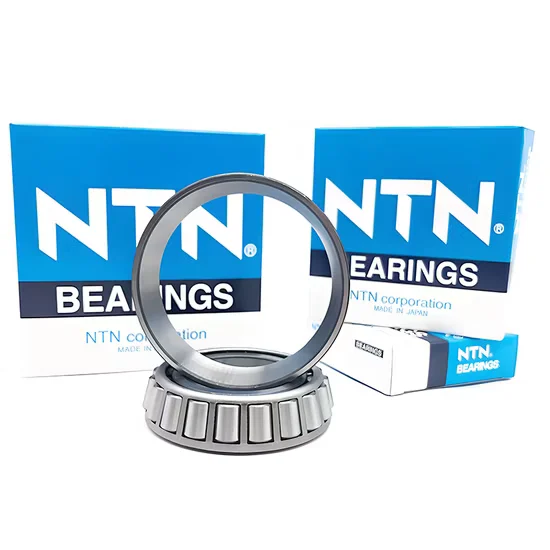 Tapered Roller Bearings
Genuine NTN 32004 32005 32006 32007 Tapered Roller Bearing Wholesale Supplier
View product detailsRelated applications
See how this topic connects to gearbox and heavy-drive service.