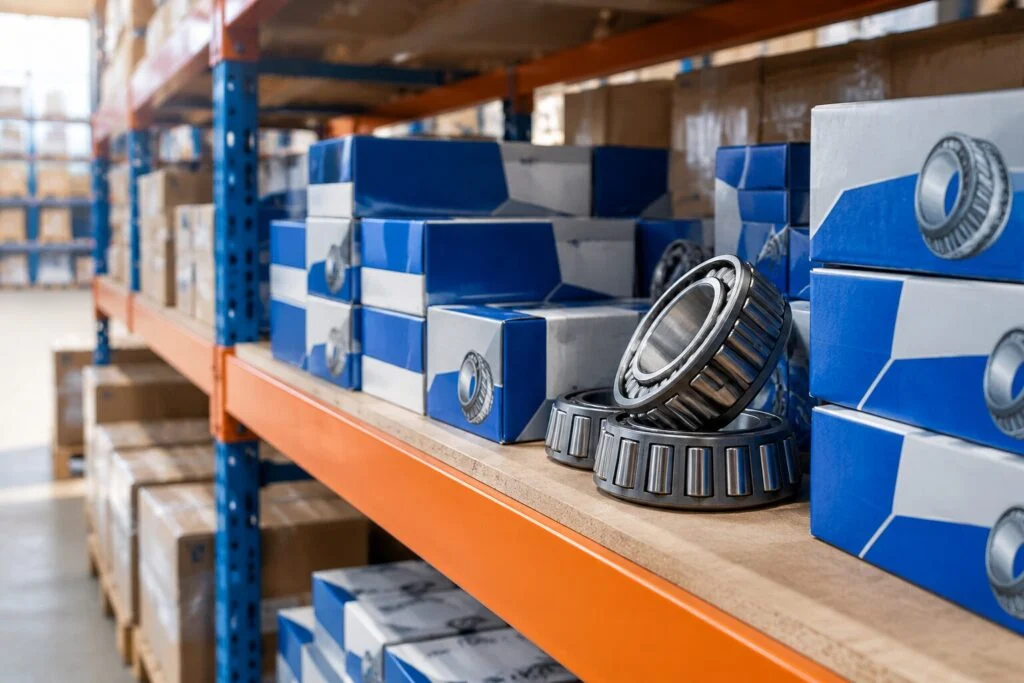
Alternator Bearing Replacement: Genuine SKF/NSK Wholesale Supplier
Most technicians replace bearings because they hear noise, but the real killer is often invisible moisture ingress that fragments the cage long before audible wear begins.
Proper alternator bearing replacement requires strict mechanical extraction and installation protocols combined with rigorous environmental protection and genuine part verification. Skipping traceability checks or ignoring humidity-specific sealing requirements leads to premature failure, where the cost of production downtime far exceeds the price difference between authentic and counterfeit components.
I still remember the smell of ozone and wet earth in Sulawesi during the rainy season. A nickel mining site had just lost power to its primary crushing line. The maintenance team swapped out the generator bearings using a cheaper, unverified alternative to save time and money. Three days later, the entire beneficiation line stopped. When we opened the housing, the bearing cages were shattered, and the raceways were covered in rust spots. The downtime cost was several times the savings from the cheap parts. That incident shifted my focus from simple part swapping to understanding the interplay between mechanical precision, environmental stress, and supply chain integrity. In heavy industry, a bearing that does not fail under load is only half the story; it must also survive the atmosphere. [NEED_CITE: impact of environmental contamination on bearing life expectancy]
Why Do Alternator Bearings Fail Prematurely?
Harsh environments and counterfeit parts are responsible for the majority of early failures, not just mechanical wear.
Many operators assume that bearing failure is purely a result of load fatigue or age. However, in tropical or high-humidity regions, moisture ingress is a silent destroyer. When water penetrates the seal, it mixes with the lubricant, forming an emulsion that loses its protective film. This leads to hydrogen embrittlement and surface distress on the raceways. [NEED_CITE: mechanisms of water-induced bearing corrosion]
Another critical factor is the use of non-genuine parts. Counterfeit bearings often lack the precise heat treatment and material purity required for heavy-duty applications. They may look identical to branded units like SKF or NSK, but their internal microstructure cannot withstand the thermal expansion and dynamic loads of a running alternator.
| Failure Mode | Visual Indicator | Root Cause | Prevention Strategy |
|---|---|---|---|
| Moisture Corrosion | Rust spots on raceways, milky lubricant | Seal failure, high humidity | Use enhanced sealing, verify storage conditions |
| Cage Fragmentation | Broken plastic or metal cage pieces | Poor material quality, vibration | Source genuine brands, check traceability |
| False Brinelling | Indentations at rolling element spacing | Vibration during standby | Proper storage, periodic rotation |
| Thermal Overload | Discoloration of rings and rollers | Insufficient clearance, over-lubrication | Select correct C3/C4 clearance, follow fill specs |
In one case, a Middle East steel mill experienced repeated alternator failures every few months. The ambient temperature was extreme, and the dust levels were high. The issue was not the load but the incorrect selection of bearing clearance and sealing type. By switching to bearings with appropriate thermal expansion clearance and robust sealing, the service life extended substantially. [NEED_CITE: bearing clearance selection for high-temperature applications]
Step-by-Step Alternator Bearing Replacement Guide
Precision extraction and installation prevent secondary housing damage and ensure optimal alignment.
Replacing an alternator bearing is not just about swapping parts; it is a surgical procedure. Improper handling can damage the shaft or housing, leading to misalignment and premature failure even with new bearings. The process requires specific tools and a clean environment.
- Preparation and Safety: Disconnect the alternator and clean the exterior thoroughly. Any dirt entering the housing during disassembly will act as an abrasive. [NEED_CITE: importance of cleanliness in bearing installation]
- Removal: Use a proper puller to remove the old bearing. Never hammer directly on the bearing or shaft, as this can cause microscopic dents that become stress concentrators. Heat induction may be used carefully if the bearing is seized, but avoid overheating the shaft.
- Inspection: Check the shaft and housing for wear, scratches, or out-of-round conditions. Measure dimensions against manufacturer tolerances. If the housing is damaged, no new bearing will fit correctly.
- Installation: Use a press or a suitable driver tool to install the new bearing. Apply force only to t* the outer ring when pressing into the housing. Never transmit force through the rolling elements.
- Lubrication: Apply the correct type and amount of grease. Over-greasing causes churning and overheating, while under-greasing leads to metal-to-metal contact. Follow the manufacturer’s specifications for fill volume. [NEED_CITE: optimal grease fill ratios for electric motor bearings]
A common mistake observed in field repairs is using generic grease instead of the specified high-temperature or anti-corrosion lubricant. In a humid coastal plant, a technician used standard lithium grease on a generator exposed to salt spray. The grease washed out quickly, leading to rapid corrosion. Switching to a specialized synthetic lubricant resolved the issue.
How to Select the Right Bearing for Your Operating Conditions
Match load, speed, and sealing capabilities to the specific site humidity, temperature, and duty cycle.
Selecting the right bearing involves more than matching the part number. It requires understanding the operational environment. For alternators in heavy equipment or stationary power generation, factors like thermal expansion, vibration, and contaminant exposure dictate the choice.
For high-temperature environments, bearings with larger internal clearance (such as C3 or C4) are essential to accommodate thermal expansion of the shaft and housing. Without this, the bearing can seize as it heats up. Conversely, in precision applications with stable temperatures, tighter clearances may be preferred for reduced vibration.
Sealing is another critical parameter. In dusty or wet environments, standard shields are insufficient. Contact seals or labyrinth seals provide better protection against contaminants. However, they generate more friction and heat, so they must be balanced against the speed rating of the alternator. [NEED_CITE: trade-offs between sealing effectiveness and frictional heat generation]
| Environment Condition | Recommended Feature | Reason |
|---|---|---|
| High Humidity/Rain | Enhanced Rubber Seals | Prevents water ingress and lubricant washout |
| High Temperature | C3/C4 Internal Clearance | Accommodates thermal expansion of components |
| Heavy Vibration | Solid Brass Cage | Resists fragmentation better than polymer cages |
| Dusty/Dirty | Labyrinth Sealing | Blocks particulate matter without excessive friction |
When sourcing for mixed-brand fleets, consistency is key. Using bearings from reputable manufacturers like SKF, NSK, FAG, or TIMKEN ensures that the material quality and manufacturing tolerances meet international standards. Generic alternatives may vary batch-to-batch, introducing unpredictability into maintenance schedules.
Verifying Bearing Authenticity Before Installation
Traceability documents and packaging checks are non-negotiable for MRO reliability.
The market is flooded with counterfeit bearings that mimic the packaging of premium brands. These fakes often use substandard steel and poor heat treatment, leading to catastrophic failure. For MRO operators, verifying authenticity is as important as the installation itself.
Genuine bearings come with specific packaging features, such as holographic labels, unique serial numbers, and high-quality printing. More importantly, they are accompanied by traceability documentation that links the batch to the manufacturer’s production records. This documentation is crucial for warranty claims and failure analysis. [NEED_CITE: importance of supply chain traceability in preventing counterfeit parts]
In emergency sourcing situations, lead time reduction should not compromise verification. Working with a supplier who maintains complete traceability documentation allows for rapid deployment without the risk of installing fake parts. A European wind farm operator once received a urgent shipment of bearings during a storm season. Because the supplier provided full batch certificates, the team could install them with confidence, avoiding the delay of third-party testing.
Our approach to sourcing emphasizes this transparency. We maintain stock of genuine products from major brands like SKF, NSK, NTN, and KOYO, ensuring that every unit shipped comes with verifiable documentation. This eliminates the guesswork for distributors and end-users who need reliable replacements quickly.
Conclusion
Reliable alternator operation depends on precise installation, correct environmental matching, and verified genuine parts.
Alternator bearing replacement is a critical maintenance task that demands attention to detail. By understanding the root causes of failure, following strict installation procedures, selecting the right specifications for the environment, and verifying part authenticity, operators can significantly extend equipment life. Sourcing from trusted suppliers who prioritize traceability and technical support ensures that every replacement contributes to sustained productivity rather than unexpected downtime.