Bearing Kits vs Loose Parts: Wholesale Supplier for Bulk Orders
Loose parts look cheaper on the invoice, but they often cost more by the time they reach the end user.
While loose parts seem to offer higher upfront margins by saving packaging and freight costs, hidden expenses like rust damage, assembly labor, and claim rates often make pre-assembled kits more profitable for bulk wholesale. The initial savings on cubic meters are frequently erased by the high cost of rejected goods and onsite labor inefficiencies.
I still remember the humidity in Jeddah during that summer shipment. We had broken down a large order of cylindrical roller bearings for a mining client to maximize container space, shipping inner and outer rings separately on pallets. The anti-rust oil, sufficient for standard transit, evaporated faster than expected in the unsealed environment of the loose packaging. When the container opened, the rollers were seized with surface corrosion. The client rejected the entire lot. That loss was not just in the value of the steel; it was in the reputation damage and the emergency air-freight costs to replace them. This experience reshaped how I evaluate every Bearing kits vs loose parts margin calculation today.
Understanding the true cost requires looking beyond the purchase order. It demands a holistic view of logistics, labor, and risk management.
What is the real upfront cost difference between kits and loose parts?
Loose parts save a small percentage on initial packaging and volume, but this is only the surface of the financial picture.
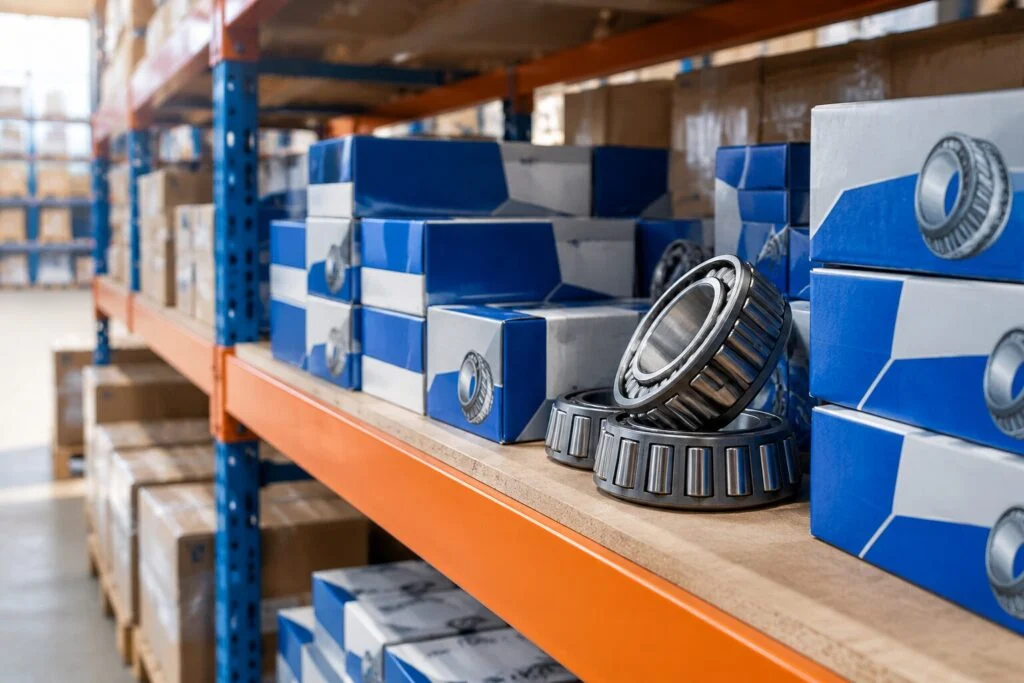
When you strip away the boxes, seals, and grease from a bearing kit, you reduce the physical volume significantly. For a wholesale bearing packaging cost comparison, the difference is visible immediately. Loose inner rings, outer rings, and rollers can be stacked tightly on pallets, allowing more units per container. This density advantage suggests a lower freight cost per unit.
However, this calculation ignores the cost of protection. To ship loose parts safely, you need robust palletizing, shrink wrapping, and often additional desiccants to prevent moisture ingress. Without the original manufacturer’s sealed packaging, the responsibility for protection shifts entirely to the supplier’s packing team.
| Cost Factor | Loose Parts | Pre-assembled Kits |
|---|---|---|
| Packaging Material | Minimal (Pallets/Wrap) | High (Boxes/Seals/Grease) |
| Freight Volume (CBM) | Low (High Density) | Higher (Lower Density) |
| Initial Unit Price | Lower | Higher |
| Protection Level | Vulnerable | Robust |
| Handling Complexity | High | Low |
The table above illustrates the trade-off. While the freight volume is lower for loose parts, the lack of individual sealing makes them vulnerable. [NEED_CITE: impact of packaging integrity on transit damage rates]. In contrast, kits arrive ready for storage or immediate installation. The higher initial price of a kit includes the labor and materials for assembly, which transfers the risk of component mismatch and contamination away from the buyer.
For a Bearing kits vs loose parts margin analysis, the upfront savings of loose parts are real but fragile. They depend entirely on perfect transit conditions and zero handling errors. Any deviation turns those savings into liabilities.
How do transit risks and hidden costs erase loose-part margins?
Humidity-induced rust and missing small components in bulk pallets lead to massive claim rates that destroy profitability.
The most significant hidden cost in shipping loose parts is environmental damage. Bearings are precision components made of steel, which is highly susceptible to corrosion. In regions with high humidity, such as Southeast Asia or coastal areas in the Middle East, the risk is acute. Without the vacuum-sealed or heavily oiled protection of a kit, loose rollers and rings are exposed to ambient moisture.
I have seen containers where the anti-rust oil on loose parts migrated or evaporated, leaving the steel bare. The resulting surface rust may seem minor, but for precision applications, it is fatal. A single spot of corrosion on a raceway can cause premature failure. [NEED_CITE: correlation between surface rust and bearing fatigue life]. The cost of replacing these units, including the logistics of returning defective goods and shipping replacements, far exceeds the initial freight savings.
Another critical issue is inventory shrinkage. Loose pallets often contain thousands of small components: snap rings, seals, spacers, and locking nuts. It is common for these small items to shift, fall, or get lost during handling. When a maintenance team opens a box of loose parts to assemble a bearing, finding a missing seal halts the entire repair process. This leads to downtime, which is expensive for industrial clients.
In contrast, a pre-assembled kit ensures all components are present and protected. The bulk bearing shipping rust prevention measures built into kit packaging are designed to withstand long-term storage and harsh transit conditions. This reliability reduces the likelihood of claims and preserves the buyer’s margin.
Why do end-users prefer kits despite a slightly higher unit price?
Ready-to-install kits reduce MRO labor costs and prevent installation errors, offering greater value to the end user.
From the perspective of a maintenance manager, time is money. Disassembling a loose bearing kit, cleaning each component, applying the correct amount of grease, and assembling it correctly takes significant time. It also requires skilled labor. If the assembly is done incorrectly—such as using too much or too little grease, or misaligning a seal—the bearing will fail prematurely.
Pre-assembled kits eliminate these variables. They arrive greased, sealed, and ready to install. This "plug-and-play" nature reduces the time spent on each repair job. For a bearing kit assembly profit margin calculation, the labor savings for the end user are substantial. Even if the kit costs more upfront, the total cost of ownership is lower because the machine returns to service faster.
Furthermore, kits reduce the risk of human error. In a busy workshop, a technician might forget to install a spacer or use the wrong seal from a loose pile. A kit ensures that every component is matched correctly by the manufacturer. This consistency is crucial for heavy-industry applications where failure can lead to catastrophic equipment damage.
End users are increasingly aware of these benefits. They are willing to pay a premium for kits because they know it reduces their own operational risks. As a supplier, offering kits aligns your product with the customer’s desire for efficiency and reliability. It transforms the transaction from a simple parts sale to a solution that supports their operational continuity.
How to calculate the true landed profit margin for your wholesale business?
Factor in freight, insurance, assembly labor, and warranty claim rates to find the real breakeven point.
To determine whether kits or loose parts are more profitable for your specific business, you must look beyond the purchase price. The true landed cost includes several hidden variables that are often overlooked in simple spreadsheets.
First, consider the claim rate. If you ship loose parts, what percentage is likely to arrive damaged or corroded? Even a small rejection rate can wipe out the margin gained from lower freight costs. Insurance premiums may also be higher for loose cargo due to the increased risk of damage. [NEED_CITE: insurance claim frequency for loose industrial components].
Second, factor in the labor cost for your customers. If your clients are MRO operators, they value speed and reliability. If loose parts cause delays or require additional assembly time, they may switch to a competitor who offers kits. Retaining these customers is more valuable than squeezing a few extra dollars from each transaction.
Third, evaluate the cost of inventory management. Loose parts require more careful handling and storage to prevent damage and loss. Kits, being self-contained, are easier to store and track. This reduces administrative overhead and the risk of stock discrepancies.
When you add these factors together, the equation often shifts in favor of kits. The Bearing kits vs loose parts margin is not just about the difference in unit price; it is about the total value delivered to the customer. By offering kits, you provide a product that minimizes risk, reduces labor, and ensures reliability. This value proposition allows you to maintain healthy margins while building long-term relationships with your clients.
For distributors dealing with mixed brands, consolidating kits can also simplify logistics. Instead of managing thousands of loose components, you handle fewer, higher-value units. This efficiency translates into lower operational costs and higher profitability.
Conclusion
True profitability lies in minimizing risk and maximizing operational efficiency, not just cutting initial costs.
While loose parts may appear attractive due to lower upfront prices and reduced freight volume, the hidden costs of rust, missing components, and assembly labor often erode these savings. Pre-assembled kits offer a superior value proposition by ensuring component integrity, reducing installation time, and minimizing the risk of failure. For wholesalers and distributors, shifting focus to kits can lead to higher customer satisfaction, fewer claims, and more sustainable profit margins. Evaluating the Bearing kits vs loose parts margin through a holistic lens reveals that the slightly higher unit cost of kits is an investment in reliability and efficiency that pays dividends in the long run.