
Express Shipping for Vehicle Off-Road Bearings Wholesale Supplier
The fastest flight does not guarantee the fastest delivery if customs rejects the cargo.
Express shipping for off-road vehicle bearings requires strict adherence to shockproof packaging standards, accurate HS code classification, and verified anti-rust measures to prevent transit damage and customs holds. Without these protocols, air freight advantages are nullified by airport rejections and corrosion failures.
I still recall the silence on the other end of the line from a mining site in Western Australia. A fleet of heavy haulers was down, waiting for a specific set of tapered roller bearings. I had arranged what I thought was the perfect solution: premium express air freight. The bearings were wrapped in standard industrial paper, boxed, and labeled. At the airport security checkpoint, the vibration during handling caused the internal packaging to shift. The outer box burst open. Worse, the declared weight on the air waybill did not match the actual gross weight due to unaccounted wooden palleting. The shipment sat in a customs hold area for three days while paperwork was corrected. By the time it cleared, the urgency was gone, and the client had already sourced a local substitute at a premium. That incident shifted my entire approach to logistics. Speed is irrelevant if the product arrives damaged or stuck in bureaucratic limbo.
This experience highlights a critical gap in global procurement. Many buyers assume that paying for express service ensures rapid deployment. However, for heavy, precision components like those used in off-road machinery, the physical and regulatory journey is far more complex than simple parcel delivery. Understanding the nuances of Express Shipping for Off-Road Vehicle Bearings is essential for any procurement professional managing urgent maintenance schedules.
Why Do Express Bearing Shipments Get Delayed?
Inaccurate HS codes and inadequate packaging documentation cause the majority of customs holds for industrial parts.
When a package enters an international airport hub, it is subjected to automated scanning and manual verification. For general consumer goods, this process is streamlined. For industrial bearings, especially those destined for mining or construction sectors, scrutiny is higher. Customs officers look for discrepancies between the declared value, weight, and commodity description. A vague description like "steel parts" often triggers a physical inspection, adding days to the timeline.
The Harmonized System (HS) code is the universal language of trade. Using a generic code instead of the specific code for tapered roller bearings or spherical roller bearings can lead to misclassification penalties. In many jurisdictions, bearings have specific duty rates and import restrictions. If the code on the commercial invoice does not match the physical item exactly, the shipment is flagged.
Consider a recent case involving a distributor in Southeast Asia. They ordered a mixed batch of deep-groove ball bearings and cylindrical roller bearings for a manufacturing plant upgrade. The supplier used a broad HS code for "general machinery parts." Upon arrival, local customs required a detailed breakdown of each bearing type, its material composition, and its intended application. The lack of precise documentation meant the goods were held for verification. The delay cost the buyer significantly more in downtime than the savings from choosing a cheaper freight forwarder.
To avoid this, every shipment of Express Shipping for Off-Road Vehicle Bearings must include a detailed packing list that matches the commercial invoice line by line. The HS code should be specific to the bearing type, not the machine it fits. Furthermore, the country of origin must be clearly marked on both the packaging and the documents. This level of detail allows customs brokers to pre-clear goods before they even land, ensuring that the express speed is maintained from tarmac to warehouse.
How to Package Heavy Off-Road Bearings for Air Freight?
Shockproof materials and vacuum rust-proofing are mandatory, not optional, for air transport of heavy bearings.
Air freight is not gentle. Cargo holds experience pressure changes, temperature fluctuations, and significant vibration during takeoff and landing. For precision bearings, even microscopic shifts in internal components can lead to brinelling or false brinelling, rendering them useless before installation. Standard cardboard boxes with loose filler are insufficient for heavy off-road bearings.
The primary threat during air transit is mechanical shock. Heavy bearings, such as those used in excavator swing circles or crusher main shafts, have substantial mass. If not secured properly, they can break through inner packaging and damage the outer box. This not only risks the integrity of the bearing but also poses a safety hazard to ground handlers. IATA guidelines suggest that heavy items must be palletized or crated with sufficient shock-absorbing material.
Rust is the second silent killer. Air cargo terminals are often humid, and condensation forms rapidly when cold metal moves through warmer environments. Basic VCI (Volatile Corrosion Inhibitor) paper may not suffice for long-haul flights with multiple transshipments. Vacuum sealing with desiccants provides a robust barrier against moisture. This method removes air from the package, eliminating the oxygen required for oxidation.
A European wind farm operator once received a set of large spherical roller bearings via express air. The supplier had used standard oil-coated wrapping. During a layover in a tropical hub, the temperature spike caused the oil to migrate and the packaging to sweat. Upon arrival, the bearings showed surface rust spots. While they could be cleaned, the trust in the supplier was damaged, and the installation was delayed for inspection. Now, for all urgent orders, we enforce a strict protocol: vacuum-sealed bags with high-capacity desiccants, placed inside rigid, foam-lined crates. This ensures that Express Shipping for Off-Road Vehicle Bearings delivers products in pristine, ready-to-install condition.
What Customs Documents Are Required for Urgent Bearing Delivery?
Exact weight, precise HS codes, and origin certificates prevent airport rejections and ensure smooth clearance.
Speed in logistics is a chain, and the weakest link is often documentation. For express shipments, there is no time to correct errors after departure. All documents must be perfect before the courier picks up the cargo. The three most critical documents are the Commercial Invoice, the Packing List, and the Certificate of Origin.
The Commercial Invoice must detail the transaction value, currency, and Incoterms. It should also include the full contact details of both the shipper and the consignee. For bearings, it is advisable to include the part number, brand, and a brief technical description. This helps customs officers verify that the goods match the declaration without opening the package.
The Packing List must reflect the exact gross and net weights. Discrepancies here are a major red flag. If the air waybill states 50 kg but the scale reads 52 kg, the shipment will be held for re-weighing and potential fines. For mixed batches, each box should be numbered and its contents listed individually. This granularity speeds up partial inspections if required.
The Certificate of Origin is increasingly important due to various free trade agreements and tariff policies. It proves where the bearings were manufactured. For genuine brands like SKF, FAG, or TIMKEN, this document also serves as a preliminary proof of authenticity. Some countries require this certificate to be legalized or stamped by a chamber of commerce. Failing to provide this can result in the application of higher default duty rates or outright rejection.
In one instance, a buyer in Latin America faced a week-long delay because the Certificate of Origin was missing the specific stamp required by their local customs authority. The express freight had arrived in two days, but the paperwork error negated the time savings. Ensuring that all documents for Express Shipping for Off-Road Vehicle Bearings are compliant with the destination country’s specific requirements is a non-negotiable step in the procurement process.
How to Choose the Right Express Logistics Partner?
Partners with industrial goods experience prevent transit damage better than general couriers.
Not all express carriers are created equal. General parcel couriers excel at delivering documents and small consumer electronics. They are not optimized for heavy, irregularly shaped industrial components. Choosing a partner with experience in industrial logistics is crucial for the safe and timely delivery of bearings.
Industrial-focused logistics providers understand the specific needs of heavy machinery parts. They have networks that handle palletized cargo efficiently, reducing the risk of mishandling. They also offer specialized services such as white-glove delivery, where the cargo is brought directly into the facility rather than left at a loading dock. This reduces the exposure time to outdoor elements and unauthorized handling.
Furthermore, experienced partners provide better visibility and proactive communication. They can alert you to potential delays due to weather, strikes, or customs backlog before they become critical issues. This allows for contingency planning, such as arranging local rental equipment or adjusting maintenance schedules.
A key differentiator is the ability to handle complex customs brokerage. Industrial bearings often fall under specific regulatory frameworks. A logistics partner with expertise in this area can pre-clear goods, advise on duty optimization, and resolve queries quickly. This expertise is invaluable when dealing with urgent spare parts where every hour of downtime costs money.
When evaluating partners, look for those who offer end-to-end traceability. From the moment the bearings leave the warehouse to the moment they are signed for at the site, every scan and movement should be visible. This transparency builds confidence and allows for precise tracking of Express Shipping for Off-Road Vehicle Bearings. It also aids in post-delivery analysis, helping to identify any bottlenecks in the supply chain for future optimization.
Conclusion
Speed without precision is merely haste.
Successful express shipping for off-road vehicle bearings hinges on meticulous preparation. Accurate HS codes, robust shockproof and anti-rust packaging, and flawless documentation are the pillars that support rapid delivery. By partnering with logistics providers who understand the nuances of industrial cargo, buyers can ensure that urgent spare parts arrive safely and ready for immediate installation. This holistic approach minimizes downtime and protects the integrity of critical machinery assets.
In this article
NTN bearings mentioned in this article
Open each product to compare its series and category with the position on your list.
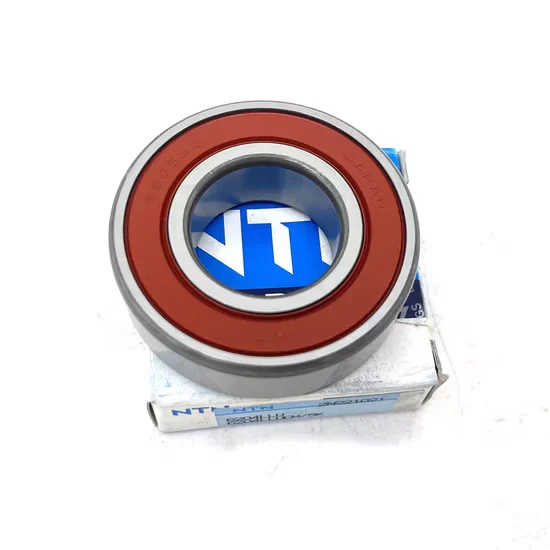 Deep Groove Ball Bearings
X&S 6000 Deep Groove Ball Bearing for Auto Wholesale Supplier
View product details Tapered Roller Bearings
Genuine NTN 32004 32005 32006 32007 Tapered Roller Bearing Wholesale Supplier
View product details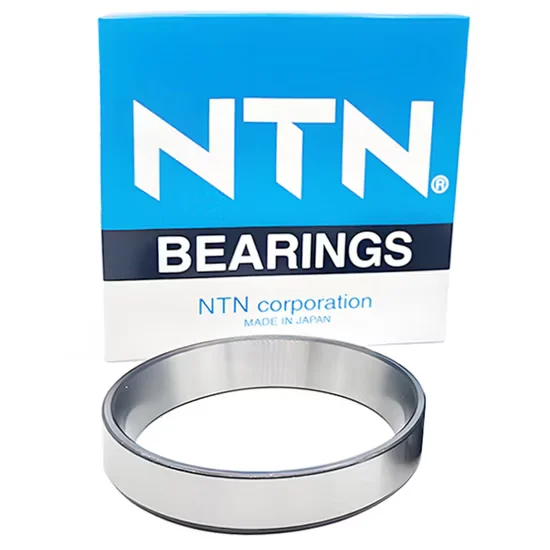 Tapered Roller Bearings
NTN 30216 Tapered Roller Bearing Genuine Original Wholesale Supplier
View product details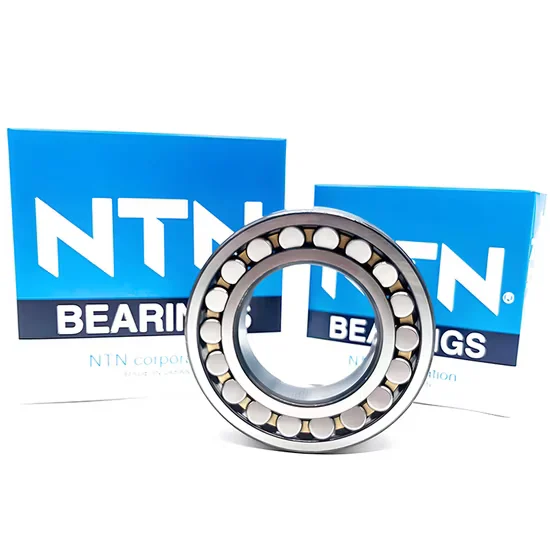 Spherical Roller Bearings
Genuine NTN 21310 21311 21312 Spherical Roller Bearing Wholesale Supplier
View product detailsRelated applications
See how this topic connects to gearbox and heavy-drive service.