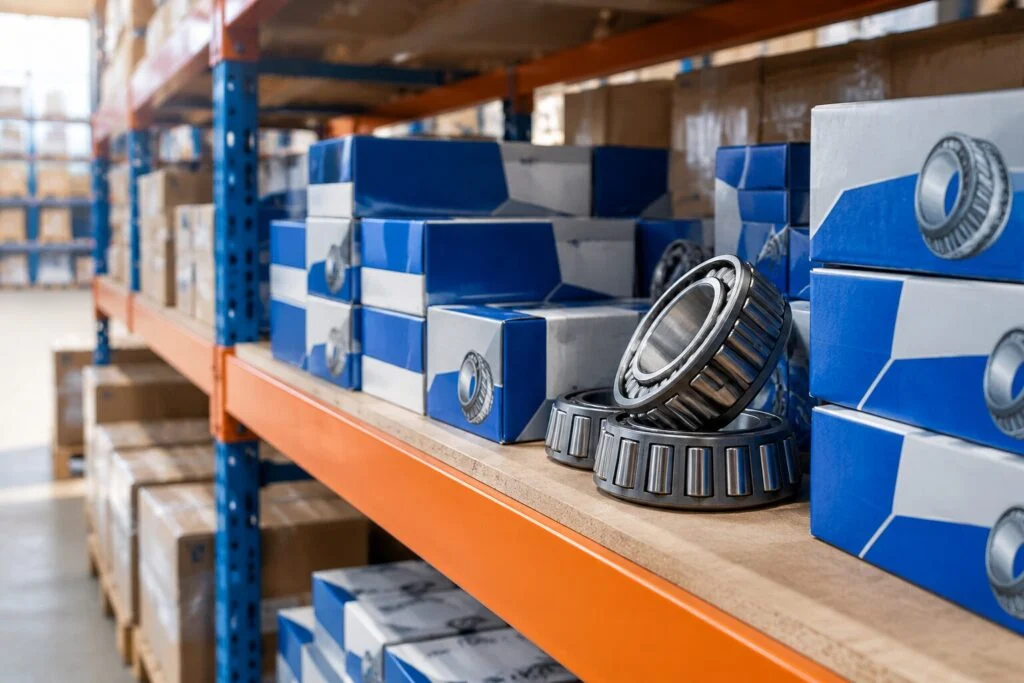
Clutch Bearings for Manual Pickups: Genuine Wholesale Supplier
Counterfeit parts destroy gearboxes faster than normal wear ever could.
Genuine clutch bearings are the only viable solution for manual pickups operating in harsh environments, as authentic components prevent catastrophic transmission failures through verified load ratings and effective dust sealing. Sourcing requires strict traceability to avoid the hidden costs of refurbished units that fail under heavy loads.
I still hear the owner’s voice from that repair shop on the outskirts of Lagos. He pointed at the scattered metal shards inside the transmission housing, furious because the vehicle had traveled less than three thousand kilometers before the gearbox disintegrated. The culprit was a refurbished clutch release bearing that looked pristine in the box but lacked the material hardness to withstand the torque of a loaded pickup. That incident shifted my focus entirely. In regions where dust is thick and roads are unforgiving, the difference between a genuine part and a high-quality imitation is not just longevity; it is whether the vehicle returns from the mine or becomes scrap. [NEED_CITE: impact of counterfeit automotive parts on transmission lifespan]
Understanding why these components fail requires looking beyond simple mileage. The operational reality for manual pickups in industrial and off-road settings demands a deeper analysis of selection criteria and sourcing integrity.
Why Do Clutch Bearings Fail Prematurely in Manual Pickups?
Harsh conditions expose the weaknesses of non-genuine materials immediately.
Premature failure is rarely a result of normal wear in heavy-duty applications. It is predominantly caused by counterfeit or refurbished parts that cannot handle the specific stress profiles of pickup trucks. In mining sites and construction zones, dust ingress is constant. A genuine bearing features sealing systems designed to block fine particulate matter, whereas cheaper alternatives often use inferior seals that degrade quickly. Once dust enters the raceway, it acts as an abrasive, grinding down the steel surfaces and leading to rapid overheating and seizure. [NEED_CITE: common failure modes of clutch bearings in dusty environments per ISO 15243]
The load rating is another critical factor. Manual pickups frequently carry heavy payloads, which increases the axial and radial loads on the clutch release mechanism. Authentic bearings are manufactured to strict international standards, ensuring they can withstand these fluctuating forces without deforming. Counterfeit units often use lower-grade steel with inconsistent hardness, making them vulnerable to spalling under heavy loads. I have seen batches of aftermarket bearings that appeared identical to original equipment but failed within weeks because their internal geometry did not match the precise tolerances required for smooth engagement.
The frequency of replacement in these environments is significantly higher than in passenger cars. A mining site pickup might require bearing replacements twice as often if the initial component lacks proper protection. This is not a maintenance issue but a sourcing error. Using parts that do not meet the original equipment manufacturer’s specifications guarantees repeated failures. The real cost is not just the bearing itself but the downtime and the potential damage to surrounding components.
How to Select the Right Clutch Bearing for Heavy-Duty Pickups?
Load capacity and sealing effectiveness are the primary selection criteria.
Selecting the correct clutch bearing involves more than matching a part number. It requires verifying the technical specifications against the operational demands of the vehicle. For heavy-duty pickups, the bearing must have a high dynamic load rating to handle the torque transfer during clutch engagement. Additionally, the sealing design must be robust enough to prevent contamination from mud, dust, and water. [NEED_CITE: technical standards for automotive clutch bearing load ratings]
When evaluating options, look for bearings that comply with international quality standards. Genuine products from established brands undergo rigorous testing to ensure consistency in material composition and dimensional accuracy. Refurbished bearings may offer a lower upfront cost, but they lack the guaranteed performance of new, authentic units. The surface finish of the raceways in a genuine bearing is optimized to reduce friction and heat generation, which is crucial for extending service life in high-temperature environments.
| Selection Criteria | Genuine Bearing | Refurbished/Counterfeit |
|---|---|---|
| Material Hardness | Consistent HRC range per standard | Variable, often below specification |
| Sealing Effectiveness | Robust, multi-lip designs | Basic or degraded seals |
| Load Rating | Verified against OEM specs | Unverified or overstated |
| Traceability | Full batch documentation | None or falsified papers |
A regional distributor once shared his experience with mixed-batch sourcing for various pickup models. He managed inventory for over five brands and ten models, consolidating shipments to reduce logistics costs. However, he noticed a pattern of returns whenever he sourced from suppliers who could not provide complete traceability documents. By switching to a supplier that offered verified genuine products, he reduced return rates significantly. This highlights the importance of sourcing from partners who prioritize authenticity over price.
The right selection also considers cross-brand compatibility. Many manual pickups share similar transmission designs across different manufacturers. A knowledgeable supplier can help identify equivalent models that meet the same technical requirements, allowing for more flexible inventory management without compromising on quality.
What Are the Hidden Costs of Using Refurbished Bearings?
Secondary gearbox damage far exceeds the savings from cheap parts.
The most dangerous misconception in the aftermarket is that a cheaper bearing saves money. In reality, the failure of a low-quality clutch bearing often leads to catastrophic damage to the transmission gears. When a bearing seizes or disintegrates, metal fragments can enter the gearbox oil, causing abrasion to gear teeth and synchronizers. The cost of replacing an entire transmission assembly is many times higher than the price difference between a genuine and a refurbished bearing. [NEED_CITE: economic impact of transmission failure due to component debris]
In a fleet workshop scenario, I observed how premature failure of refurbished bearings led to a complete gearbox replacement. The initial savings on the bearing were negligible compared to the labor hours and parts required to fix the transmission. Moreover, the downtime meant the vehicle was out of service for days, affecting operational schedules. For businesses relying on their pickup fleets, this unplanned downtime is a significant financial burden.
Another hidden cost is the risk to safety. A failing clutch bearing can cause erratic clutch behavior, leading to difficult shifting or even loss of power transmission while driving. In off-road or heavy-load situations, this can be dangerous. Genuine bearings provide predictable performance, ensuring that the clutch engages and disengages smoothly every time. This reliability is essential for drivers who operate in challenging conditions where vehicle control is paramount.
Refurbished bearings also lack the consistent quality control of new units. They may have microscopic cracks or surface imperfections that are not visible to the naked eye but will propagate under stress. These defects lead to unpredictable failure times, making it impossible to plan maintenance schedules effectively. Investing in genuine parts eliminates this uncertainty, providing a known baseline for service intervals.
How to Source Genuine Clutch Bearings for Aftermarket Distribution?
Traceability and mixed-batch consolidation are key to reliable supply.
Sourcing genuine clutch bearings for aftermarket distribution requires a partner who can provide full traceability documentation. This includes certificates of origin, material test reports, and batch numbers that link back to the manufacturer’s production facilities. Without these documents, it is impossible to verify the authenticity of the parts. A reliable supplier will transparently share this information, allowing distributors to prove the quality of their products to end customers. [NEED_CITE: importance of supply chain traceability in automotive aftermarket]
For distributors serving multiple regions, the ability to consolidate mixed batches is crucial. Instead of ordering full containers of a single part number, buyers can combine various bearing types and brands into one shipment. This flexibility reduces inventory holding costs and allows for quicker response to market demands. A professional global supplier can manage this complexity, ensuring that each item in the container is genuine and properly documented.
Technical support is another vital aspect of sourcing. A good supplier offers cross-brand equivalent model consultation, helping buyers find the right parts for diverse pickup fleets. This service is particularly valuable when dealing with older or less common models where direct replacements may be hard to find. By leveraging extensive databases and engineering knowledge, suppliers can recommend suitable alternatives that meet the required specifications.
Building a long-term relationship with a supplier who prioritizes quality over quick sales is essential. Such partners will refuse to sell questionable stock, even if it means losing a short-term order. This integrity ensures that distributors receive only products that will perform as expected, protecting their reputation and customer trust. In the competitive aftermarket landscape, reliability is the most valuable currency.
Conclusion
Authenticity prevents costly transmission failures in manual pickups.
Genuine clutch bearings are non-negotiable for vehicles operating in harsh conditions, as they offer verified load capacity and superior sealing against contaminants. Sourcing from suppliers who provide full traceability and technical support ensures long-term reliability and protects against the hidden costs of secondary damage. Prioritizing quality over initial price savings is the only sustainable strategy for aftermarket distributors and fleet operators.