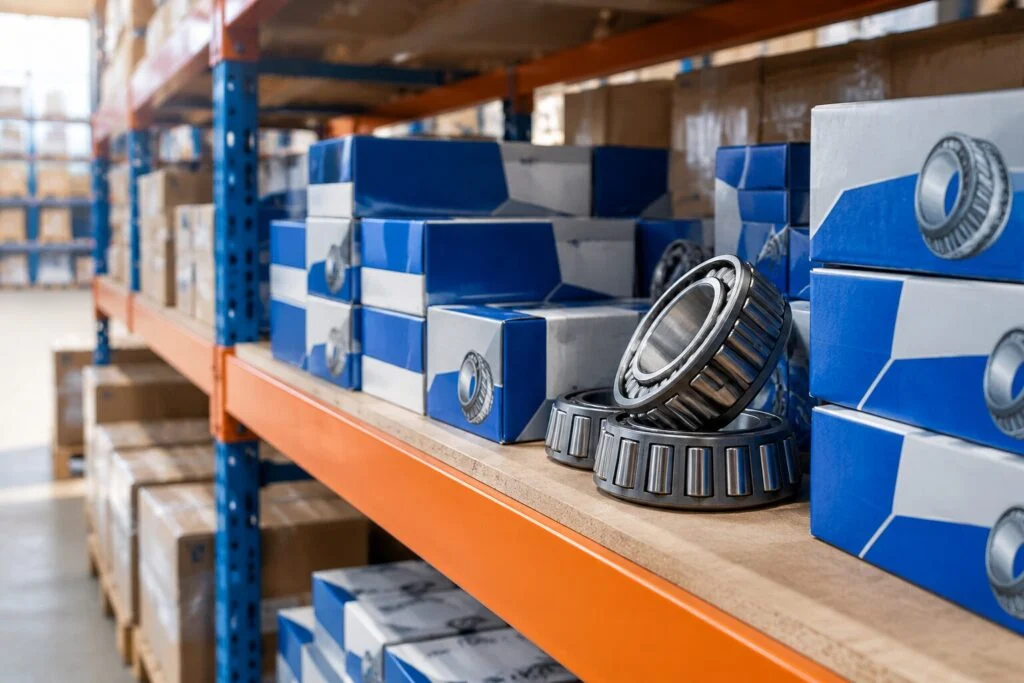
Genuine Auto Bearings for Latin America Distributors – Wholesale Supplier
The cheapest unit price often leads to the highest total landed cost.
For auto parts distributors in Latin America, successful procurement hinges less on the initial invoice value and more on the completeness of traceability documentation and the strategic consolidation of mixed-brand shipments. Without verified origin certificates and precise HS code classification, even genuine bearings face severe port delays or seizure, eroding margins through storage fees and missed sales windows.
Navigating the import landscape for automotive components requires a shift from simple transactional buying to comprehensive supply chain management. I learned this the hard way during a shipment to Veracruz. The bearings were authentic, sourced directly from major European and Japanese manufacturers, but the paperwork lacked specific origin details required by local customs authorities. The container sat idle for weeks while my client scrambled to produce documents that should have been part of the initial packing list. That incident reshaped how I approach every order for auto parts distributors in Latin America, prioritizing administrative precision alongside product quality.
This guide addresses the critical friction points in sourcing genuine bearings for the region. It covers mandatory documentation, logistics optimization through mixed-container strategies, and the technical verification needed to ensure fleet reliability. By focusing on these operational realities, buyers can secure consistent supply without the hidden costs of compliance failures.
What documents are mandatory for importing bearings to Latin America?
Complete traceability and origin certificates are non-negotiable for preventing port seizures.
Customs authorities in countries like Mexico, Brazil, and Argentina have tightened scrutiny on industrial imports, particularly for components used in critical infrastructure and transportation. A commercial invoice and packing list are no longer sufficient. Importers must provide a certificate of origin that explicitly links the goods to their manufacturing source, along with detailed technical datasheets that justify the declared HS code. [NEED_CITE: customs documentation requirements for mechanical parts in Mercosur countries]
The complexity arises from the need to prove that the bearings are not merely transshipped but are genuinely produced by the claimed brand. For auto parts distributors in Latin America, this means working with suppliers who can provide batch-specific traceability. If a supplier cannot link a specific batch of SKF or NSK bearings to their original factory test reports, the risk of customs questioning the authenticity increases significantly.
Consider a scenario where a distributor in Bogota receives a shipment of tapered roller bearings. The boxes look correct, and the seals are intact. However, the certificate of origin lists a generic trading company rather than the actual manufacturer. Customs officials flag this as a potential counterfeit entry. The resulting inspection halts the entire container, leading to demurrage charges that quickly surpass the value of the goods themselves. This is not an isolated incident but a recurring pattern for those who overlook documentation rigor.
To mitigate this, ensure your supplier provides a full set of export documents that include:
- A legalized certificate of origin.
- Original manufacturer test certificates for each batch.
- A detailed packing list matching the physical SKU count exactly.
- Clear HS code classifications aligned with local tariff schedules.
Failure to secure these documents upfront turns a routine clearance into a legal ordeal. The cost of correcting paperwork after arrival is exponentially higher than ensuring accuracy before departure. For auto parts distributors in Latin America, verifying these documents is as critical as inspecting the physical goods.
How to optimize mixed-container shipments for auto parts distributors?
Consolidating multi-brand bearings reduces logistics costs and maximizes cubic meter utilization.
Many buyers assume that sticking to a single brand simplifies logistics. In reality, relying on one brand often leads to inefficient container usage because popular SKUs sell faster than niche ones, leaving dead stock that occupies valuable warehouse space. Mixed-container consolidation allows distributors to balance high-turnover items with specialized parts, optimizing both cash flow and shipping volume. [NEED_CITE: logistics efficiency in mixed-SKU automotive aftermarket supply chains]
When planning a mixed container, the key is balancing SKU variety against total CBM. A typical 40-foot container can hold a diverse range of deep-groove ball bearings, spherical roller bearings, and tapered roller bearings from brands like FAG, INA, and TIMKEN. By combining these, distributors can meet the varied needs of local repair shops and fleet operators without overstocking any single type.
I once worked with a client in Santiago who was struggling with inventory turnover. He was ordering full containers of a single brand, which meant he had excess stock of standard sizes but constant shortages of heavy-duty equivalents for mining trucks. We restructured his orders to include a mix of premium European brands for high-load applications and reliable Asian brands for standard passenger vehicle repairs. This approach reduced his average inventory holding time noticeably and improved his ability to respond to urgent MRO requests.
The process involves:
- Analyzing local demand patterns to identify fast-moving versus slow-moving SKUs.
- Selecting complementary brands that cover different price points and application needs.
- Calculating the exact CBM for each SKU to maximize container fill rate.
- Ensuring all brands in the mix have compatible documentation standards to simplify clearance.
This strategy requires a supplier capable of managing complex picking and packing operations. Not all wholesalers can handle the administrative burden of mixing brands while maintaining accurate traceability for each item. For auto parts distributors in Latin America, finding a partner who specializes in mixed-brand consolidation is essential for competitive advantage.
Why is cross-brand equivalent consultation critical for aftermarket MRO?
Ensures precise replacement for diverse vehicle fleets without overstocking.
The Latin American automotive market is characterized by a wide variety of vehicle makes and models, many of which are imported from different global regions. A truck fleet might operate vehicles from Europe, Asia, and North America simultaneously. Stocking original equipment manufacturer (OEM) parts for every model is financially impractical. Cross-brand equivalent consultation allows distributors to offer viable alternatives that meet or exceed OEM specifications. [NEED_CITE: aftermarket bearing interchangeability standards for commercial vehicles]
For example, a specific wheel hub assembly might originally use an NSK bearing. However, a high-quality equivalent from NTN or KOYO may offer similar performance characteristics at a more accessible price point. Knowing these equivalencies requires deep technical knowledge of bearing dimensions, load ratings, and material compositions. It is not enough to match the part number; the internal geometry and precision class must also align.
A common mistake is assuming that all bearings with the same outer dimensions are interchangeable. Differences in internal clearance, such as C3 versus standard, can lead to premature failure in high-temperature environments like brake hubs. A distributor who understands these nuances can advise customers correctly, reducing return rates and building trust.
In one case, a repair group in Lima was experiencing high failure rates in their rear axle replacements. They were using a generic bearing that matched the dimensions but lacked the necessary heat treatment for heavy loads. After switching to a verified equivalent from a premium brand with proper technical guidance, the failure rate dropped noticeably. This outcome was not just about the product but about the technical support provided during the selection process.
Key factors in cross-brand consultation include:
- Verifying dimensional accuracy and tolerance classes.
- Matching load capacity and speed ratings.
- Confirming material compatibility with operating conditions.
- Ensuring availability of technical datasheets for customer reference.
For auto parts distributors in Latin America, offering technical consultation transforms them from simple box movers into trusted partners. This value-added service distinguishes successful distributors in a crowded market.
How to verify bearing authenticity from global suppliers?
ISO compliance and direct brand traceability guarantee genuine products.
The aftermarket is flooded with counterfeit bearings that mimic the packaging and branding of reputable manufacturers. These fakes often fail prematurely, causing significant damage to machinery and reputational harm to distributors. Verifying authenticity requires looking beyond the box to the product itself and its accompanying documentation. [NEED_CITE: ISO standards for bearing authentication and quality assurance]
Genuine bearings from brands like SKF, FAG, and NSK have specific marking characteristics, including laser-etched codes that are difficult to replicate. Additionally, the surface finish and rolling element quality are consistent with strict manufacturing tolerances. Counterfeits often exhibit rough finishes, inconsistent spacing, or incorrect font styles on the labels.
However, visual inspection alone is not foolproof. The most reliable method is to source from suppliers who maintain direct relationships with manufacturers and can provide unbroken chain-of-custody documentation. This includes original purchase orders from the brand, factory test reports, and authorized distribution certificates.
I recall inspecting a batch of bearings that looked perfect externally. The packaging was pristine, and the logos were sharp. However, upon checking the batch numbers against the manufacturer’s database, they did not exist. The supplier had reused authentic boxes to package inferior products. This experience reinforced the importance of verifying the digital trail alongside the physical product.
Steps to verify authenticity include:
- Checking laser-etched markings for clarity and consistency.
- Requesting original factory test certificates for the specific batch.
- Verifying the supplier’s authorization status with the brand.
- Conducting random sample testing for dimensional accuracy and hardness.
For auto parts distributors in Latin America, selling counterfeit goods is not just a business risk but a legal liability. Ensuring every bearing is genuine protects both the distributor and the end-user. Working with established auto parts distributors in Latin America who prioritize transparency is the best defense against fraud.
Conclusion
Documentation and technical accuracy drive profitability, not just low prices.
Sourcing bearings for the Latin American market demands a holistic approach that integrates rigorous customs compliance, smart logistics consolidation, and technical expertise. By focusing on complete traceability and mixed-brand optimization, distributors can avoid costly delays and meet the diverse needs of their customers. Authenticity verification remains the cornerstone of long-term success, ensuring that every part delivered performs as expected. For auto parts distributors in Latin America, mastering these elements creates a resilient and competitive supply chain.