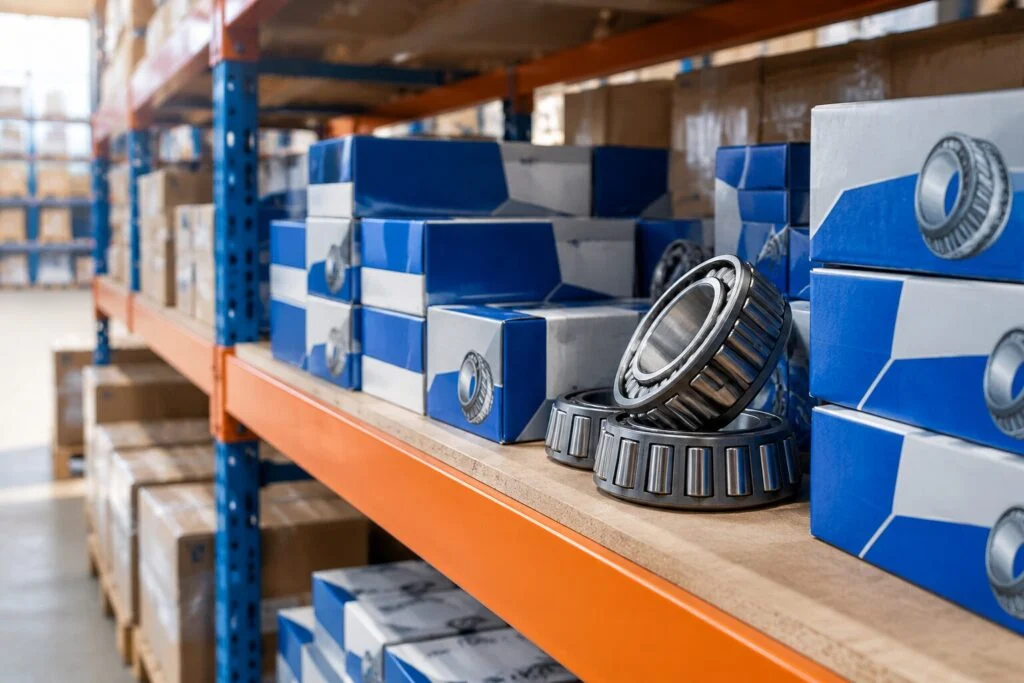
Hyundai & Kia SUV Wheel Bearings: Wholesale Supplier for Bulk Orders
Cheap bearings save costs initially but triple maintenance downtime.
Sourcing genuine, traceable wheel bearings from authorized suppliers like TIMKEN and SKF is the only reliable method to prevent premature failure in Hyundai and Kia SUVs operating under harsh conditions. Distributors must prioritize full batch traceability documentation over OEM-style packaging to avoid counterfeit "water goods" that lack proper metallurgy.
I still remember the dust choking the air in Lagos when a local fleet manager slammed a shattered hub assembly onto my desk. The vehicles were modern Kia Sportages, barely out of warranty, yet their front wheels had seized after less than twenty thousand kilometers on unpaved roads. The culprit was not poor driving or bad luck, but a batch of untraceable aftermarket parts that looked identical to genuine components until they disintegrated under load. We had to air-freight emergency replacements overnight, a logistical nightmare that cost far more than the initial savings from the cheap parts. That incident reshaped how I approach procurement for Hyundai & Kia SUV wheel bearings. It is not just about finding a part number; it is about verifying the lineage of the steel itself.
The aftermarket is flooded with components that mimic the appearance of premium brands but fail to meet the rigorous tolerance grades required for heavy SUVs. When sourcing for bulk orders, the primary risk is not price, but authenticity. A legitimate Hyundai & Kia SUV wheel bearings supplier will provide documentation that links every unit back to the manufacturer’s production facilities, ensuring that the material composition meets ISO standards for fatigue resistance. Without this paper trail, you are essentially gambling with your clients’ safety and your own reputation.
Why Do Hyundai & Kia SUV Wheel Bearings Fail Prematurely?
Counterfeit bearings lack the necessary metallurgical integrity to withstand heavy loads, leading to rapid spalling.
Modern SUVs like the Hyundai Tucson and Kia Sportage place significant stress on their front axles due to their weight and typical usage in mixed terrain. Genuine bearings from brands like SKF and TIMKEN are engineered with specific case-hardening depths and controlled nitrogen infusion to resist subsurface fatigue. Counterfeit units often use inferior steel with higher inclusion density, which creates weak points where cracks initiate prematurely. [NEED_CITE: failure mode analysis per ISO 15243 standard]
In my experience, the most common failure mode in these fake parts is not immediate seizure, but progressive degradation. The rollers begin to pit, creating vibration that drivers mistake for tire imbalance. By the time the noise becomes unbearable, the hub assembly is often damaged beyond repair, requiring a much costlier replacement. This is why a reliable Hyundai & Kia SUV wheel bearings distributor must understand the technical specifications behind the part number, not just the box it comes in.
| Feature | Genuine Premium Bearing (TIMKEN/SKF) | Counterfeit/Untraceable Unit |
|---|---|---|
| Steel Purity | Controlled inclusion density | High inclusion density |
| Heat Treatment | Precise case-hardening depth | Inconsistent hardness profile |
| Surface Finish | Micron-level precision | Visible machining marks |
| Traceability | Full batch-level documentation | None or self-reported |
| Fatigue Life | Substantially extended service life | Vulnerable to early spalling |
A European repair group once reported a spike in comebacks after switching to a cheaper source for Hyundai & Kia SUV wheel bearings. The parts looked correct, and the packaging was convincing, but the failure rate doubled within months. Upon investigation, we found that the internal geometry deviated slightly from the OEM specifications, causing uneven load distribution. This subtle deviation is impossible to detect without precise measurement tools, making trust in the supplier’s quality assurance processes critical.
How to Identify Genuine TIMKEN & SKF Bearings?
Rely on batch traceability and official documentation, not just packaging.
Packaging can be replicated with alarming accuracy. I have seen boxes that perfectly mimic the branding of major manufacturers, complete with holographic stickers that fade under scrutiny. The true differentiator lies in the component itself and the accompanying paperwork. Genuine TIMKEN and SKF bearings feature laser-etched batch numbers on the outer ring or shield, which can be cross-referenced with the manufacturer’s database. [NEED_CITE: official brand authentication guidelines]
When evaluating a potential source for Hyundai & Kia SUV wheel bearings, ask for the certificate of origin and the mill test certificate for the steel batch. These documents should match the lot numbers on the physical products. If a supplier hesitates or provides vague answers, it is a red flag. Authentic distributors maintain a direct line to the brand’s logistics network, allowing them to verify the provenance of every item in stock.
Consider the case of a Middle East distributor who nearly accepted a container load of suspiciously low-priced bearings. The seller claimed they were "overstock" from an OEM factory. However, upon requesting the traceability docs, the seller could only provide a generic invoice. We advised the client to reject the shipment. Later, independent testing revealed that the grease used in those bearings had a significantly lower dropping point, meaning it would liquefy and leak out under the high temperatures generated by heavy braking. This kind of detail is never visible on the box but is critical for performance.
What Are the Sourcing Risks of Untraceable Aftermarket Parts?
Unverified supply chains increase the risk of receiving counterfeit "water goods" that compromise vehicle safety.
The term "water goods" refers to products that enter the market through unofficial channels, often bypassing quality control checks. For Hyundai & Kia SUV wheel bearings, this risk is heightened because these vehicles are popular in regions with challenging road conditions. A bearing that fails in a city might cause inconvenience; a bearing that fails on a remote highway can be catastrophic.
Sourcing from untraceable channels also exposes distributors to legal and reputational risks. If a customer suffers an accident due to a faulty part, the liability trail leads back to the supplier. Without proof of authenticity, defending against such claims becomes difficult. Moreover, inconsistent quality leads to unpredictable inventory turnover. You may find yourself dealing with a high volume of warranty claims, which erodes profit margins and damages relationships with repair shops.
A Latin American fleet operator learned this lesson the hard way. They sourced Hyundai & Kia SUV wheel bearings from a new vendor offering prices well below market average. Initially, the savings seemed substantial. However, within a year, the maintenance costs skyrocketed due to frequent replacements. The downtime alone cost several times the initial savings. We stepped in to consolidate their future orders with verified sources, stabilizing their supply chain and reducing total cost of ownership despite higher unit prices.
How to Consolidate Multi-Brand Bearing Orders Efficiently?
Partner with global suppliers offering mixed-brand consolidation and technical support.
Managing inventory for multiple brands like TIMKEN, SKF, NSK, and FAG can be logistically complex. Each brand has its own packaging, labeling, and documentation requirements. A specialized Hyundai & Kia SUV wheel bearings supplier can simplify this by offering mixed-container consolidation. This allows distributors to order exact quantities of each brand without meeting high minimum order quantities for individual SKUs.
Technical support is another crucial element. Different brands may have slight variations in fitment or installation procedures. A knowledgeable supplier provides cross-reference lookup services and application guidance, ensuring that the right bearing is selected for the specific model year and trim level. This reduces the risk of returns due to incorrect part selection.
For example, a Southeast Asian wholesaler needed to stock bearings for a wide range of Hyundai and Kia models. Instead of placing separate orders with multiple distributors, they worked with us to create a consolidated shipment. We provided detailed technical datasheets for each item, helping their sales team educate local repair shops on the benefits of using genuine parts. This collaborative approach strengthened their market position and improved customer trust.
Conclusion
Authenticity and traceability are non-negotiable for sustainable aftermarket success.
Sourcing genuine Hyundai & Kia SUV wheel bearings requires a shift from price-focused buying to value-driven procurement. By prioritizing suppliers who offer full documentation and technical expertise, distributors can protect their clients from the hidden costs of counterfeit parts. The goal is not just to sell a component, but to ensure reliable performance and safety on the road.