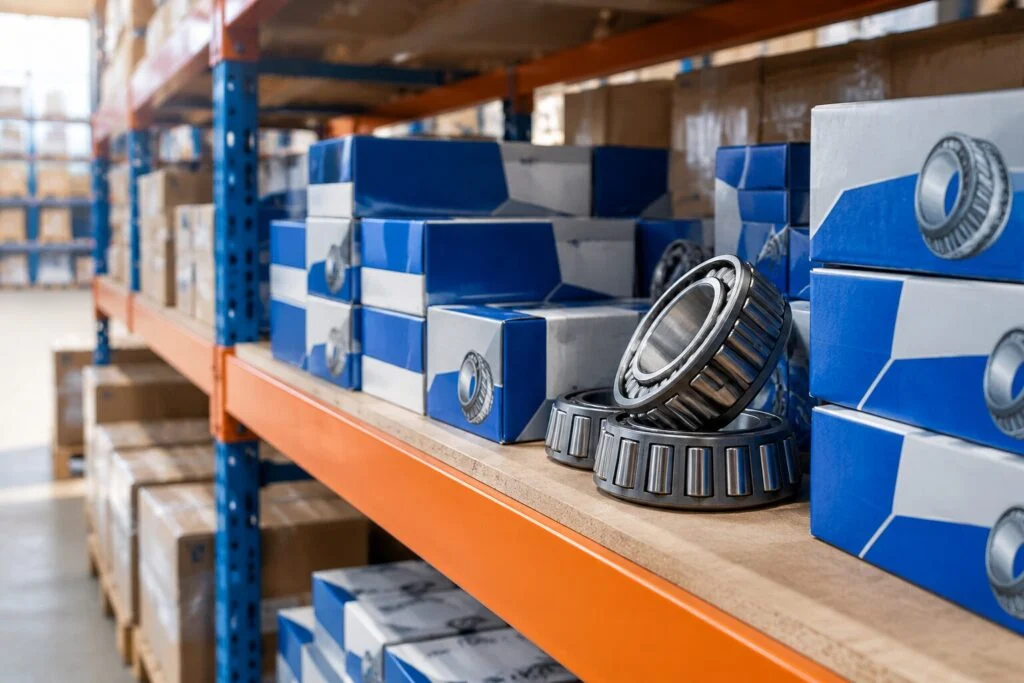
Motorcycle Wheel Bearing Replacement: Wholesale Supplier for Bulk Orders
Saving pennies on bearings costs dollars in warranty claims.
Proper motorcycle wheel bearing replacement requires precise installation techniques and genuine parts with correct clearance parameters to prevent premature failure. Sourcing from a reliable supplier ensures traceability and technical accuracy, which are critical for reducing aftermarket liability.
I still remember the panic when a claim arrived from a repair shop in South America. They had installed a batch of budget-friendly tapered roller bearings I sourced years ago during my early days in Linyi. The cages fragmented within a few thousand kilometers, causing the wheels to lock up. That incident shifted my entire approach. Now, I focus strictly on genuine components and verified clearance specs. When distributors ask about cost savings, I point out that the initial purchase price is negligible compared to the reputation damage caused by a single catastrophic failure on the road. [NEED_CITE: common causes of premature bearing failure in automotive applications]
Understanding the technical nuances of sourcing and installation helps wholesalers protect their clients from these hidden risks.
What Are the Signs of a Failing Motorcycle Wheel Bearing?
Listen for humming noises and check for axial play to catch issues early.
Identifying failing bearings before they cause collateral damage is essential for repair shops. The most common indicator is a continuous humming or growling noise that increases with speed. This sound often mimics tire noise but persists regardless of road surface. Another critical sign is excessive axial play. When the wheel is lifted, grabbing it at the top and bottom and rocking it should reveal no movement. Any noticeable wiggle suggests the internal races are worn or the preload is lost.
In tropical climates, moisture ingress accelerates corrosion inside the seal, leading to gritty resistance when spinning the wheel by hand. A smooth rotation should feel consistent; any roughness or binding indicates contamination or race spalling. Repair technicians often mistake these symptoms for brake drag or transmission issues, leading to misdiagnosis.
For wholesalers, educating clients on these signs reduces unnecessary returns. When a customer reports noise, verifying the bearing condition before replacement ensures the right part is ordered. This diagnostic precision builds trust between the distributor and the end-user. [NEED_CITE: diagnostic procedures for wheel bearing noise identification]
How to Choose the Right Replacement Bearing?
Match exact dimensions, load ratings, and clearance to OEM specs.
Selecting the correct bearing involves more than matching the outer diameter and bore size. The internal clearance class is vital for motorcycle applications, which experience significant thermal expansion during operation. Standard industrial clearances may be too tight, causing overheating and seizure under load. Conversely, loose clearances lead to vibration and premature fatigue.
A comparison of bearing attributes helps clarify why generic substitutes often fail:
| Attribute | Genuine Premium Bearing | Generic Substitute |
|---|---|---|
| Material Purity | High-carbon chromium steel with controlled inclusion density | Variable steel quality with higher impurity risk |
| Clearance Control | Precise C3 or specific OEM-matched clearance | Often standard C0, risking thermal seizure |
| Seal Integrity | Integrated high-temperature rubber seals | Basic rubber or metal shields prone to leakage |
| Cage Design | Optimized polymer or steel cage for high RPM | Basic stamped steel prone to fragmentation |
A wholesaler in the Middle East once faced a wave of claims because the bearings supplied had incorrect clearance for the local high-temperature environment. The internal friction generated excessive heat, destroying the lubricant and seizing the hubs. Switching to bearings with verified thermal clearance specifications eliminated the issue. [NEED_CITE: impact of internal clearance on bearing operating temperature]
Sourcing from a professional supplier who provides technical datasheets ensures that every batch meets these stringent requirements. This level of detail prevents the mismatched parts that plague many aftermarket channels.
What Are the Step-by-Step Replacement Procedures?
Follow strict torque specs and use proper press tools to avoid damage.
Improper installation is a leading cause of new bearing failure. Hammering a bearing into place damages the races and rollers, creating immediate points of stress concentration. The correct method involves using a hydraulic press or a dedicated bearing driver kit that applies force evenly to the outer race.
- Preparation: Clean the hub thoroughly. Any debris left in the seat will prevent the bearing from sitting flush, causing misalignment.
- Removal: Use a blind hole bearing puller or a slide hammer with appropriate attachments. Avoid heating the hub excessively, as this can alter the metallurgy of the aluminum alloy.
- Installation: Press the new bearing in until it seats fully against the shoulder. Ensure the force is applied only to the outer race. Pressing through the inner race transfers load to the rolling elements, causing invisible damage.
- Sealing: Install new seals if they are separate components. Lubricate the seal lip lightly to prevent tearing during installation.
- Torque: Tighten the axle nut to the manufacturer’s specified torque. Over-tightening preloads the bearing excessively, while under-tightening allows movement that wears the races.
A fleet operator in Southeast Asia extended their service intervals significantly after training mechanics on these precise installation protocols. The reduction in premature failures was noticeable, proving that technique matters as much as part quality. [NEED_CITE: best practices for pressing bearings into housing bores]
For distributors, providing these technical guidelines alongside the product adds value. It transforms a simple transaction into a technical partnership, helping repair shops avoid costly comebacks.
Why Do New Bearings Fail Prematurely?
Improper installation, contamination, and using non-genuine parts cause early failure.
When a new bearing fails shortly after installation, the culprit is rarely a manufacturing defect in a genuine part. More often, it is the result of contamination during handling or incorrect fitting. Dust and dirt introduced during the replacement process act as abrasives, grinding down the polished surfaces of the races.
Another frequent issue is the use of incompatible lubricants. Some greases react chemically with the seal material, causing it to swell or degrade. This breach allows water and grit to enter the bearing assembly. In coastal regions, salt spray accelerates this corrosion process, making seal integrity even more critical.
Using non-genuine parts also introduces variability. Without strict quality control, the hardness of the steel may vary, leading to rapid wear under load. A batch of substandard bearings might pass visual inspection but fail under dynamic stress tests.
Sourcing from a supplier with full traceability documentation mitigates these risks. Knowing the origin of the steel and the manufacturing standards ensures consistency. For wholesalers, this reliability is a key differentiator in a market flooded with uncertified alternatives. [NEED_CITE: effects of contamination on rolling element bearing life]
Conclusion
Precision and authenticity define successful motorcycle wheel bearing replacement.
Ensuring safety and longevity requires adhering to OEM specifications for clearance and installation. Sourcing genuine components from a trusted partner eliminates the hidden costs of warranty claims and reputational damage.