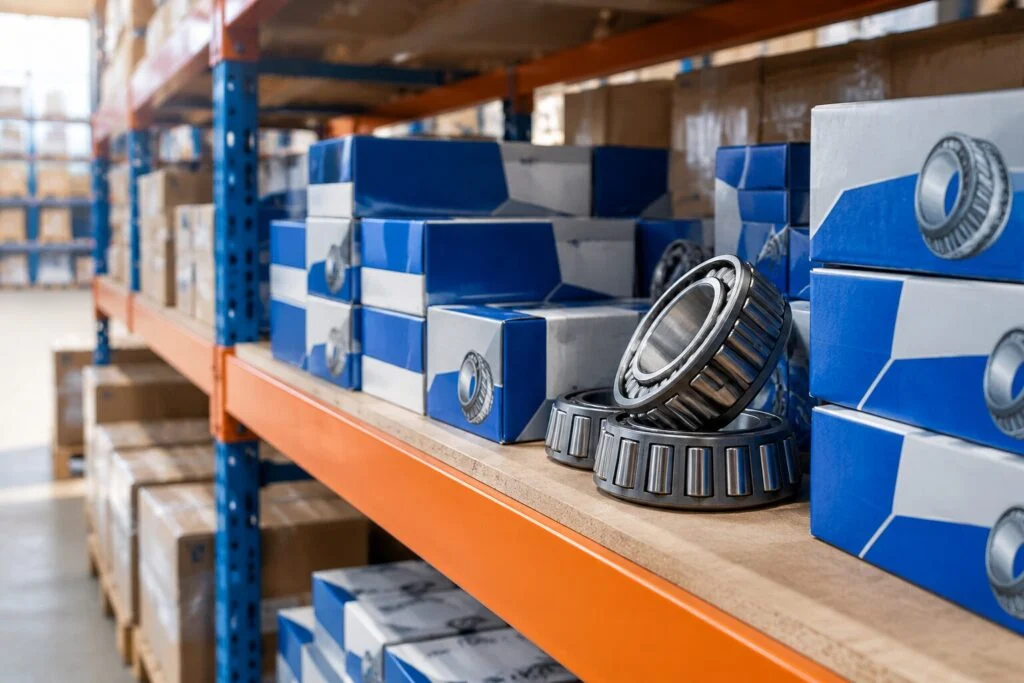
Nissan Navara & Patrol Wheel Bearings: Wholesale Supplier
Cheap bearings do not save money; they multiply repair costs exponentially.
Selecting genuine wheel bearings for Nissan Navara and Patrol requires matching dynamic load capacities to regional road conditions and ensuring strict traceability to prevent catastrophic axle seizures. Distributors must prioritize seal integrity over initial price, verifying authenticity through complete documentation rather than visual inspection alone.
The dust in the Dubai auto parts market has a distinct, metallic taste that I still remember from that disastrous shipment years ago. I had sourced what appeared to be premium NSK and KOYO units for a large fleet of Nissan Navaras and Patrols operating in the Middle East. The price was right, the packaging looked authentic, and the client was eager to cut costs. Within twenty thousand kilometers, the first reports of wheel hub noise began. By the time the third vehicle suffered a complete bearing disintegration on a desert highway, the financial damage was severe. The fake seals had failed under high-temperature desert conditions, allowing abrasive sand to destroy the raceways. That incident forced a fundamental shift in how I approach sourcing. It is no longer about finding the lowest bid; it is about understanding the specific failure modes of off-road vehicles and ensuring every single unit is traceable to its original manufacturer. [NEED_CITE: common failure modes of wheel bearings in off-road applications per ISO 15243]
This experience underscores why aftermarket distributors and repair groups must look beyond the box. The core argument for selecting genuine components lies in the engineering specifications that counterfeits simply cannot replicate. When dealing with high-turnover fleets like the Nissan Navara and Patrol, the margin for error is non-existent.
Why Do Nissan Navara and Patrol Wheel Bearings Fail Prematurely?
Harsh environments and overloading expose inferior seal designs and low load ratings.
Most operators assume that standard seals are sufficient for daily driving. However, the true cause of failure in dusty regions is inadequate seal design, not just steel quality. In the Middle East, off-road fleets face extreme temperatures and fine, abrasive dust. Standard rubber seals harden and crack under these conditions, losing their ability to keep contaminants out. Once sand enters the bearing assembly, it acts as a grinding compound, rapidly wearing down the precision-ground surfaces. [NEED_CITE: impact of environmental contaminants on bearing lifespan]
In African mining support vehicles, the challenge shifts to heavy shock loads and persistent dust. These vehicles operate on unpaved roads where impacts are frequent. If the bearing housing or the bearing itself lacks the necessary dynamic load capacity, micro-fractures develop in the raceways. This leads to premature noise onset long before the expected mileage is reached. The seal integrity here is critical because the dust in mining areas is often coarser and more damaging than desert sand.
Latin American commercial transport presents a different scenario: overloaded pickups. Nissan Navaras are frequently used for heavy cargo transport beyond their rated capacity. This places excessive stress on the front wheel bearings, which are not designed for such high static and dynamic loads. The result is rapid fatigue failure. Counterfeit bearings often use lower-grade steel with inconsistent hardness, making them even more vulnerable to these overload conditions. [NEED_CITE: relationship between overload and bearing fatigue life]
Understanding these regional nuances is essential for any supplier offering wheel bearings for Nissan Navara and Patrol. It is not enough to stock generic parts; one must stock parts engineered for the specific stresses of the target market.
How to Select the Right Bearing Specifications for Specific Regions?
Match dynamic load ratings and seal types to local road conditions and vehicle payloads.
Selection is not a one-size-fits-all process. It requires a detailed analysis of the operating environment. For distributors, this means offering products that align with the actual usage patterns of the end-users. A bearing suitable for urban delivery in Europe may fail catastrophically in the Australian outback or the Andes mountains.
| Region/Condition | Primary Stress Factor | Required Seal Type | Load Rating Focus |
|---|---|---|---|
| Middle East Desert | High Temperature, Fine Dust | High-Temp Fluoroelastomer | Moderate Dynamic, High Thermal Stability |
| African Mining | Shock Loads, Coarse Dust | Robust Double-Lip Seal | High Dynamic, Impact Resistant |
| Latin America Transport | Overloading, Paved/Unpaved Mix | Standard NBR with Reinforcement | Very High Dynamic, High Static |
| Urban Commercial | Stop-Start, Moderate Load | Standard Seal | Standard Dynamic, Low Noise |
This table illustrates how specifications must vary. For instance, in the Middle East, the focus is on temperature resistance. Bearings must maintain their structural integrity and seal elasticity at elevated temperatures. In contrast, African mining operations require bearings that can withstand sudden impacts without brinelling the raceways. [NEED_CITE: ABEC tolerance grades and application suitability]
When sourcing wheel bearings for Nissan Navara and Patrol, it is crucial to verify the dynamic load rating (C) provided by the manufacturer. Genuine brands like SKF, FAG, and NSK provide precise data on these ratings. Counterfeit products often lack this data or provide falsified figures. Distributors should request technical datasheets and cross-reference the part numbers with official OEM manuals to ensure compatibility. [NEED_CITE: automotive OEM service manual standards for bearing selection]
By aligning product specifications with regional demands, suppliers can reduce return rates and build trust with their clients. This approach transforms the supply chain from a transactional exchange into a technical partnership.
What Are the Hidden Costs of Using Non-Genuine Bearings?
Counterfeit parts lead to axle seizures and massive warranty claims, destroying brand reputation.
The initial savings from purchasing cheap bearings are illusory. The real cost emerges when a bearing fails in the field. A seized wheel bearing can damage the hub, axle shaft, and even the braking system. Repairing this collateral damage costs several times the price of the original bearing. For fleet operators, downtime is equally expensive. A truck stuck on a remote road generates lost revenue and logistical nightmares.
I recall a case where a repair group in Southeast Asia switched to a cheaper, unverified supplier for their Nissan Patrol maintenance. Initially, their profit margins improved. However, within six months, warranty claims surged. Customers reported unusual noises and vibration, leading to repeated visits. The repair shop had to replace not just the bearings, but also damaged hubs and axles. The cost of these repairs, combined with the loss of customer trust, far exceeded any initial savings. [NEED_CITE: cost-of-failure analysis in automotive aftermarket]
Furthermore, using non-genuine parts poses a safety risk. A catastrophic bearing failure at high speed can lead to loss of vehicle control. This liability extends to the distributor and the repair shop. In many jurisdictions, using counterfeit parts can void insurance coverage and lead to legal action.
For wholesalers, the reputational damage is perhaps the most significant hidden cost. Once a distributor is known for supplying unreliable parts, regaining market confidence is difficult. Clients will switch to competitors who offer verified, genuine products. Therefore, investing in authentic wheel bearings for Nissan Navara and Patrol is an investment in long-term business sustainability.
How to Verify Authenticity and Ensure Traceability?
Demand complete traceability documentation and buy from authorized global suppliers to avoid high-fake traps.
Visual inspection is no longer sufficient to detect high-quality counterfeits. Modern fakes can replicate packaging, holograms, and even part markings with alarming accuracy. The only reliable method to ensure authenticity is through strict supply chain traceability. This means knowing exactly where the bearing was manufactured, when it was produced, and how it reached your warehouse.
Authorized suppliers provide full documentation, including certificates of origin, material test reports, and batch numbers that can be verified with the manufacturer. Brands like TIMKEN, KOYO, and NTN have robust tracking systems. Distributors should insist on these documents for every shipment. If a supplier cannot provide verifiable traceability, the risk of receiving counterfeit goods is high. [NEED_CITE: industry best practices for anti-counterfeiting in bearing distribution]
Another effective strategy is to source from suppliers who hold significant spot inventory of genuine brands. Large inventories often indicate a direct relationship with manufacturers or authorized master distributors. These suppliers are less likely to mix counterfeit goods into their stock because their reputation depends on consistency. Additionally, they can offer mixed-batch consolidation, allowing buyers to purchase small quantities of various brands and sizes without compromising on authenticity.
When evaluating a potential partner, ask about their sourcing channels. Do they buy directly from the brand or through unauthorized intermediaries? Are they willing to share proof of authorization? These questions help filter out unreliable sources. For those seeking wheel bearings for Nissan Navara and Patrol, working with a supplier who prioritizes traceability ensures that every unit meets the original equipment manufacturer’s specifications.
Conclusion
Authenticity and specification matching are non-negotiable for reliable performance.
Premature bearing failure stems from mismatched specifications and counterfeit components. Distributors must prioritize traceability and technical suitability over initial cost. By understanding regional operating conditions and demanding verifiable documentation, suppliers can protect their clients from costly failures. Sourcing genuine wheel bearings for Nissan Navara and Patrol from reputable partners ensures longevity, safety, and brand integrity in the competitive aftermarket.