
 Installation & Maintenance Tapered Wheel Bearings for Older Cars: Wholesale Supplier & Bulk Repacking tapered wheel bearings on older cars demands precise preload adjustment to counteract worn spindles. Standard specifications often fail on aged axles, causing rapid… Sep 27, 2026
Enquiry checklist
Specify this bearing by shaft position, not just size.
Five details make an enquiry complete, so the quote matches the position this bearing fills in your gearbox or reducer.
-
Shaft position
Input, intermediate or output shaft, with locating or non-locating end marked.
-
NTN suffix
The full designation, including clearance and cage suffixes from your work order.
-
Paired arrangement
Which bearings form a set and how the overhaul drawing arranges them.
-
Quantity
The quantity for each line and the set count across the full overhaul.
-
Required date
The date you need the parts, plus destination country and postcode.
Product details
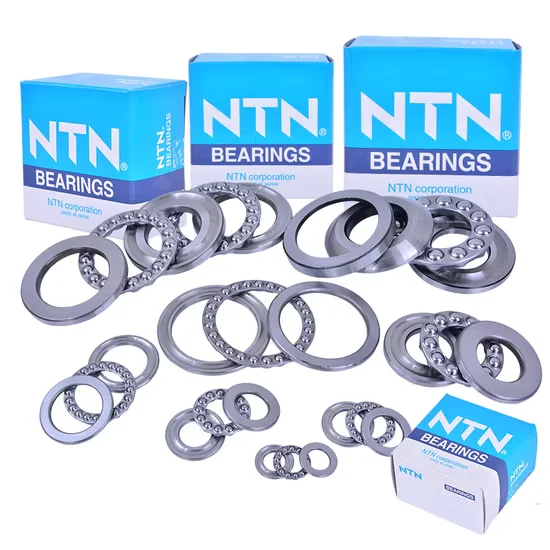
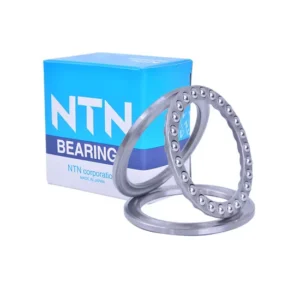
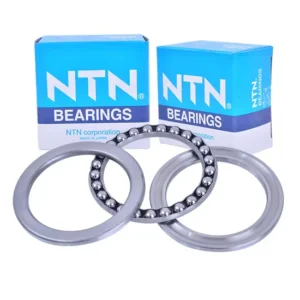
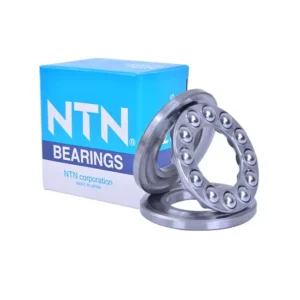
About BDL 51100 Thrust Ball Bearing for Equipments 51101-51238m
Original Batch Traceability — Every BDL 51100 thrust ball bearing ships with verifiable manufacturer lot codes to guarantee authentic metallurgy and consistent quality.
Technical Specifications
| Parameter | Value |
|---|---|
| Designation | 51100 |
| Bearing Type | Thrust Ball Bearing |
| Number of Rows | Single |
| Aligning | Non-Aligning Bearing |
| Separated | Separated |
| Material | Bearing Steel |
| Contact Angle | 0° |
| Lubrication | Grease or Oil |
| Precision Class | P0, P6, P5, P4, P2 |
| Vibration | Z1V1, Z2V2, Z3V3 |
| Certification | ISO9001:2008 |
| Origin | China |
Application Suitability
| Industry | Typical Applications |
|---|---|
| Automobile | Transmission thrust support and steering column axial load management |
| Rolling Mill | Roll neck axial positioning and guide roller thrust support |
| Mine | Crusher vertical shaft axial load retention and conveyor drive support |
| Metallurgy | Continuous caster segment axial guidance and ladle turret thrust support |
Why Non-Aligning Thrust Bearings Fail Under Hidden Misalignment
When specifying a BDL 51100 thrust ball bearing for heavy axial loads, engineers often overlook minor housing deflections that occur under operational stress. Strict non-aligning designs demand perfect seat perpendicularity to prevent localized raceway spalling and premature fatigue. During my early purchasing days in Indonesia, I sourced a similar non-aligning thrust bearing for a local gearbox plant without considering slight shaft deflections caused by heavy torque. Within months, the raceway suffered severe spalling because the rigid design could not compensate for the misalignment, leading to catastrophic equipment failure. highlights that edge loading from housing distortion accounts for a significant share of premature thrust bearing failures in heavy machinery. Procurement teams must prioritize housing machining tolerances just as much as the bearing specifications themselves to avoid these hidden operational traps.
Matching Axial Load Profiles to Separated Thrust Designs
The separated construction of the BDL 51100 thrust ball bearing allows independent installation of the shaft washer, housing washer, and ball cage assembly. This modularity drastically simplifies maintenance procedures in cramped metallurgy equipment housings where physical access is highly restricted and space is limited. By separating the components, maintenance crews can inspect individual raceways for wear patterns without completely dismantling the surrounding drive assemblies. Our engineering team provides comprehensive cross-brand equivalent model consultation to ensure this separated configuration aligns perfectly with your existing maintenance protocols and spatial constraints, preventing costly installation delays during urgent MRO replacements.
Managing Lubrication and Vibration in Heavy-Duty Metallurgy
Rolling mill and mining environments subject thrust components to intense axial shock loads, continuous vibration, and abrasive particulate contamination. Selecting the appropriate lubrication—whether high-viscosity grease for sealed environments or circulating oil for high-speed cooling—is absolutely critical to prevent cage wear and raceway scoring. Furthermore, specifying the correct vibration grade, such as Z3V3, ensures the internal geometry can withstand the harmonic resonance typical in heavy machinery without accelerating subsurface fatigue. demonstrates that unmitigated structural resonance drastically accelerates material degradation in thrust washers. Proper alignment during mounting remains equally vital to distribute these immense axial forces evenly across the entire contact surface, preventing localized stress concentrations that compromise the bearing steel integrity.
Decoding Precision and Vibration Tolerances for Thrust Applications
Precision classes ranging from P0 to P2 dictate the running accuracy, axial stiffness, and overall operational stability of the thrust assembly. While standard P0 precision suffices for general automotive applications, rolling mill guide rollers demand P4 or P2 precision to minimize axial runout and maintain strict strip thickness consistency during high-speed rolling. The vibration grades (Z1V1 to Z3V3) reflect the internal surface finish quality and ball sorting accuracy; a Z3V3 rating indicates exceptionally smooth raceways that significantly reduce operational noise and heat generation. Since this is a non-aligning bearing with a zero contact angle, it is engineered purely for unidirectional axial loads and cannot accommodate any radial forces or combined loading scenarios. The high-carbon bearing steel construction provides the necessary core hardness to resist brinelling under extreme static thrust loads, ensuring dimensional stability over extended service periods.
The Operational Toll of Ignoring Axial Deflection Limits
Selecting a rigid non-aligning thrust bearing for an application with unavoidable shaft deflection inevitably leads to catastrophic edge loading on the raceways. This localized stress triggers premature spalling, generates excessive heat, and causes unplanned downtime that severely disrupts production schedules and voids equipment warranties. According to, improper load distribution is a primary driver of surface-initiated fatigue and raceway flaking in thrust washers. Ultimately, the hidden costs of emergency maintenance, secondary component damage, and lost production revenue far exceed the initial savings of bypassing an aligning seat design or ignoring housing tolerances. Engineers must evaluate the entire structural system rather than just the isolated bearing component to ensure long-term reliability.
Securing Authentic Thrust Components Through Rigorous Verification
Sourcing genuine thrust bearings requires more than just matching the basic prefix; verifying the exact precision class, vibration grade, and material traceability is where most suppliers fail. We maintain massive spot inventory covering thousands of standard part numbers, ensuring flexible MOQ from single-unit emergency replacements to full container consolidations for bulk project orders. Our complete traceability documentation guarantees that every BDL 51100 thrust ball bearing originates from verified production facilities, entirely eliminating the risk of counterfeit metallurgy and substandard heat treatment. Additionally, our technical selection support helps buyers cross-reference equivalent models to confirm dimensional, precision, and clearance alignment before shipment, ensuring direct integration into your existing mechanical systems without unexpected modifications.
Documentation & Authenticity
- Certificate of Conformity confirming ISO9001:2008 compliance for the specific thrust bearing batch.
- Original manufacturer lot traceability codes etched on the housing washer for authenticity verification.
- Running accuracy inspection reports validating the requested P4 or P2 precision class before dispatch.
- Material test certificates verifying the bearing steel composition and hardness of the shaft and housing washers.
- Vibration grade test logs confirming Z1V1 to Z3V3 internal surface finish specifications.
Storage, Handling & Mounting
- Keep the separated shaft and housing washers in original anti-corrosion packaging until mounting to prevent surface oxidation.
- Use clean lint-free gloves when handling the ball cage assembly to avoid contaminating the bearing steel raceways.
- Ensure the mounting seat perpendicularity is strictly machined, as the non-aligning design cannot compensate for housing distortion.
- Apply the specified grease or oil lubrication immediately after unsealing to protect the zero contact angle raceways.
- Verify the vibration grade marking on the outer packaging matches the Z1V1, Z2V2, or Z3V3 requirement before installation.
Engineering Data Required for Thrust Bearing Validation
To ensure optimal performance, please provide the exact axial load magnitude, operating speed, and thermal environment for L10 life calculation. Share your OEM equipment numbers or housing drawings so our engineering team can verify the seat perpendicularity and cross-reference equivalent models. Specifying the required precision class and vibration grade will help us filter our spot inventory for your exact maintenance needs.
Frequently Asked Questions
Q: How do we verify the authenticity and traceability of thrust bearings from global and domestic brands?
A: We provide complete traceability documentation, including original manufacturer lot codes and material test certificates. Every BDL 51100 thrust ball bearing is verified against official production records to ensure genuine bearing steel metallurgy. Buyers can also utilize official app QR verification or authorized channel validation to prevent counterfeit parts and guarantee ISO-compliant quality assurance.
Q: What are the cross-reference considerations for precision and clearance when substituting 51100 series models?
A: When cross-referencing 51100 series models, it is crucial to align not just the basic dimensions but also the precision class and vibration grades. Substituting a P0 precision bearing for a P4 application in rolling mills will cause excessive axial runout. Our technical team verifies dimensional, precision, and clearance alignment to ensure the replacement matches the original operational requirements.
Q: How to interpret standard precision ratings and vibration grades for thrust ball bearings?
A: Precision ratings from P0 to P2 define the dimensional accuracy and running precision, where P2 offers the tightest tolerances for high-speed applications. Vibration grades like Z1V1 to Z3V3 indicate the internal surface finish and ball sorting quality. A higher grade, such as Z3V3, ensures smoother operation, reduced noise, and lower heat generation in sensitive metallurgy equipment.
Q: What does the unverified 'm' suffix indicate in cross-reference models like 51226m and 51238m?
A: The 'm' suffix in models like 51226m and 51238m is currently an unverified designation that requires manufacturer catalog confirmation. It typically denotes specific cage materials or internal design modifications, but assuming its meaning without official documentation risks severe misapplication. We always recommend verifying exact suffix definitions with the original manufacturer before finalizing cross-reference substitutions.
Q: How to select the appropriate lubrication for heavy-duty metallurgy and rolling mill applications?
A: Selecting between grease and oil lubrication depends on the operating speed, cooling requirements, and contamination levels of the rolling mill environment. Oil lubrication is often preferred for high-speed applications requiring active cooling, while grease suits sealed environments with moderate speeds. We analyze your specific thermal and load profiles to recommend the optimal lubrication strategy for extended service life.
Same overhaul list
Related NTN bearings
Add these to the same list as this bearing. Multiple shaft positions and paired bearings can be quoted as one coordinated parts list.
 Cylindrical Roller Bearings NTN N2310em NJ2310em NF2310em NU2310em NUP2310em Cylindrical Roller Bearing 50x110x40
 Deep Groove Ball Bearings NTN 6202 Deep Groove Ball Bearing for Motor and Agricultural Machinery
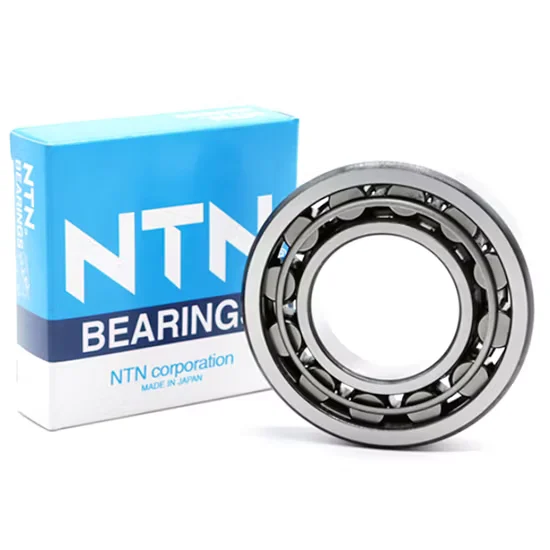 Cylindrical Roller Bearings NTN N2344 Nj2344 NF2344 Nu2344 Cylindrical Roller Bearing Genuine Supplier
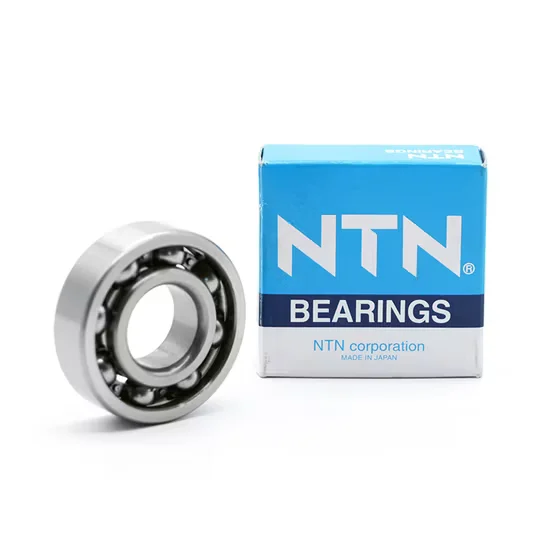 Construction Machinery Bearings NTN NSK Koyo Timken NACHI 68/500 69/500 Deep Groove Ball Bearing
Where it runs
Applications for this bearing
This bearing serves the drive systems listed here. Open a scenario to see the NTN bearings used in that equipment.
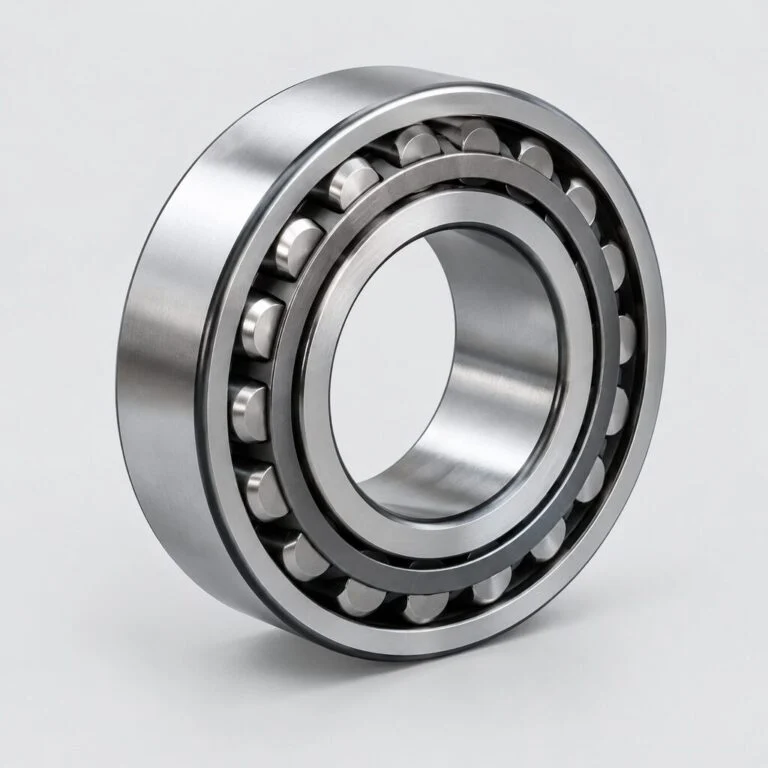 Equipment Repair & Replacement Maintenance teams replace bearings across motors, fans, machine tool spindles, and textile, printing and packaging machines, often working from worn markings or incomplete shop…
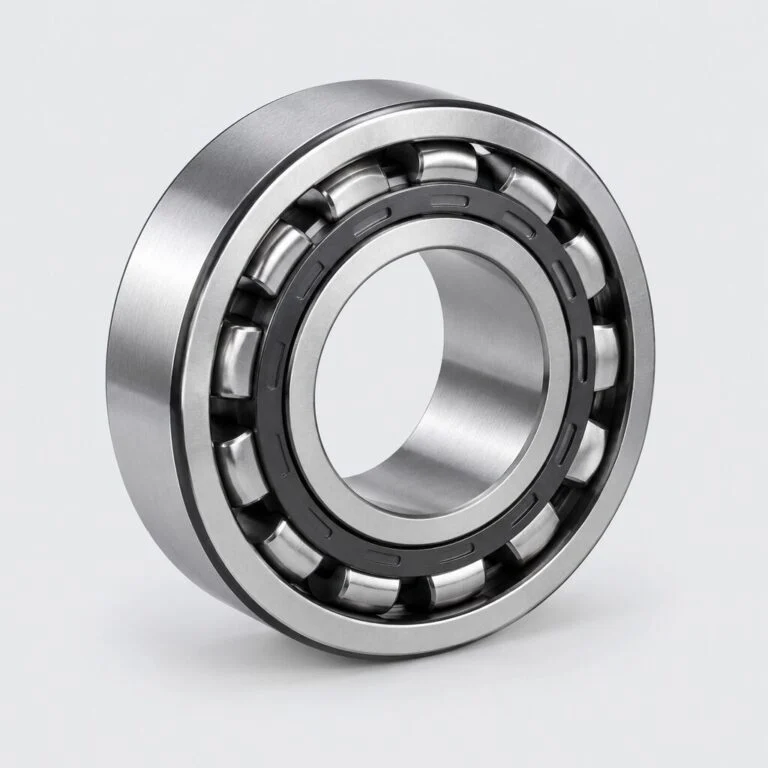 Gearbox Assembly Gearbox assembly lines need several bearing types for each unit, delivered in the correct execution and quantity to keep production moving. Mixed suffixes or…
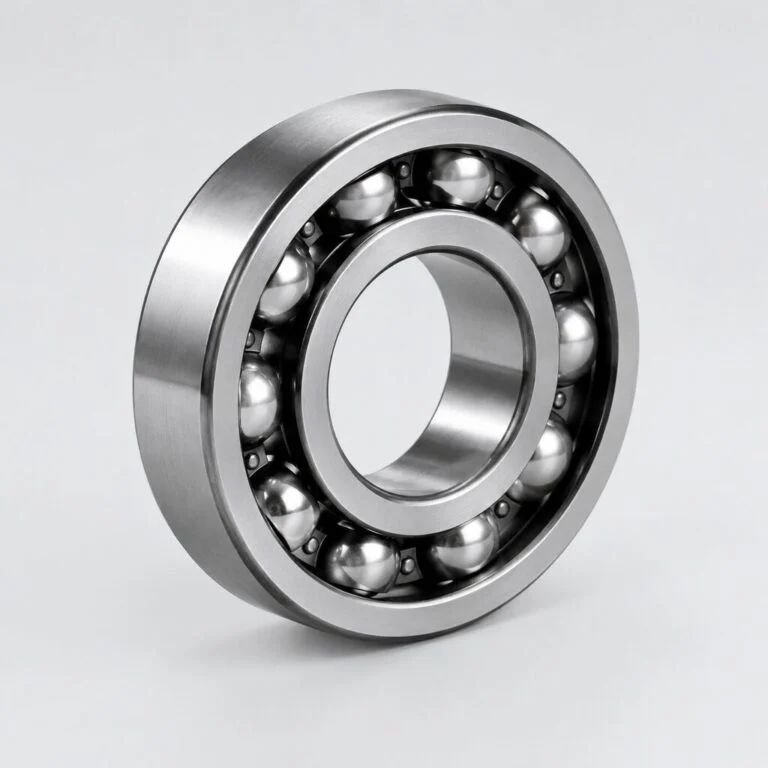 Industrial Gearboxes & Reducers Industrial gearboxes and speed reducers use different bearing types at the input, intermediate and output shafts, with radial, axial and combined loads shifting from…
Selection guides
Bearing selection articles
These articles help you check duty, shaft position and bearing execution before you finalize a reducer or gearbox list.
Installation & Maintenance Tapered Wheel Bearings for Older Cars: Wholesale Supplier & Bulk Repacking tapered wheel bearings on older cars demands precise preload adjustment to counteract worn spindles. Standard specifications often fail on aged axles, causing rapid… Sep 27, 2026  Installation & Maintenance CV Axle Replacement Guide & Wholesale Bearings Supplier Master CV axle replacement by addressing the real cause of noise: hub bearing deformation from improper installation. Learn how precise bearing fit, hydraulic pressing,… Sep 27, 2026 Installation & Maintenance Hub Assembly Replacement Guide: Wholesale Supplier for Bulk MRO Orders Master the technical nuances of How to Replace a Hub Assembly by prioritizing correct internal clearance and verified authenticity over simple installation. Prevent catastrophic… Sep 27, 2026
FAQ
Questions from gearbox and reducer buyers
NTN Bearing Supplier keeps your NTN execution exact, keeps sets together and marks any substitute clearly.
How do I confirm the exact NTN suffix if my records differ?
Send a clear photo of the bearing marking and state which part of the designation is uncertain. The exact execution, including clearance and cage suffixes, is confirmed before you accept the quote. This matters because one base number can carry different suffixes in workshop records.
How should paired bearings be identified in an enquiry?
List them as a set, with the shaft position, arrangement and set quantity, and attach the overhaul drawing. Paired bearings then go through the enquiry as one coordinated list rather than as unrelated single items.
Will you replace my specified bearing with a substitute?
No, the NTN execution your equipment specifies stays in place throughout the enquiry. Any substitute is marked separately, and a technical change goes ahead only with your approval.
Which product documents come with an order?
Product documents are confirmed at the quotation stage, and shipping documents are confirmed with the order. If your order carries a precision-class requirement, state it along with any measurement report you need, so both are settled before you order.
Written quotation
Get a written quote for BDL 51100 Thrust Ball Bearing for Equipments 51101-51238m
NTN Bearing Supplier, an Authorized NTN Distributor in Schaumburg, Illinois, USA, supplies buyers worldwide. Your quote states model, quantity, price and currency, availability, estimated lead time, validity and applicable shipping or tax terms.