
 Installation & Maintenance Tapered Wheel Bearings for Older Cars: Wholesale Supplier & Bulk Repacking tapered wheel bearings on older cars demands precise preload adjustment to counteract worn spindles. Standard specifications often fail on aged axles, causing rapid… Sep 27, 2026
Enquiry checklist
Specify this bearing by shaft position, not just size.
Five details make an enquiry complete, so the quote matches the position this bearing fills in your gearbox or reducer.
-
Shaft position
Input, intermediate or output shaft, with locating or non-locating end marked.
-
NTN suffix
The full designation, including clearance and cage suffixes from your work order.
-
Paired arrangement
Which bearings form a set and how the overhaul drawing arranges them.
-
Quantity
The quantity for each line and the set count across the full overhaul.
-
Required date
The date you need the parts, plus destination country and postcode.
Product details
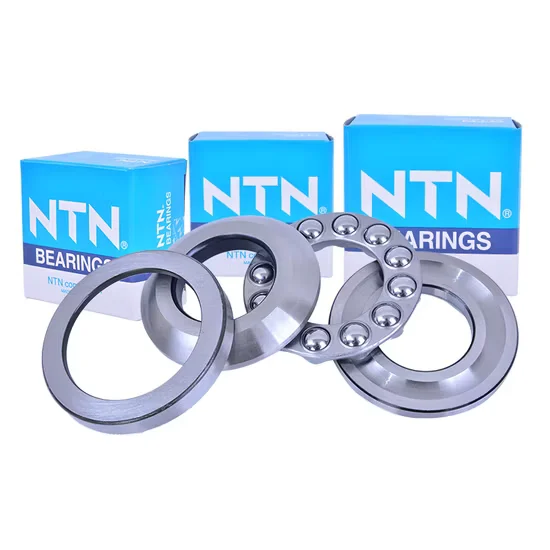
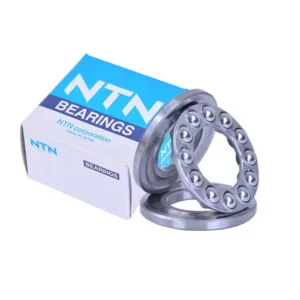
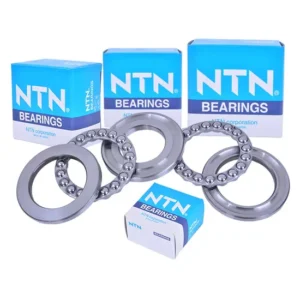
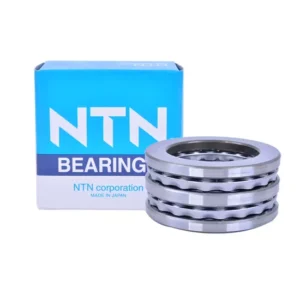
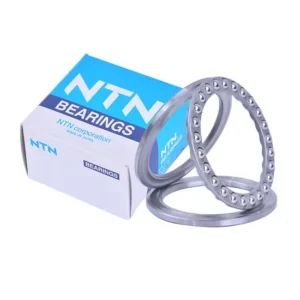
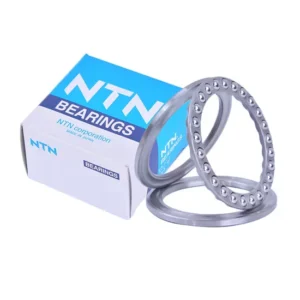
About BDL 51406 51107 Thrust Ball Bearing for Crane Hook
Cross-reference alignment verified — matching dimensional and load profiles across global catalogs ensures exact fitment for heavy lifting hooks.
Technical Specifications
| Parameter | Value |
|---|---|
| Designation | 51406 51107 |
| Bearing Type | Thrust Ball Bearing |
| Precision Class | P0, P6, P5, P4, P2 |
| Vibration Level | Z1V1, Z2V2, Z3V3 |
| Aligning | Non-Aligning Bearing |
| Separated | Separated |
| Number of Rows | Single |
| Material | Bearing Steel |
| Contact Angle | 0° |
| Lubrication | Grease or Oil |
| Origin | China |
| Certification | ISO9001:2008 |
Application Suitability
| Industry | Typical Applications |
|---|---|
| Material Handling | Crane hook pulley blocks and slewing mechanisms |
| Metallurgy | Rolling mill axial load supports |
| Mining | Heavy-duty hoisting equipment thrust seats |
Why the BDL 51406 51107 thrust ball bearing Survives Hook Impact Loads
Stamped steel cages fail under shock, making solid brass alternatives mandatory for dynamic lifting.
During a severe port crane breakdown in Nigeria, I tore down a completely seized hook block and found shattered cage fragments mixed with deformed rolling elements. The original standard thrust bearing simply could not absorb the repetitive shock loads generated by irregular container swings and sudden braking. Upgrading to a heavier-duty configuration with a machined brass cage prevented subsequent catastrophic drops and stabilized the lifting cycle. Relying solely on basic dimension matching without considering the internal cage construction is a frequent error that leads to repeated field failures.
Matching Axial Capacity to Dynamic Lifting Cycles
Selecting the right BDL 51406 51107 thrust ball bearing requires carefully balancing static axial capacity with the dynamic shock inherent in lifting operations. Our global sourcing network provides extensive cross-brand equivalent model consultation to verify if your specific hook mechanism demands a heavier series or a specialized cage material. This dedicated technical selection support prevents undersized components from entering your critical maintenance inventory. Furthermore, understanding the exact load profile ensures that the chosen configuration can withstand the peak forces experienced during emergency stops or uneven load distributions.
Navigating Shock Loads and Contamination in Port Environments
Crane hooks endure severe axial shock loads combined with occasional misalignment during heavy lifts and swinging motions. Standard grease lubrication can easily channel away from the raceways under high impact, necessitating high-viscosity oils or extreme-pressure greases to maintain the protective elastohydrodynamic film. Furthermore, exposed thrust seats in marine or dusty mining environments require strict contamination control, as particulate ingress rapidly accelerates raceway spalling and compromises the structural integrity of the rings. Proper installation of separated washers is equally critical to avoid uneven load distribution across the rolling elements, which would otherwise induce premature localized fatigue.
Decoding Precision, Vibration, and Cage Configurations
The available precision classes from P0 up to P2 dictate the rotational accuracy and axial runout of the entire assembly. For high-speed or precision hoisting applications, tighter P4 or P2 tolerances minimize vibration and heat generation, ensuring smoother operation. Vibration ratings spanning Z1V1 to Z3V3 further ensure operational smoothness, with Z3V3 being absolutely essential for sensitive equipment where noise and micro-vibrations must be strictly controlled. Since these are separated single-row designs, the shaft and housing washers can be installed independently, which greatly simplifies maintenance in confined hook blocks. The non-aligning nature of the bearing demands perfectly square mounting surfaces to prevent edge loading on the balls, highlighting the need for meticulous housing preparation during overhauls.
The Downtime Penalty of Undersized Thrust Components
Installing a light-series thrust bearing in a heavy-duty hook block inevitably leads to premature fatigue and sudden cage fracture. Such unplanned downtime halts entire loading operations and incurs massive financial penalties that far exceed the mere replacement cost of the component. According to established failure analysis frameworks, improper load capacity matching is a primary driver of catastrophic structural damage in lifting gear. Warranty voidance is also a common consequence when non-specified components are forced into critical safety paths, leaving the operator fully liable for any subsequent equipment damage or safety incidents.
Securing Traceable Heavy-Duty Replacements Globally
Sourcing genuine heavy-duty thrust components often involves navigating complex supply chains, but we consolidate mixed-brand packages directly from our massive spot inventory. When a port requires an urgent replacement for a specific hook block, our flexible minimum order quantity allows single-unit emergency dispatches alongside full container shipments. We provide complete traceability documentation for every batch, ensuring the bearing steel meets strict metallurgical standards required for heavy lifting. Our engineering team also offers cross-brand equivalent model consultation, verifying dimensional interchangeability when original equipment manufacturer parts face extended lead times, thus keeping your critical machinery operational without compromising safety.
Documentation & Authenticity
- Certificate of Conformity validating ISO9001:2008 compliance for the specific production batch.
- Original batch traceability reports linking the bearing steel heat number to the final assembly.
- Dimensional and running accuracy inspection reports confirming P-class tolerances before dispatch.
- Material inspection certificates verifying the chemical composition of the bearing steel rings.
- Vibration and noise testing logs for units specified with Z2V2 or Z3V3 ratings.
Storage, Handling & Mounting
- Store the separated washers in their original anti-corrosion packaging until the exact moment of hook block assembly.
- Use clean lint-free gloves when handling the precision P4 or P2 raceways to prevent moisture-induced etching.
- Apply the specified high-viscosity grease evenly across the ball and cage assembly before closing the housing.
- Ensure the housing seating surface is perfectly machined and square, as this non-aligning bearing cannot compensate for angular misalignment.
- Verify the shaft and housing washer orientation during installation to prevent the rotating ring from creeping on the stationary seat.
Engineering Review for Critical Lifting Applications
To ensure the selected thrust configuration perfectly matches your exact lifting mechanism, please share the maximum axial load, operational cycle frequency, and ambient temperature conditions. Providing the original equipment manufacturer hook block drawings allows our technical team to perform a precise life calculation and cross-reference verification against global catalogs. Detailing the environmental exposure, such as marine salinity or mining dust, helps us recommend the optimal lubrication and sealing strategy for your specific application, ensuring long-term reliability in the field.
Frequently Asked Questions
Q: How do I choose between the 51406 and 51107 series for my crane hook?
A: The 51107 series suits standard axial loads, while the 51406 series handles significantly heavier shock loads due to its larger ball diameter and deeper raceway grooves. Evaluate the maximum dynamic axial force and impact frequency of your lifting cycles. If the hook experiences severe swinging or irregular container weights, the heavier 51406 configuration with a machined brass cage is strongly recommended to prevent cage fragmentation.
Q: What is the practical difference between P0 and P2 precision in thrust bearings?
A: P0 is the standard tolerance suitable for general industrial machinery where minor axial runout is acceptable. P2 represents ultra-high precision, drastically reducing axial play and vibration, which is critical for high-speed or highly sensitive hoisting mechanisms. Selecting P2 ensures smoother load transfer and extends the fatigue life of the raceways under continuous dynamic cycling, though it requires stricter mounting surface tolerances.
Q: How do Z1V1 and Z3V3 vibration levels affect crane hook stability?
A: Vibration ratings indicate the strictness of the manufacturing finish and balancing processes. Z1V1 is adequate for standard slow-speed lifting, whereas Z3V3 guarantees minimal micro-vibrations and acoustic noise. In precision lifting or high-cycle automated port cranes, utilizing Z3V3 components prevents resonant vibrations from transferring into the wire ropes and structural boom, thereby enhancing overall operational stability and reducing structural fatigue.
Q: What are the best practices for installing separated thrust washers?
A: Since the design is separated, the shaft washer, housing washer, and ball-cage assembly are installed independently. Ensure the shaft washer fits tightly against the rotating shaft shoulder, while the housing washer sits squarely in the stationary bore with a slight clearance to prevent binding. Always verify that the rotating ring is mounted on the tight-fitting seat to avoid destructive creep and fretting corrosion on the mating surfaces.
Q: Can we cross-reference these models with other global brands?
A: Yes, our technical team provides comprehensive cross-reference consultation to match these designations with equivalent models from major global manufacturers. By supplying your exact axial load requirements and spatial constraints, we can identify direct dimensional substitutes if the primary brand faces supply shortages. This ensures your maintenance schedule remains uninterrupted while maintaining the required load capacity and precision class for your lifting equipment.
Same overhaul list
Related NTN bearings
Add these to the same list as this bearing. Multiple shaft positions and paired bearings can be quoted as one coordinated parts list.
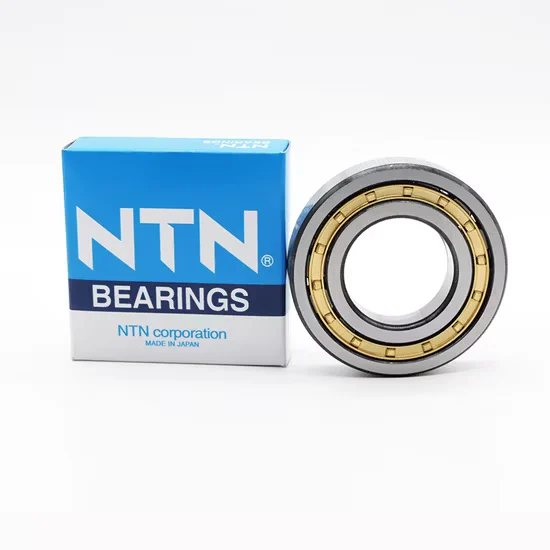 Cylindrical Roller Bearings NTN Koyo Timken NF306EM NF307EM NF308EM Cylindrical Roller Bearing Supplier
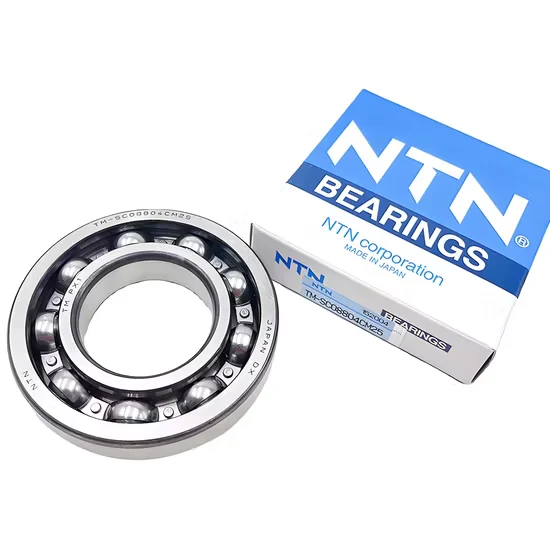 Deep Groove Ball Bearings NTN 6034 6034m Deep Groove Ball Bearing Low Vibration Genuine
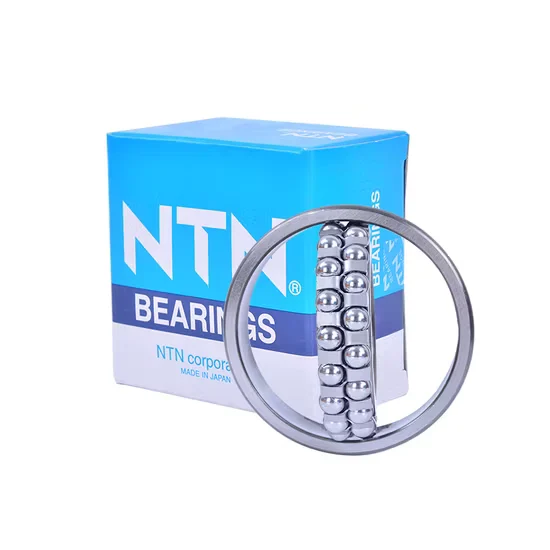 Self-Aligning Ball Bearings NTN NSK Koyo 1208 Self Aligning Ball Bearings for Textile Machinery
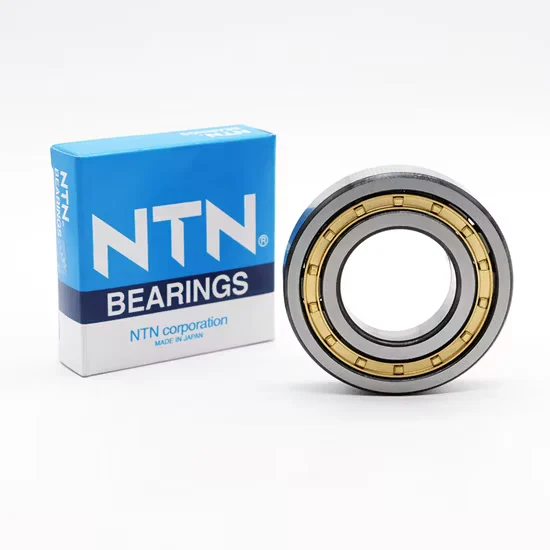 Cylindrical Roller Bearings N303EM N304EM N305EM Cylindrical Roller Bearing NTN Koyo Timken
Where it runs
Applications for this bearing
This bearing serves the drive systems listed here. Open a scenario to see the NTN bearings used in that equipment.
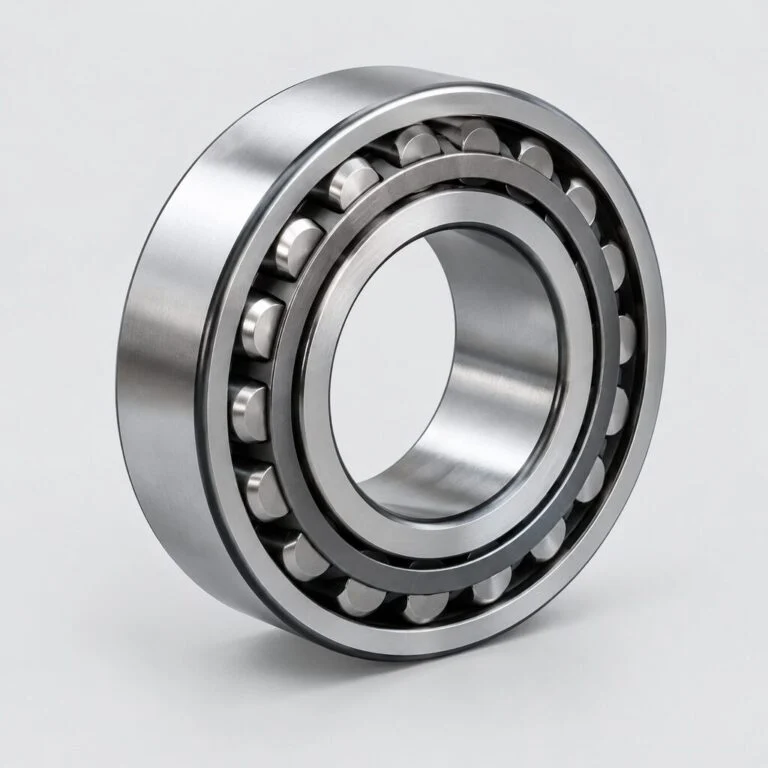 Equipment Repair & Replacement Maintenance teams replace bearings across motors, fans, machine tool spindles, and textile, printing and packaging machines, often working from worn markings or incomplete shop…
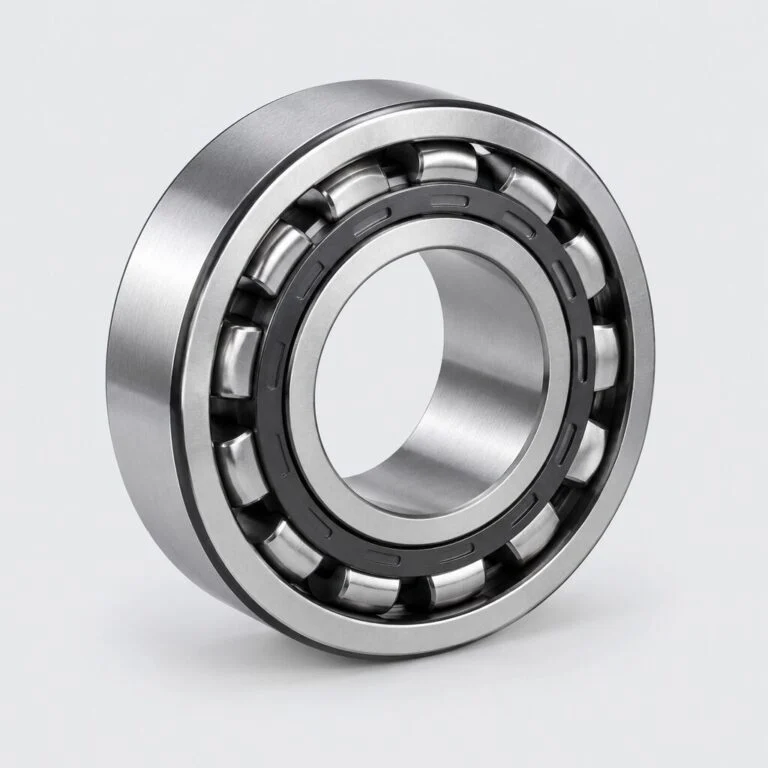 Gearbox Assembly Gearbox assembly lines need several bearing types for each unit, delivered in the correct execution and quantity to keep production moving. Mixed suffixes or…
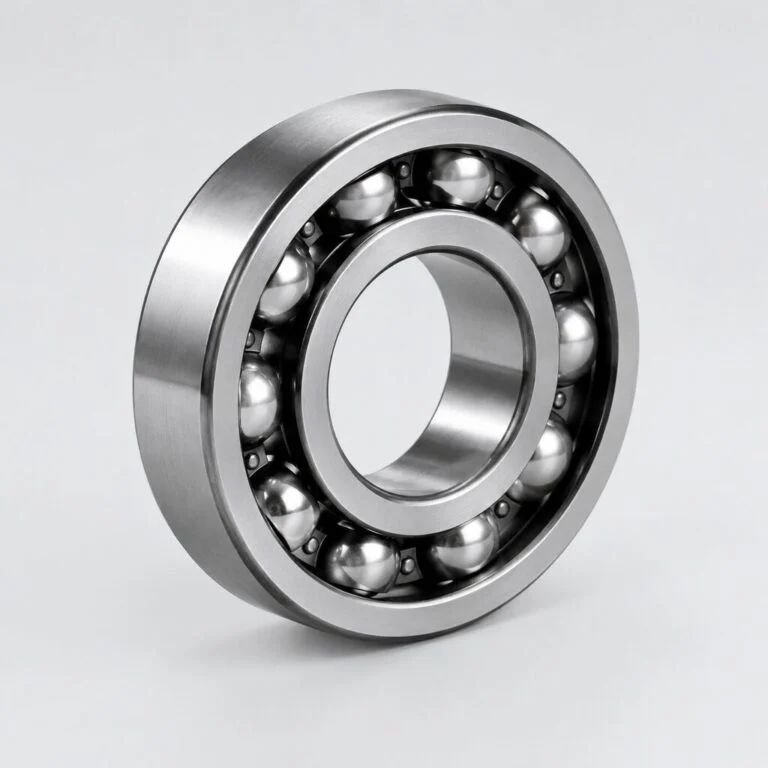 Industrial Gearboxes & Reducers Industrial gearboxes and speed reducers use different bearing types at the input, intermediate and output shafts, with radial, axial and combined loads shifting from…
Selection guides
Bearing selection articles
These articles help you check duty, shaft position and bearing execution before you finalize a reducer or gearbox list.
Installation & Maintenance Tapered Wheel Bearings for Older Cars: Wholesale Supplier & Bulk Repacking tapered wheel bearings on older cars demands precise preload adjustment to counteract worn spindles. Standard specifications often fail on aged axles, causing rapid… Sep 27, 2026  Installation & Maintenance CV Axle Replacement Guide & Wholesale Bearings Supplier Master CV axle replacement by addressing the real cause of noise: hub bearing deformation from improper installation. Learn how precise bearing fit, hydraulic pressing,… Sep 27, 2026 Installation & Maintenance Hub Assembly Replacement Guide: Wholesale Supplier for Bulk MRO Orders Master the technical nuances of How to Replace a Hub Assembly by prioritizing correct internal clearance and verified authenticity over simple installation. Prevent catastrophic… Sep 27, 2026
FAQ
Questions from gearbox and reducer buyers
NTN Bearing Supplier keeps your NTN execution exact, keeps sets together and marks any substitute clearly.
How do I confirm the exact NTN suffix if my records differ?
Send a clear photo of the bearing marking and state which part of the designation is uncertain. The exact execution, including clearance and cage suffixes, is confirmed before you accept the quote. This matters because one base number can carry different suffixes in workshop records.
How should paired bearings be identified in an enquiry?
List them as a set, with the shaft position, arrangement and set quantity, and attach the overhaul drawing. Paired bearings then go through the enquiry as one coordinated list rather than as unrelated single items.
Will you replace my specified bearing with a substitute?
No, the NTN execution your equipment specifies stays in place throughout the enquiry. Any substitute is marked separately, and a technical change goes ahead only with your approval.
Which product documents come with an order?
Product documents are confirmed at the quotation stage, and shipping documents are confirmed with the order. If your order carries a precision-class requirement, state it along with any measurement report you need, so both are settled before you order.
Written quotation
Get a written quote for BDL 51406 51107 Thrust Ball Bearing for Crane Hook
NTN Bearing Supplier, an Authorized NTN Distributor in Schaumburg, Illinois, USA, supplies buyers worldwide. Your quote states model, quantity, price and currency, availability, estimated lead time, validity and applicable shipping or tax terms.