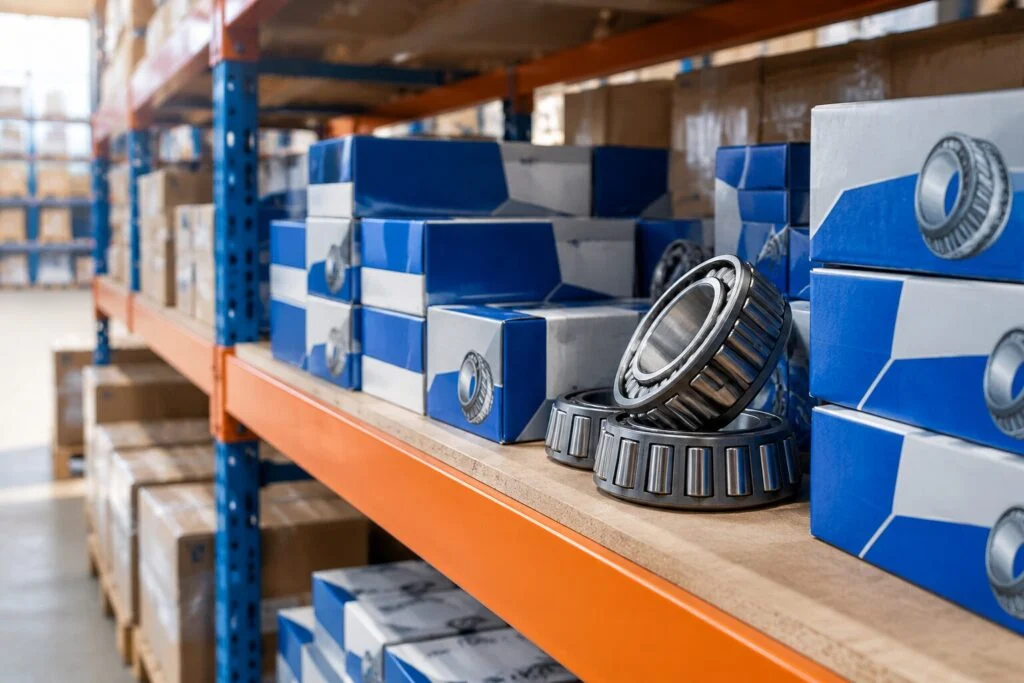
Seasonal Wheel Bearings Wholesale Supplier Bulk Stock
Price is not the primary risk during winter peaks; lead-time accuracy is.
For automotive aftermarket distributors, the critical window to secure seasonal wheel bearings wholesale supplier bulk stock begins 60 to 90 days before the first forecasted snowfall. This timeline accounts for production scheduling, ocean freight transit, and customs clearance buffers. Relying on spot inventory alone during peak repair seasons invites costly stockouts and lost retail contracts.
The chill in a Las Vegas convention center always feels sharper when you are standing in front of an empty shelf display. I remember a specific autumn at the AAPEX show, speaking with a procurement director from a major North American chain. He was not interested in discussing new product lines or marketing support. His focus was entirely on a shipment of flanged hub bearings that had stalled at the Port of Long Beach just weeks before the winter freeze. The delay was not due to a lack of funds or poor supplier relationships. It was a miscalculation of seasonal lead times. That incident reshaped how I approach inventory planning. It highlighted that in the automotive aftermarket, timing is a more valuable commodity than unit price. Managing seasonal demand requires a shift from reactive purchasing to proactive strategic stocking.
How far in advance should wheel bearings be ordered for winter peaks?
Calculate backward from the first snowfall, adding substantial buffers for production and logistics.
Winter weather triggers a surge in vehicle maintenance. Ice and snow increase stress on suspension and rotating components, leading to higher failure rates for wheel bearings. Distributors who wait until temperatures drop to place orders are already behind. The supply chain for automotive parts operates on long cycles. A typical journey from manufacturing facilities in Asia to distribution centers in Europe or North America involves multiple stages. Each stage introduces potential delays.
Production slots for high-demand SKUs fill up quickly as manufacturers anticipate global demand. Once production is complete, goods must move through port congestion, ocean freight, and customs inspection. Ocean freight schedules can fluctuate based on fuel costs, geopolitical events, and port labor actions. Customs clearance adds another layer of variability, especially for mixed-brand consolidations where documentation must be precise.
To mitigate these risks, buyers should adopt a backward-planning model. Identify the historical date when winter repairs peak in your target region. Subtract the average ocean freight transit time. Then, subtract the production lead time. Finally, add a safety buffer for unexpected delays. This calculation often points to a ordering window of two to three months before the season starts. For regions with harsh winters, this may need to extend further.
A buyer in Scandinavia once shared their strategy. They begin reviewing their wheel bearing wholesale supplier bulk stock levels in late summer. By early autumn, they have already secured container space for their primary SKUs. This approach ensures that goods arrive before the roads become hazardous. It also allows them to negotiate better freight rates by avoiding the last-minute rush that characterizes the pre-holiday shipping season.
What are the risks of ignoring seasonal lead times?
Port congestion and customs delays can cause missed repair windows and lost retail contracts.
Ignoring the seasonal nature of bearing demand leads to significant operational disruptions. The most immediate risk is stockouts. When a vehicle breaks down in winter, the owner needs a repair immediately. Repair shops cannot wait weeks for a part to arrive. If a distributor cannot supply the necessary wheel bearing, the shop will source it elsewhere. Repeated failures to supply erode trust and damage long-term business relationships.
Another risk is financial loss due to expedited shipping costs. When standard sea freight fails to meet the deadline, buyers often resort to air freight. The cost difference between sea and air freight is substantial. This expense can erase the margin gained from sourcing lower-cost bulk inventory. Furthermore, emergency air shipments often involve smaller quantities, reducing the economies of scale achieved through container consolidation.
Customs delays pose a third critical risk. During peak seasons, customs authorities face higher volumes of imports. Incomplete or inaccurate documentation can lead to inspections that hold cargo for days or weeks. For temperature-sensitive or time-critical automotive parts, even a short delay can mean missing the entire repair window.
| Risk Factor | Impact on Business | Mitigation Strategy |
|---|---|---|
| Stockouts | Lost sales, damaged retailer relationships | Advance inventory planning, safety stock calculations |
| Expedited Freight Costs | Reduced profit margins | Early booking of ocean freight, flexible MOQ options |
| Customs Delays | Missed repair windows, contractual penalties | Accurate documentation, experienced logistics partners |
[NEED_CITE: impact of port congestion on automotive supply chains]
The experience of a Midwest distributor illustrates this point. They attempted to restock popular tapered roller bearings in December, assuming that post-holiday lulls would ease logistics. Instead, they faced severe port backlogs. The resulting delay meant they could not fulfill contracts with several large repair chains. The loss was not just in revenue but in reputation. Recovery took multiple seasons of consistent service.
How to optimize container consolidation for seasonal stock?
Mix high-turnover flanged hubs with standard SKUs to maximize container space and meet diverse workshop needs.
Container consolidation is a powerful tool for managing seasonal inventory. It allows distributors to combine different types of bearings into a single shipment. This approach reduces per-unit shipping costs and simplifies logistics. However, effective consolidation requires careful planning. Not all bearings have the same demand profile. Some SKUs move quickly, while others are slow-moving but essential for specific vehicle models.
A successful strategy involves analyzing sales data to identify high-turnover items. These items should form the base of the container load. Flanged hub bearings, for example, are common in many modern vehicles and often see increased demand in winter due to corrosion and road salt exposure. Including a substantial volume of these SKUs ensures that the core inventory needs are met.
Alongside high-turnover items, distributors should include a mix of standard SKUs. These might include deep-groove ball bearings or cylindrical roller bearings used in various automotive applications. The goal is to create a balanced load that serves a wide range of customer needs. This diversity helps prevent situations where a distributor has excess stock of one type but lacks another.
Technical selection support plays a crucial role in this process. Understanding which bearings are equivalent across different brands allows for greater flexibility. For instance, if a specific brand is unavailable, a reliable alternative with matching dimensions and performance characteristics can be substituted. This requires deep knowledge of bearing specifications and cross-reference data.
A European buyer optimized their consolidation by grouping bearings by application rather than just by size. They created packages tailored for light commercial vehicles, which see heavy use in delivery services during the holiday season. This targeted approach ensured that they had the right mix of products to meet specific market demands. It also simplified inventory management for their downstream customers.
What MOQ flexibility is needed for emergency seasonal restocking?
Secure suppliers offering low-MOQ emergency orders alongside bulk container shipments.
Even with careful planning, unexpected demand spikes can occur. A sudden cold snap or a widespread vehicle recall can deplete inventory faster than anticipated. In these situations, having access to low minimum order quantity (MOQ) options is essential. Suppliers who offer flexibility in order sizes can help distributors bridge the gap until the next bulk shipment arrives.
Emergency restocking often involves smaller quantities of specific SKUs. Traditional bulk suppliers may not accommodate these small orders, forcing buyers to seek alternative sources. This fragmentation can lead to higher costs and inconsistent quality. A supplier who understands the seasonal nature of the business will maintain a spot inventory of fast-moving items. This inventory can be tapped for urgent orders without disrupting the main production schedule.
Flexible MOQs also allow distributors to test new markets or product lines without committing to large volumes. This is particularly useful when introducing new bearing types or expanding into new geographic regions. It reduces the financial risk associated with inventory holding and allows for more agile response to market changes.
[NEED_CITE: benefits of flexible MOQ in automotive aftermarket supply chains]
Consider a scenario where a repair group in Canada experiences an unusual spike in demand for needle bearings due to a specific truck model issue. Their regular container shipment is still in transit. A supplier with low-MOQ capabilities can ship a small batch via air freight to cover immediate needs. This responsiveness maintains service levels and protects the distributor’s reputation. It also demonstrates the value of a partnership beyond simple transactional exchanges.
Conclusion
Seasonal success depends on precise timing, not just low prices.
Managing seasonal demand for wheel bearings requires a proactive approach to inventory planning. By calculating lead times accurately, optimizing container consolidation, and securing flexible MOQ options, distributors can avoid the pitfalls of stockouts and expedited shipping costs. The key is to view the supply chain as a strategic asset rather than a logistical hurdle. Building relationships with suppliers who understand these dynamics ensures consistent availability and long-term business stability.