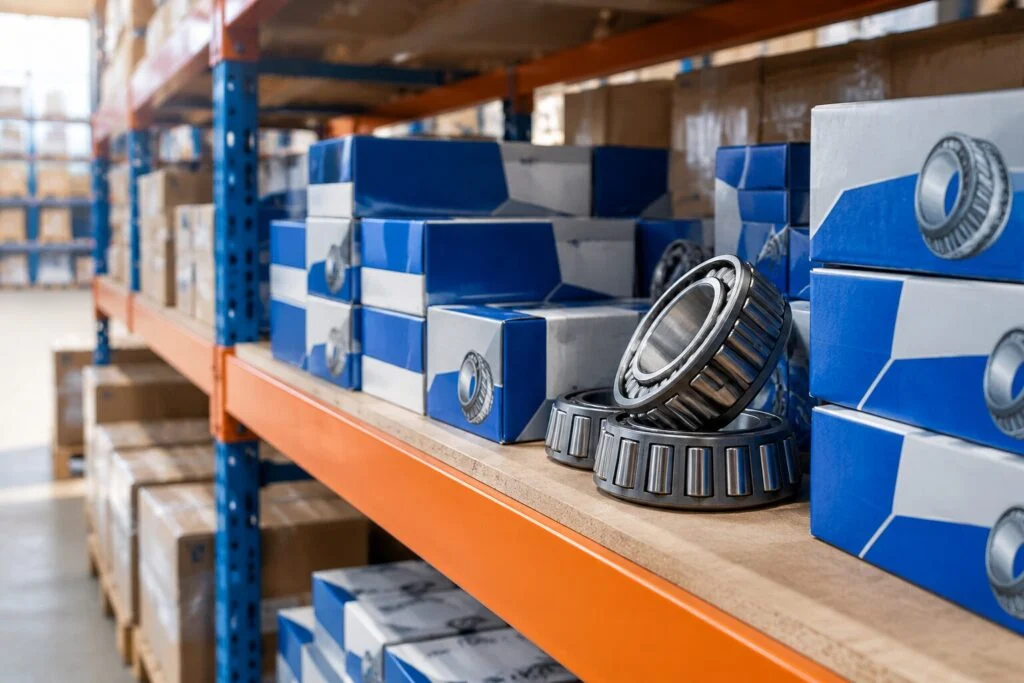
Toyota Hilux & Land Cruiser Wheel Bearings: Wholesale Supplier for Bulk Orders
Cheap bearings do not save money; they destroy axles.
Sourcing genuine wheel bearings for Toyota Hilux and Land Cruiser models requires strict traceability and verified load ratings to prevent catastrophic fleet failures in mining and off-road applications. Relying on unverified "OEM-spec" replacements often leads to premature spalling and secondary hub damage, making authenticated supply chains the only viable strategy for heavy-duty MRO operations.
I still remember the silence in the dispatch office after a mining fleet in Western Australia ground to a halt. It was not the usual hum of diesel engines but the quiet of thirty trucks sitting idle because their front hubs had seized. We had sourced what looked like perfect wheel bearings for Toyota off-road vehicles from a low-cost supplier, saving a fraction on the initial invoice. Within months, the cheap steel failed under shock loads. The cost of replacing the bearings was negligible compared to the downtime and the ruined axle assemblies. That loss taught me that in heavy-duty applications, the bearing is not just a spare part; it is the critical link between operation and catastrophe. Today, when I advise clients on sourcing genuine wheel bearings for Toyota off-road fleets, I focus entirely on material certification and batch traceability rather than unit price.
The market is flooded with components that claim to meet original equipment standards but lack the metallurgical integrity to survive harsh environments. For wholesalers and fleet operators, understanding the difference between a commodity bearing and a engineered solution is essential. This guide details how to verify authenticity, select the correct load ratings, and optimize wholesale procurement for these specific Toyota platforms.
Why Do Hilux and Land Cruiser Wheel Bearings Fail Prematurely?
Shock loads expose material flaws that static tests miss.
Most premature failures in Toyota Hilux and Land Cruiser wheel bearings are not due to normal wear but to material inconsistencies in counterfeit or substandard replacements. These vehicles often operate in mining, construction, and rugged off-road conditions where dynamic loads far exceed standard highway driving specifications. [NEED_CITE: failure analysis reports for light truck bearings in mining applications]
When a vehicle hits a rock or drops into a pothole, the bearing experiences a shock load that can be several times its rated capacity. Genuine bearings from brands like SKF, KOYO, or TIMKEN use high-purity steel with controlled inclusion levels to resist crack initiation. Cheaper alternatives often use recycled steel with higher impurity content. Under repeated shock loading, these impurities act as stress concentrators, leading to rapid spalling of the raceways.
I once inspected a batch of returned bearings from a regional distributor in Southeast Asia. The outer races showed classic signs of brittle fracture rather than fatigue spalling. The metal had simply shattered under impact. This is a common issue with non-traceable parts. For a heavy-duty hub bearings mining fleet, this means unplanned downtime. A single failed bearing can lock a wheel, causing tire destruction and potentially damaging the steering knuckle.
The seal design also plays a critical role. Off-road environments introduce dust, mud, and water. Genuine bearings utilize advanced lip seals that maintain flexibility across temperature ranges while resisting abrasive ingress. Inferior seals harden in cold conditions or tear easily, allowing contaminants to wash out the grease and enter the rolling elements. Once contamination occurs, failure is inevitable and rapid.
How to Verify Genuine Bearings for Toyota Off-Road Models?
Traceability documentation is more valuable than the packaging.
Verifying the authenticity of wheel bearings requires looking beyond the box. Counterfeiters have become adept at replicating packaging, logos, and even holographic stickers. The only reliable method is to demand full traceability documentation from the supplier. This includes material certificates, heat treatment logs, and batch numbers that can be traced back to the manufacturer’s production facilities. [NEED_CITE: ISO standards for bearing quality and traceability requirements]
When sourcing OEM replacement bearings Land Cruiser wholesale, I require suppliers to provide proof of origin. This does not mean a simple invoice. It means a certificate of conformity that links the specific batch number on the bearing to the steel mill source and the manufacturing date. Reputable brands like FAG, INA, and NSK maintain rigorous batch control. If a supplier cannot provide this level of detail, the risk of receiving refurbished or counterfeit goods is high.
Physical inspection can also reveal clues. Genuine bearings have precise machining marks and consistent surface finishes. The rolling elements should be uniform in size and color. Any variation in the shade of the steel or irregularities in the cage structure suggests poor quality control. However, visual inspection alone is insufficient. Microscopic defects in the steel structure are invisible to the naked eye but fatal to the bearing’s lifespan.
A European repair group once shared their verification protocol with me. They randomly sample bearings from each container and send them for independent metallurgical testing. While this adds cost, it prevents the massive liability of supplying failed parts to their clients. For most wholesalers, relying on authorized distribution channels or suppliers with proven track records in genuine wheel bearings for Toyota off-road markets is the practical alternative.
Selecting the Right Brand and Type for Heavy-Duty Applications
Load rating matching prevents over-engineering and under-performance.
Not all bearings are created equal, even if they fit the same hub. Toyota Hilux and Land Cruiser models typically use tapered roller bearings for the front wheels due to their ability to handle combined radial and axial loads. When selecting replacements, it is crucial to match the dynamic load rating to the application. [NEED_CITE: dynamic load ratings for tapered roller bearings in heavy-duty applications]
For standard road use, a basic commercial-grade bearing may suffice. However, for mining fleets or off-road tour operators, upgrading to premium brands like TIMKEN or KOYO offers significant advantages. These brands engineer their bearings with optimized internal geometry that distributes load more evenly across the rollers. This reduces stress concentrations and extends service life meaningfully.
I have seen workshops switch from generic brands to cross-brand equivalents like SKF or NTN for Land Cruiser hub repairs. The result was not just longer life but better margin retention. While the upfront cost was higher, the reduction in warranty claims and repeat labor made the total cost of ownership lower. Clients appreciated the reliability, leading to increased loyalty.
| Application Scenario | Recommended Bearing Tier | Key Selection Criteria |
|---|---|---|
| Standard Highway Driving | Commercial Grade | Cost-effectiveness, basic seal protection |
| Mixed Urban/Off-Road | Premium Aftermarket (e.g., KOYO, NSK) | Enhanced seal design, improved steel purity |
| Heavy Mining/Construction | Industrial Premium (e.g., TIMKEN, SKF) | High dynamic load rating, robust cage design, verified traceability |
When sourcing heavy-duty hub bearings mining fleet components, always check the suffix codes on the bearing part number. These codes indicate specific features such as seal type, clearance, and cage material. Using a bearing with the wrong clearance can lead to overheating or premature wear. Technical support from your supplier is vital here. A reliable Wheel Bearings Toyota Hilux Land Cruiser supplier will offer cross-reference services to ensure the exact match for your specific model year and configuration.
Optimizing Wholesale Sourcing and Container Consolidation
Mixed-brand batching reduces freight costs and meets diverse local preferences.
For regional distributors, sourcing individual brands in full container loads is often inefficient. Local markets have diverse brand preferences and varying volume requirements. Consolidating mixed-container orders allows wholesalers to optimize freight costs while meeting the specific needs of their customer base. [NEED_CITE: logistics optimization strategies for automotive aftermarket parts]
I work with clients who combine orders for Hilux and Land Cruiser bearings with other industrial bearings. This approach maximizes container space and reduces per-unit shipping costs. By partnering with a supplier who stocks multiple premium brands like FAG, INA, and NACHI, wholesalers can offer their customers a choice without maintaining excessive inventory.
Flexibility in minimum order quantities (MOQs) is another critical factor. Emergency maintenance requirements often demand small batches of specific part numbers. A supplier with massive spot inventory can fulfill these urgent needs while still accommodating large project orders. This dual capability ensures that fleets remain operational and wholesalers maintain their reputation for reliability.
One client in Latin America consolidated a container with mixed brands of genuine wheel bearings for Toyota off-road applications. This allowed them to cater to both budget-conscious repair shops and premium fleet operators. The variety helped them capture a larger market share without increasing their capital tied up in stock. The key was working with a supplier who could provide complete traceability documentation for all brands included in the mix.
Conclusion
Authenticity prevents failure; traceability ensures authenticity.
Sourcing wheel bearings for Toyota Hilux and Land Cruiser models demands a focus on material integrity and supply chain transparency. Cheap alternatives pose significant risks to heavy-duty fleets, leading to costly downtime and secondary damage. By prioritizing verified genuine products and optimizing wholesale consolidation, operators can ensure reliability and cost-efficiency. Trust in the supply chain is built on documentation, not just price.