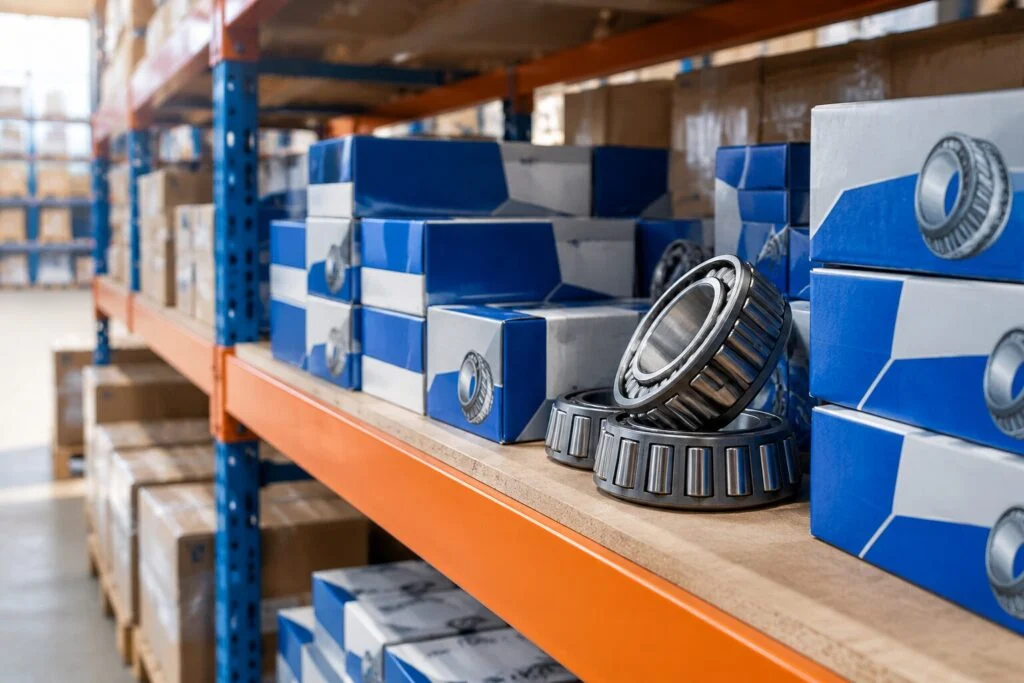
Wrong Fitment Bearing Parts Return Policy | Global Wholesale Supplier
Most bearing failures are not manufacturing defects.
Returns for wrong fitment require strict evidence, specifically installation videos and failure slice analysis, to prevent disputes. Without this documentation, claims regarding improper installation bearing warranty are typically rejected because the root cause is operational error, not product quality.
I still remember the dust choking the air at a quarry in Nigeria. The vibration screen had stopped again. The client pointed at the shattered spherical roller bearings on the spindle, insisting they were defective. He demanded a full refund under the standard bearing fitment return policy. But when I asked for the installation records, there was silence. The local crew had used a sledgehammer to force the inner ring onto the shaft, ignoring the specified clearance. They smashed the rolling elements into misalignment before the machine even started. Within half a month of operation, the bearings burned out completely. That incident cost the project weeks of downtime and tens of thousands in lost production. It also taught me that a clear bearing fitment return policy is not just about protecting the supplier; it is about ensuring the buyer understands that genuine parts fail instantly if installed incorrectly. [NEED_CITE: common causes of premature bearing failure per ISO 15243]
This experience shaped how we handle claims today. When you source from a global wholesale supplier, you expect reliability. But reliability depends on what happens at your site, not just in our warehouse. Understanding the nuances of wrong bearing installation return procedures helps you avoid costly disputes and keeps your operations running.
Why Do "Genuine" Bearings Fail Shortly After Installation?
Improper fitment causes premature failure, not defects.
It is counter-intuitive, but most buyers assume that if a bearing fails quickly, the quality must be poor. In reality, the majority of early-life failures stem from improper fitment. A genuine SKF or FAG bearing is engineered to precise tolerances. If you ignore those tolerances during assembly, you destroy the internal geometry immediately.
Consider the case of a gearbox assembly project in Southeast Asia. The maintenance team installed cylindrical roller bearings using an incorrect interference fit. They did not measure the shaft tolerance properly. As a result, the inner rings expanded excessively, eliminating the necessary internal clearance. The batch affected percentage was high, leading to extended downtime hours across multiple units. The bearings did not fail due to material fatigue; they failed because they were choked by the housing.
Another example involves a conveyor system in a Latin American mining operation. The bearings seized due to misalignment. The replacement cost multiplier versus the original part price was significant, but the real loss was the halted production line. The root cause was not the bearing brand, but the lack of alignment checks during installation. [NEED_CITE: impact of misalignment on bearing life expectancy]
When you encounter such issues, claiming a return under the bearing fitment failure claim process requires proving that the part was defective ex-factory. If the failure pattern shows brinelling from hammer blows or overheating from tight fits, the claim will be denied. This is why we emphasize technical selection support. We help you verify the shaft and housing tolerances before you even place the order, preventing these errors at the source.
What Evidence is Required to Claim a Return for Wrong Fitment?
Installation videos and failure slice analysis are mandatory.
If you believe a bearing failed due to a manufacturing defect rather than installation error, you must provide concrete evidence. Vague descriptions like "it broke after a week" are insufficient for a valid wrong bearing installation return. Our policy requires specific documentation to distinguish between user error and product failure.
First, we require video evidence of the installation process. This does not need to be a professional production, but it must clearly show the tools used, the heating method (if applicable), and the force applied. If we see a hammer being used directly on the bearing ring, the claim is void. Proper installation involves using induction heaters or hydraulic presses with appropriate adapters. [NEED_CITE: recommended mounting methods per OEM guidelines]
Second, we require a failure slice analysis. This involves cutting the failed bearing open to inspect the rolling elements and raceways. A metallurgical lab can determine if the failure was due to material defects, such as inclusions or cracks, or due to operational stress, such as overload or contamination. For a bearing fitment failure claim, this analysis is the definitive proof.
A US buyer once attempted to return a set of tapered roller bearings that had seized in a heavy-duty truck axle. He provided photos of the seized unit but no installation records. Upon receiving the returned parts, our technical team performed a slice analysis. The results showed clear signs of inadequate lubrication and foreign particle contamination, not a manufacturing flaw. The claim was rejected based on this evidence.
To streamline this process, we offer technical consultation during the selection phase. By reviewing your application parameters and installation capabilities upfront, we can advise on the correct bearing type and fitting method. This proactive approach reduces the likelihood of needing to file a complex bearing fitment failure claim later.
How to Prevent Fitment Errors on Site?
Strict adherence to clearance and fitting tools is critical.
Prevention is far cheaper than litigation. Most fitment errors occur because site technicians rely on intuition rather than standards. To avoid wrong bearing installation return scenarios, you must enforce strict protocols.
Start with measuring the shaft and housing. Use calibrated micrometers to verify dimensions against ISO tolerance classes. Do not assume that a machined shaft is within spec. Even minor deviations can lead to excessive interference or loose fits. [NEED_CITE: ISO bearing fitting standards for shaft and housing tolerances]
Next, choose the right installation method. For small bearings, a mechanical press with a sleeve is acceptable. For larger bearings, induction heating is preferred. The heater should raise the inner ring temperature evenly, allowing it to expand smoothly onto the shaft. Avoid open flames, which create hot spots and distort the metal.
Clearance measurement is another critical step. Before final assembly, check the internal clearance of the bearing. If the clearance is reduced significantly after mounting, the fit is too tight. Adjust the shaft diameter or select a bearing with a larger initial clearance, such as C3 or C4, depending on the operating temperature.
In one instance, a wind farm operator in Europe faced repeated generator bearing failures. After implementing a strict installation protocol with verified heating temperatures and clearance checks, the failure rate dropped noticeably. The key was training the maintenance crew to respect the precision of the components.
We support this by providing detailed installation guides for each brand we supply, including SKF, NSK, and TIMKEN. These guides specify the exact tools and procedures required for each bearing type, helping your team avoid common pitfalls.
What Are the Financial Impacts of Improper Installation?
Downtime and replacement costs far exceed part prices.
The cost of a bearing is negligible compared to the cost of its failure. When a bearing fails due to improper fitment, the financial impact extends well beyond the price of the replacement part. You face unplanned downtime, labor costs for emergency repairs, and potential damage to adjacent components.
Consider a steel mill in the Middle East. A single misaligned bearing in a continuous caster caused a stoppage that lasted several days. The cost of the lost production was a mid-six-figure loss. The bearing itself cost only a fraction of that amount. If the installation had been done correctly, following the proper bearing fitment return policy guidelines for prevention, this loss would have been avoided.
Furthermore, improper installation often damages the shaft or housing. Repairing or replacing these components is expensive and time-consuming. In some cases, the entire machine frame may need realignment, adding to the repair bill.
By treating bearing installation as a critical engineering task rather than a simple mechanical swap, you protect your bottom line. Investing in proper tools and training yields a high return on investment by extending service life meaningfully.
Our role as a global wholesale supplier includes offering technical selection support. We help you choose bearings that match your specific application requirements, reducing the risk of fitment issues. This partnership approach ensures that you get not just parts, but solutions that keep your business running.
Conclusion
Correct installation protects your investment.
Understanding the bearing fitment return policy is essential for B2B buyers. It clarifies that returns for wrong fitment require strict evidence to prevent disputes. By focusing on correct selection and installation, you minimize the risk of premature failure. Remember, genuine bearings perform as designed only when installed correctly. Prioritize evidence, adhere to standards, and leverage technical support to ensure operational success.